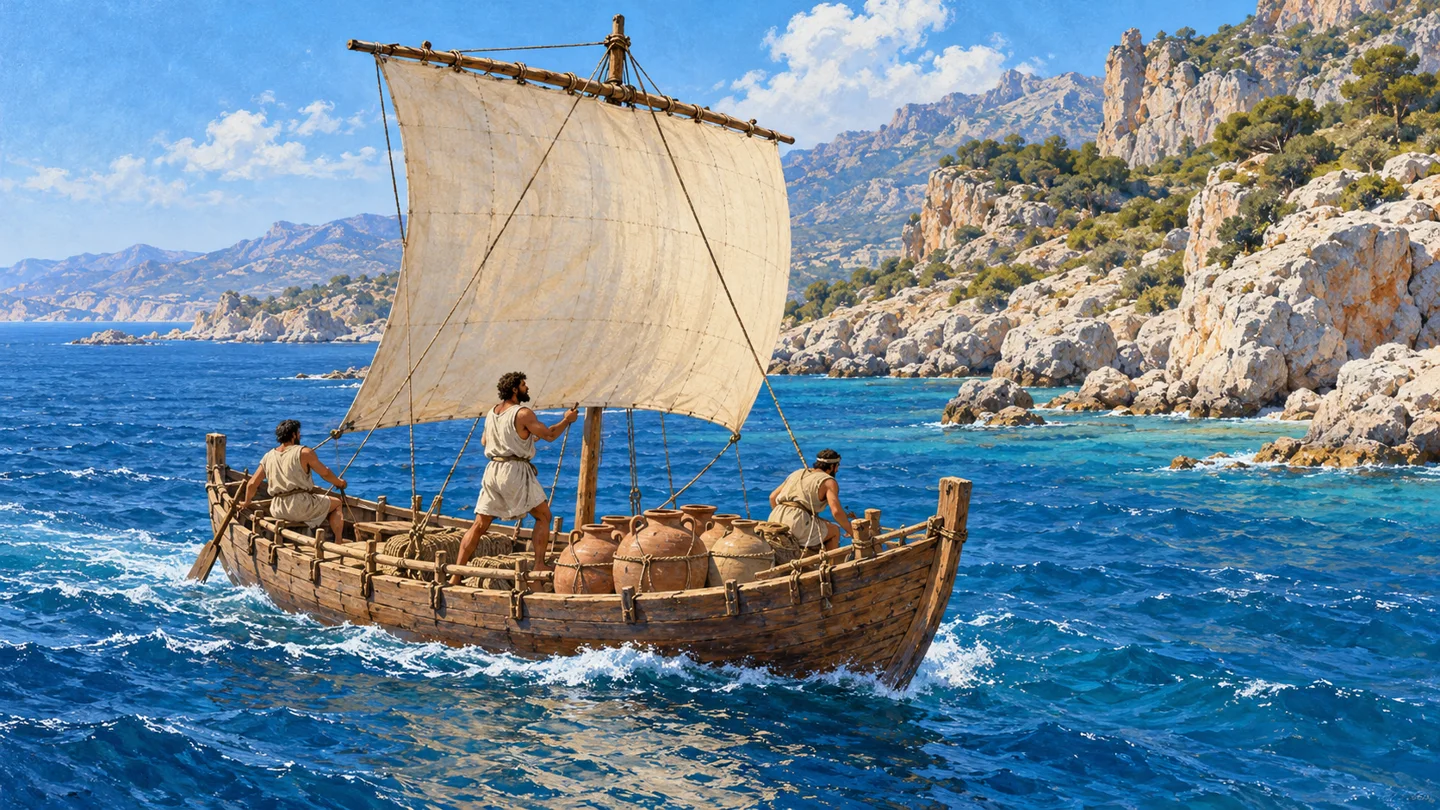
Demre, Antalya, Turkey — The ship has disappeared. Its cargo is still trying to tell us where it was going.
Off Kekova, on Turkey’s Mediterranean coast, archaeologists are studying ceramic jars from a voyage they believe ended roughly 4,500 years ago. Their proposed date places it in the age of Egypt’s great pyramids. While monumental history was being built on land, somebody else was loading a small vessel and heading out to sea.
We do not know the captain’s name, the crew’s fate or the port they hoped to reach. But the objects left behind offer something unusually intimate: evidence of a working journey that never became a successful delivery.
The cargo outlasted the ship
The site was documented in 2024 during Akdeniz University’s work in the Kekova region. In a preliminary report published in July 2026, Hakan Öniz and Ceyda Öztosun describe storage vessels resembling Early Bronze Age Levantine pottery, with side handles and flat bases. Two jars had been raised for examination, one in 2024 and another in 2025.
Later excavation brought the discovery to a wider audience. Turkey’s culture minister, Mehmet Nuri Ersoy, publicised the finds on October 14, describing them as evidence of the world’s oldest shipwreck. His post includes footage of the underwater work.
Mavi Vatan’da, dünyanın en eski batığının izlerini gün yüzüne çıkarıyoruz.
— Mehmet Nuri Ersoy (@MehmetNuriErsoy) October 14, 2026
The wooden structure has not survived. Guinness World Records lists the Kekova site at an estimated 4,400–4,700 years old, with more than 30 storage vessels and three nearby stone anchors. Its entry describes a vessel thought to have been about ten metres long.
Yet proximity is not proof of ownership. The published study explicitly says researchers do not know which, if any, of those anchors belonged to this ship. A seabed can preserve objects from different visits and different losses.
A jar can be a clock
Without the hull, there is no surviving ship timber to date. The investigation instead relies heavily on pottery: the vessels’ forms, manufacture and decoration, compared with objects from other archaeological contexts.
In her account for Macquarie University, archaeologist Karin Sowada gives a tentative range of about 2700–2400 BCE. She cautions that further work could move the date earlier or later.
That is the right way to understand the headline. The published preliminary study establishes an Early Bronze Age interpretation; the more precise dating and the claim to be the oldest deserve continued testing. “Oldest” also means the oldest yet recognised, rather than the first ship humanity ever lost.
For the people aboard, of course, there was no record to break. The cargo represented work, payment and an expected arrival.
What was inside?
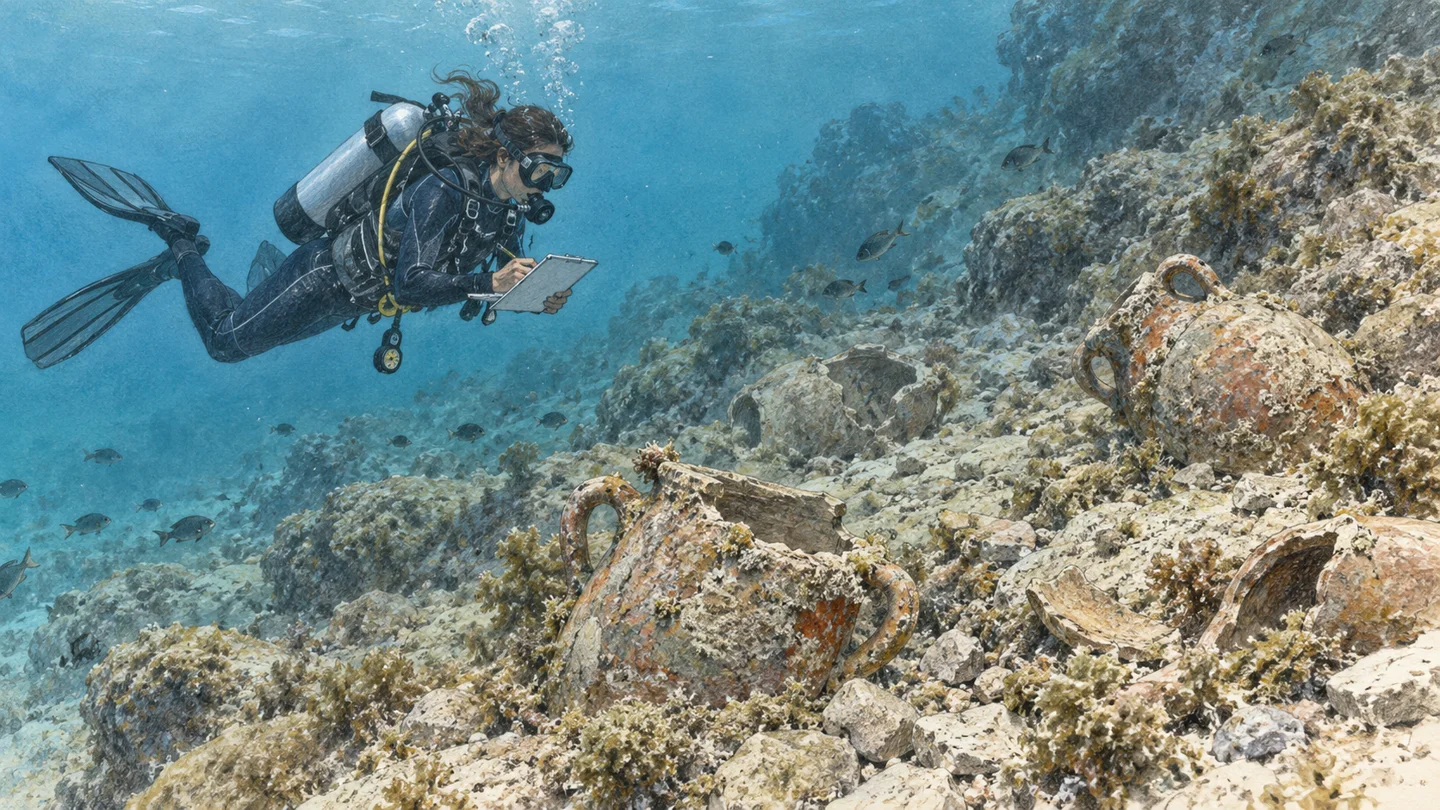
Some jars still contain visible residues. Sowada says laboratory work is needed to identify them; oil, wine and tree resin are possibilities, not a confirmed manifest. Even identifying a substance would leave questions about a container’s earlier uses.
The practical work is as absorbing as the interpretation. In an ABC interview, Sowada described examining more than 20 objects and disentangling the ceramic evidence. Material brought up from salt water needs careful treatment: the team placed finds in water baths to extract salts and help prevent deterioration.
A successful dive is therefore only the beginning. The object has to survive its return to the air before it can answer the questions that justified bringing it up.
The pyramids had trading partners
It is tempting to imagine the pyramid age as a collection of isolated civilisations. The evidence points to connections. University College London’s Old Kingdom overview describes Egypt’s trade with Byblos, particularly imports of cedar, and Egyptian royal objects found there.
That does not establish an Egyptian destination for the Kekova cargo. It supplies the wider setting: people were moving valuable materials between shores long before the familiar worlds of classical Greece and Rome.
A much later wreck, Uluburun, shows how much a single loss can reveal. Dated to around 1320 BCE, it carried copper and tin alongside glass, ivory and other goods. The Institute of Nautical Archaeology excavated it over eleven seasons. It belongs to a different period, but demonstrates why archaeologists value cargo as evidence of relationships between distant places.
The people we cannot recover
Sowada suggests the Kekova vessel may have sought shelter during a storm before striking rocks. It is a possible explanation, not a recovered account of the final minutes. Neither a storm scene nor the sailors’ deaths should be mistaken for established facts.
Still, the human question is unavoidable. Someone made the jars. Someone filled and loaded them. Others expected the boat to arrive. Their names have vanished, while a few durable objects remain available for examination.
We tend to remember this era through rulers and monuments. Kekova offers another way in: a modest cargo, a difficult coast and people trying to complete a journey. The jars may eventually tell us what they carried. For now, they remind us that the ancient world was also a working world.
Explore more of the past in our History features. The footage below, published by No Comment TV, shows the modern investigation off Turkey’s coast.