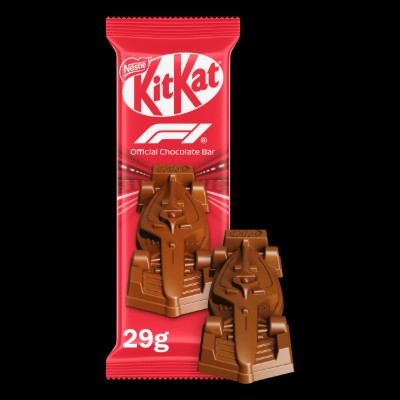
There are several respectable ways to acquire a KitKat. You can buy one at a petrol station, find one in a lunchbox or persuade someone that the last bar in the cupboard was always meant for you.
Acquiring 413,793 of them requires a different conversation.
In March 2026, Nestlé announced that a truck carrying approximately 12 tonnes of its new KitKat range had been stolen during a journey from central Italy to Poland. The chocolates were intended for distribution across Europe. Instead, the shipment became an international news story.[1]
Precisely 413,793 chocolates: the sort of figure that suggests someone in inventory had already endured a very long afternoon.
The public had jokes. The company had a missing shipment. And underneath the laughter sat a worthwhile question: what would anyone do with that much chocolate?
The obvious answer is sell it. The less obvious part is how ordinary that business can look.
Regarding recent press coverage pic.twitter.com/Huh4EnFV2J
— KITKAT (@KITKAT) March 29, 2026
A very unusual break
KitKat was enjoying a busy year. Its Formula 1 partnership had entered its first full global season, with promotions and new products, including a moulded chocolate racing car. Nestlé announced the car’s initial rollout in January, ahead of wider distribution.[2]
It was an excellent moment for the brand to attract attention. Having a shipment stolen was presumably not the preferred method.
The company responded with a joke built around its invitation to take a break, while warning that the missing goods could reach unofficial sales channels. It also corrected reports of an Easter shortage: supply was not threatened.[1]
Other brands joined the fun. Domino’s UK contributed its own visual joke to the chocolate crime story.
— Domino's Pizza UK (@Dominos_UK) March 30, 2026
By June, the response had become an advertising success. Nestlé announced a Cannes Lions Grand Prix for “The KitKat Heist”, a campaign that included a Stolen KitKat Tracker.[3] An impressive recovery of the narrative, although an advertising trophy does not tell us where a stolen truck went.
The business after the getaway
Our feature on the Nice bank heist follows thieves through a tunnel into a strongroom. Food cargo crime raises a different puzzle: once you have the goods, how do you turn them into money?
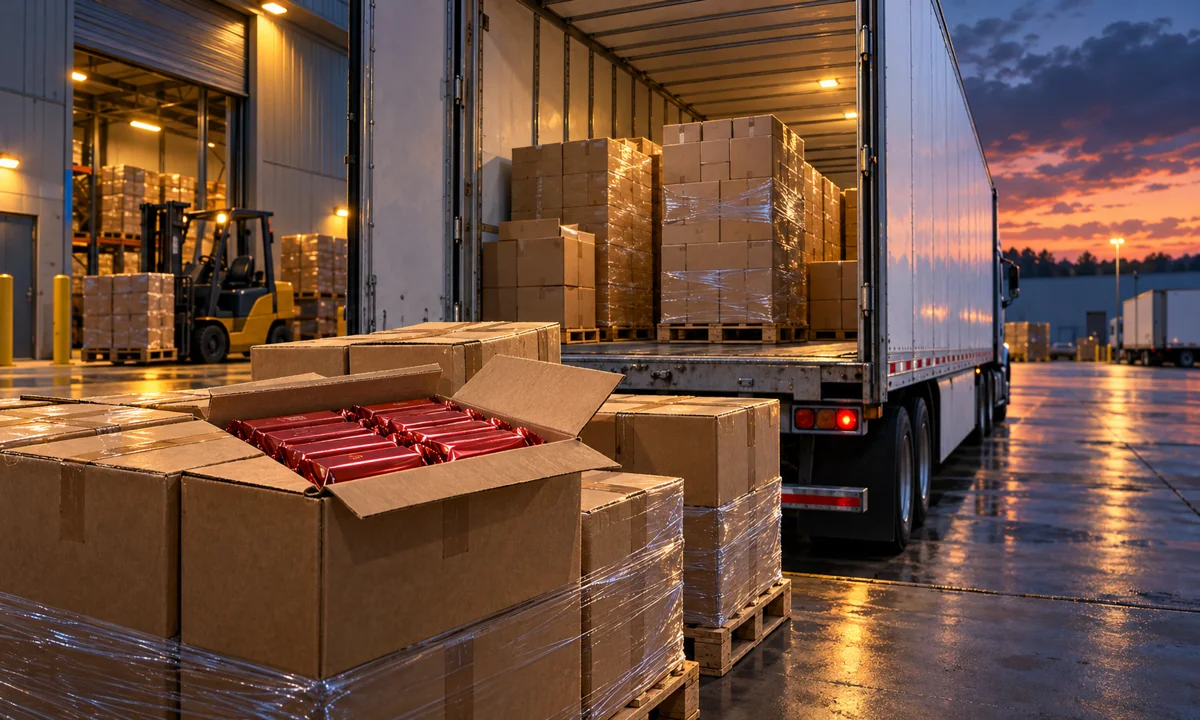
A famous stolen painting has a problem: it is famous. Selling it quietly can be considerably harder than stealing it. Familiar groceries already have customers, recognised prices and a reason to sit on a shelf.
Moving them still takes work. A truckload needs transport, storage and buyers; some foods need temperature control. Those demands make the route from possession to payment an essential part of the crime.
TT Club and BSI Consulting’s report covering 2025 describes fraudulent documents, impersonation and fictitious pickups among cargo criminals’ methods. Food and beverages led its recorded stolen-commodity categories, while trucks accounted for roughly 70% of incidents globally.[4]
Sometimes the goods leave through normal commercial procedures because someone has persuaded the people handling them that an instruction is genuine. Trust becomes the weak point.
The cheddar that left through the front door
London’s Neal’s Yard Dairy learned that lesson in 2024. It reported losing more than £300,000 worth of clothbound cheddar to a fraudulent buyer posing as a wholesale distributor for a major French retailer. More than 22 tonnes—950 cheeses—were delivered before the false identity was discovered.[5]
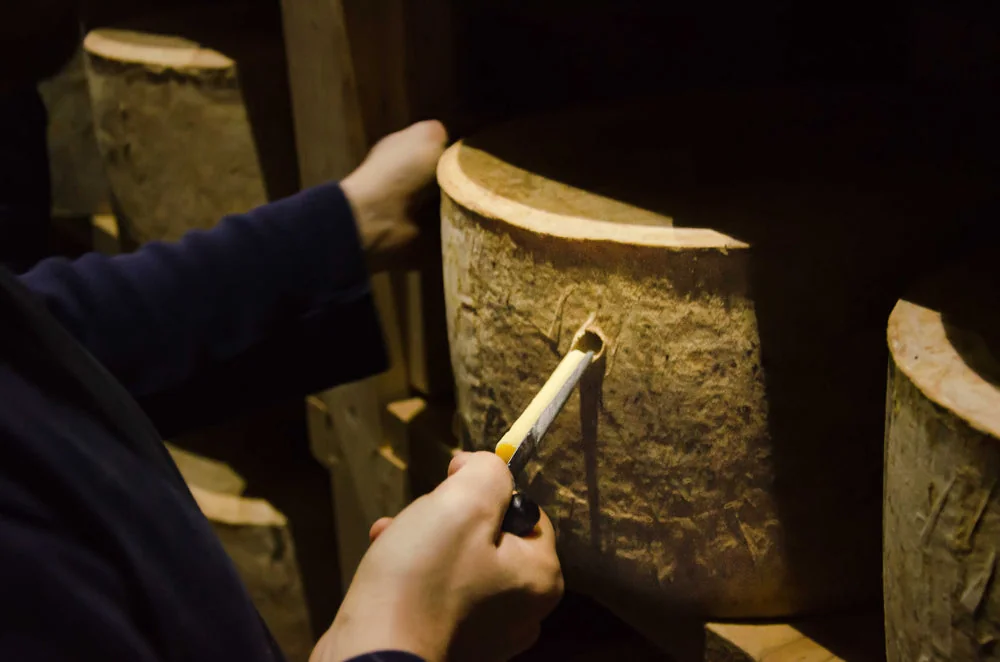
This was a theft with a sales process. The dairy described an elaborate contract, detailed payment terms and convincing knowledge of the cheese business. The supposed customer understood the industry well enough to exploit its confidence.[5]
It is tempting to appreciate the ambition of a 950-cheese crime. Then consider the milk, feed, labour, skill and time those cheeses represented.
Neal’s Yard Dairy said it paid all three cheesemakers in full despite the loss, absorbing the blow rather than passing it to its suppliers. Its later statement acknowledged an arrest connected with the investigation.[6]
The joke was available to everyone. The bill was not.
Canada’s contribution: the syrup reserve
Canada can hardly watch Europe’s food crimes with an air of superiority. We have already supplied the maple syrup chapter.
The Quebec theft uncovered in 2012 involved syrup worth more than C$18 million. A routine inventory inspection at the producers’ federation warehouse in Saint-Louis-de-Blandford found barrels containing water instead of syrup.[7]
There is something particularly Canadian about having a maple syrup reserve. Discovering that part of it has become a water reserve is considerably less charming.
One major participant, Richard Vallières, was convicted of fraud, trafficking and theft. The Supreme Court’s account records an eight-year prison sentence and a fine exceeding C$9 million, upheld in 2022.[7]
The commodity may belong on a breakfast table. The criminal enterprise does not.
A growing appetite for stolen food
Verisk CargoNet’s analysis of 2025 reported a 47% increase in food-and-beverage theft. Across cargo categories, estimated losses reached nearly US$725 million, up 60%. Those figures describe CargoNet’s reporting rather than every theft, and the dollar total covers all cargo, not food alone.[8]
One stolen bar is a snack. A trailer of them is inventory.
The appeal is straightforward: recognisable goods have established demand. If their origin is concealed, customers may encounter an ordinary-looking product at an attractive price.
A discount is not proof of a crime. Clearance, surplus and legitimate wholesale trade also produce cheap stock. The concern is that illicit goods can resemble those perfectly lawful deals.
The evidence does not simply get eaten
Food has one property that makes the story almost too neat: people consume it. Recovering a chocolate after someone has eaten it is no longer a sensible investigative ambition.
But food is not necessarily untraceable. KitKat said its missing products could be identified through batch codes, Reuters reported when the theft was announced.[9] A code is not a miniature police officer inside a wrapper, but it can connect a product to a production run.
Transactions can leave records, too. Eating the goods does not automatically erase the evidence of their movement. The syrup convictions are a fairly persuasive reminder.
Who gets the last laugh?
Nestlé had the resources to turn its response into an award-winning campaign. A smaller producer confronting a missing payment or vanished shipment may have fewer options.
That is what makes the KitKat story worth following beyond the punchline. Behind the improbable quantity of chocolate is the trust that lets goods move between factories, carriers, warehouses and shops.
The serious question is commercial: who expected to buy the load, and what would make the sale appear ordinary?
A stolen painting looks out of place in a supermarket. A chocolate bar looks right at home.
Watch: The KitKat heist
Brew explores the KitKat theft and the wider trade in stolen food in this accompanying video. For more researched features, visit Freeway66’s Business coverage.