San Jose, CA, USA - A quiet media revolution has already happened—so quietly that many people still talk about it as if it’s “the future.”
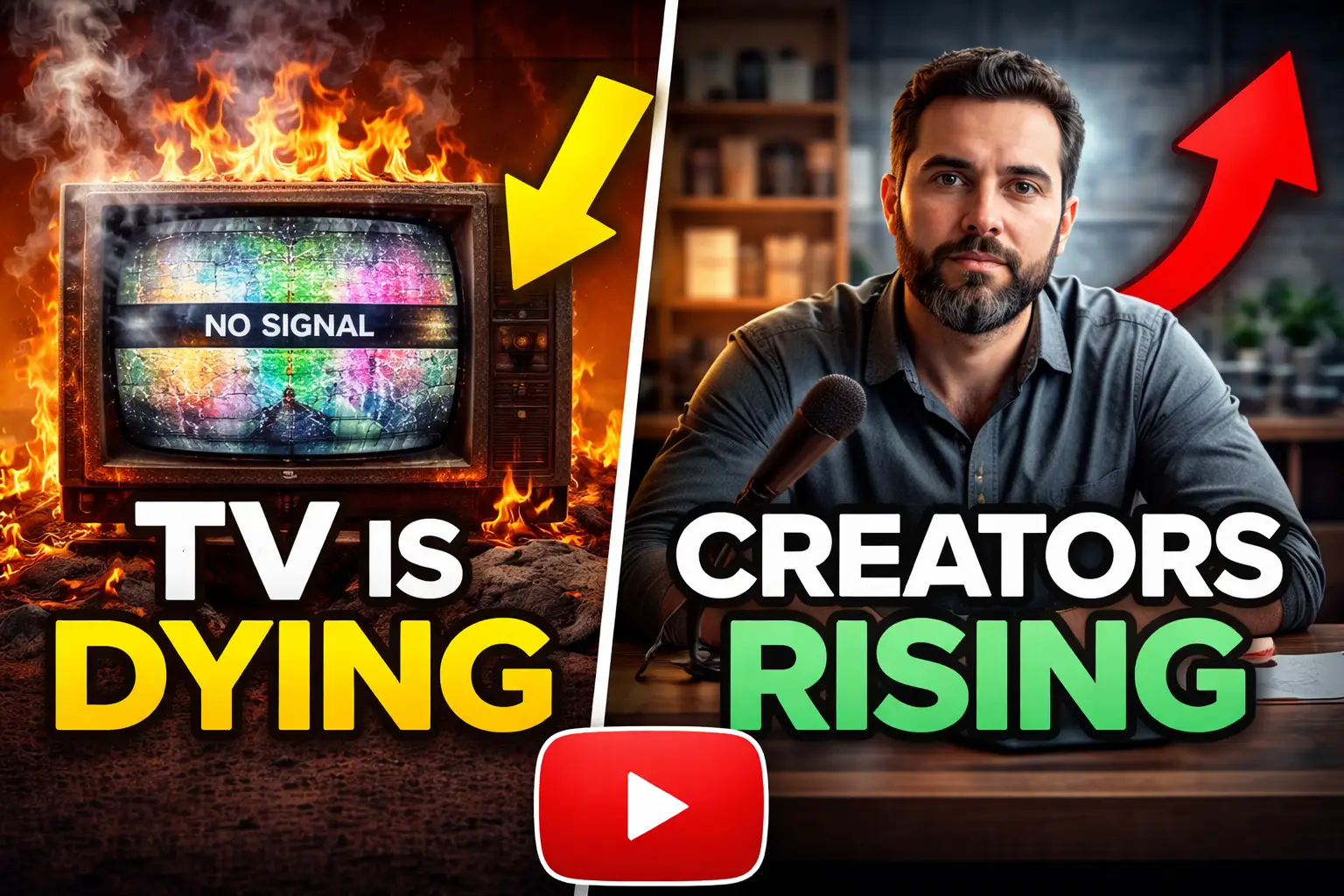
The old broadcast model was built around scarcity: limited channels, limited airtime, limited access to production and distribution. If you wanted to reach millions, you needed the tower, the studio, the gatekeepers, and the schedule.
Now the scarcity has flipped. Distribution is abundant. The scarce asset is trustworthy attention—and an ecosystem of independent creators has proven they can earn it, hold it, and scale it. Not as a novelty. As a new default.
One of the biggest psychological barriers to taking independent media seriously used to be production quality. Legacy television could always say: we look and sound better.
That argument has collapsed.
Today’s leading creator operations routinely deliver:
The result is a new kind of viewer experience: not a “web video,” but something that feels like television’s best era—only faster, sharper, and more culturally current.
This is not just aesthetics. It changes the social contract. High quality signals respect: your time matters, your attention is earned, and we won’t waste it.
The shift isn’t vague or anecdotal anymore. The numbers are now large enough to define the whole market.
In the U.S., streaming hit a record 47.5% of total TV viewing in December 2025, while broadcast and cable were each around the low 20s share range. That isn’t “streaming is growing.” That’s “streaming is the biggest single slice of the pie.”
Within that new universe, creator-led platforms are no longer minor players. YouTube has repeatedly led measured TV watch-time among “media distributors” in Nielsen’s reporting—e.g., 13.4% of TV watch-time in July 2025 in Nielsen’s Media Distributor Gauge. In Nielsen’s December 2025 Gauge reporting, YouTube’s share was reported at 12.7%.
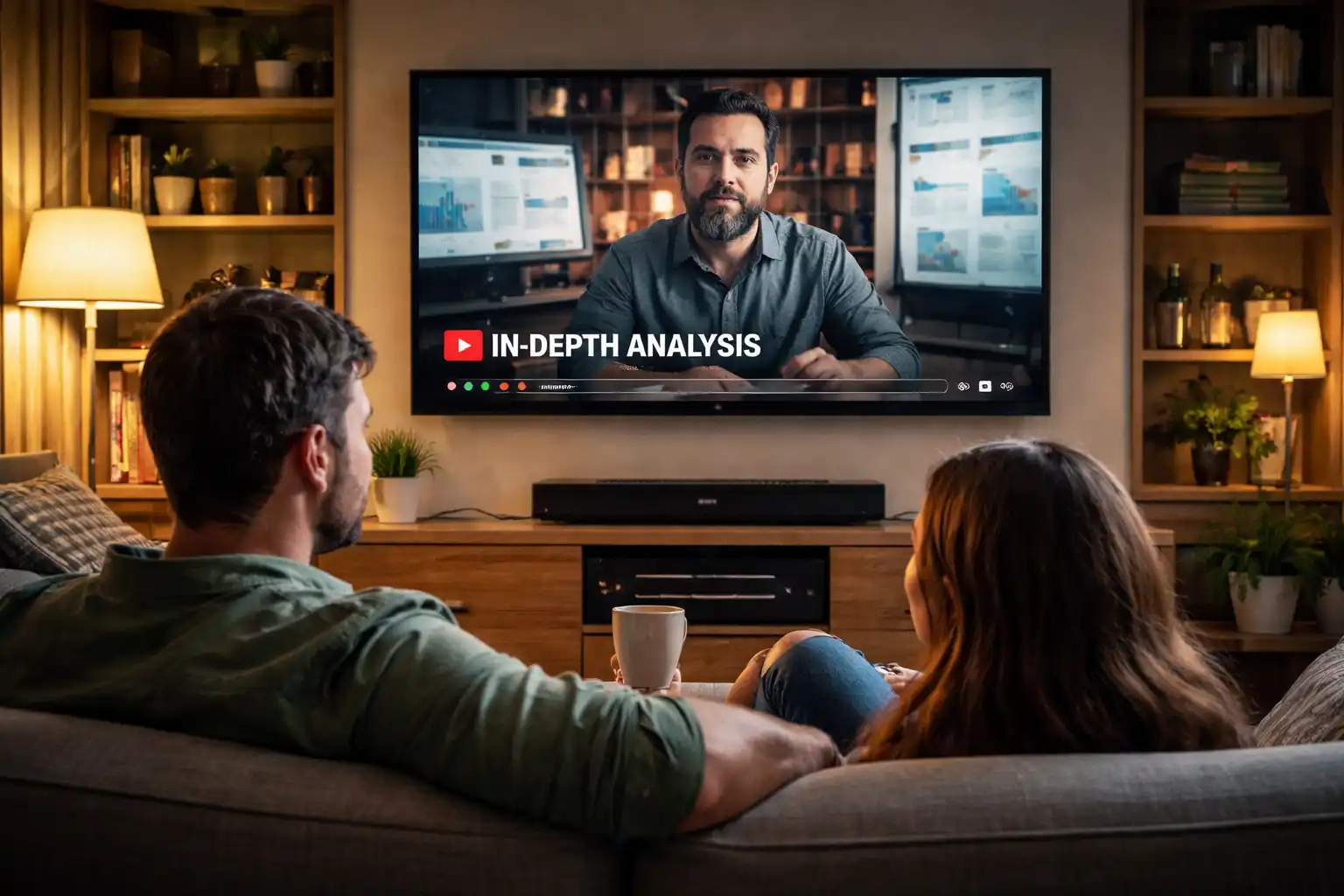
Even more telling: these numbers are about TV sets, not just phones. The living-room screen—the home territory of broadcast—has already become a connected device first.
And the cultural reset is visible outside the U.S., too. In the UK, Ofcom reports that 16–24 year-olds watched just 17 minutes of live TV daily (2024), and less than half watched broadcast TV weekly.
That’s not a preference shift. That’s a generational handoff.
Yes—and importantly, it’s not fringe behavior.
A useful way to think about this is: not everyone “doesn’t watch TV.” Many people still watch plenty of video—just not broadcast/cable.
A Pew Research Center survey found 83% of U.S. adults watch streaming services, while only 36% subscribe to cable or satellite at home. The same survey found that 55% watch streaming but don’t subscribe to cable/satellite—a majority living outside the pay-TV bundle.
That doesn’t perfectly equal “never watch broadcast TV” (some people may still catch local channels, sports, or events), but it strongly supports the core point: there is now a large population for whom the default video habit is on-demand platforms, not scheduled television.
Add one more reality: the definition of “watching TV” has changed. Deloitte reports that a significant share of consumers now consider social video and streaming part of “watching TV” in the first place. In plain English: for many viewers, “TV” is the big screen, not the broadcast system.
One of the most surprising outcomes of the creator era is the return of long-form attention.
For years, the story went like this: “People have short attention spans now.” Yet millions of viewers routinely watch 30, 60, 90 minutes—and longer—when the content respects them.
Long-form works because it allows:
This is especially true for complex subjects—politics, war, institutions, finance, medicine, history—where the short broadcast segment can only gesture at the edge of a real explanation.
The audience didn’t lose patience. The audience lost tolerance for being managed.
There’s a second shift happening alongside format and quality: information sorting has moved away from centralized permission and back toward audience judgment.
In the broadcast era, the default assumption was paternalistic: people needed heavy filtering because they couldn’t be trusted to evaluate competing claims. The modern creator ecosystem—messy as it can be—often runs on the opposite premise:
This is how adult societies actually refine beliefs in the real world: through exposure, friction, debate, and time.
There’s an important nuance here: fewer gates does not automatically mean higher truth. But it often means a faster and more visible cycle of correction—because creators who build trust can’t afford to be sloppy for long, and audiences have the power to leave instantly.
The proof is in behavior: when people feel respected, they act like grown-ups. They ignore what’s dumb. They laugh at what’s ridiculous. They share what’s meaningful.
Here’s a fascinating irony: as the viewing experience became more “TV-like,” advertising logic quietly followed.
On free, ad-supported viewing, platform ad breaks increasingly resemble classic broadcast rhythm: interruptions occur at natural pauses, after a beat, or at predictable intervals. That structure is not nostalgia—it’s retention science.
Traditional television learned (over decades) that ads work best when:
As creators became the primary reason people show up, platforms had to protect the viewing experience—or risk viewers clicking away. The ecosystem is rediscovering the original broadcast contract: you can run ads, but you can’t disrespect the viewer.
The same structural forces hitting broadcast TV—abundance of choice, attention competition, creator ecosystems, and changing audience habits—are now pressuring the film industry.
Theatrical is not “dead,” but it’s clearly in a painful transition.
In North America, 2025 box office revenue landed around $8.87B, and estimated admissions were about 780 million, down ~5% from 2024, according to EntTelligence estimates reported by trade press. Meanwhile, analysis of moviegoing frequency suggests the most reliable audience segment is shrinking: one survey cited by S&P Global Market Intelligence reports the share of adults going to the cinema at least monthly fell from 39% (2019) to 17% (2025).
That’s the “pangs” in one sentence: fewer habitual moviegoers, higher stakes per release, and more pressure for films to justify the trip.
Studios are also navigating a new competitive reality. A two-hour movie competes not just with other movies, but with:
It’s not that people stopped loving stories. It’s that the story marketplace exploded—and the old release windows no longer control attention the way they used to.
Put the pieces together and the phenomenon looks less like “platform disruption” and more like a cultural rebalancing:
This is why creator-led journalism and documentary work can feel more “alive” than institutional programming. It isn’t just the edge. It’s the absence of a certain deadness: the careful, committee-shaped tone that tries to guide the viewer rather than serve them.
A free society can’t outsource its thinking to institutions forever. It has to argue, test, refine, and laugh—publicly.
And that, more than any brand name or platform, is the real story.