Hollywood, California - Time travel is one of cinema’s most familiar ideas, but its most famous films represent only a small part of what the genre has attempted.
Beyond Back to the Future, The Terminator and 12 Monkeys is a collection of films that approached time from stranger, smaller and often more human directions. Some were crowded out at the box office. Others were marketed badly, released into impossible circumstances or made so cheaply that a theatrical breakthrough was never realistic.
What unites them is not obscurity for its own sake. Each understands that a time machine is only a mechanism. The real story is what a person does when given another encounter with a dead parent, a chance to prevent a catastrophe, a doorway into another life—or the terrible knowledge that every attempt to repair the past may complete the disaster.
Here are ten time-travel films that deserve another look.
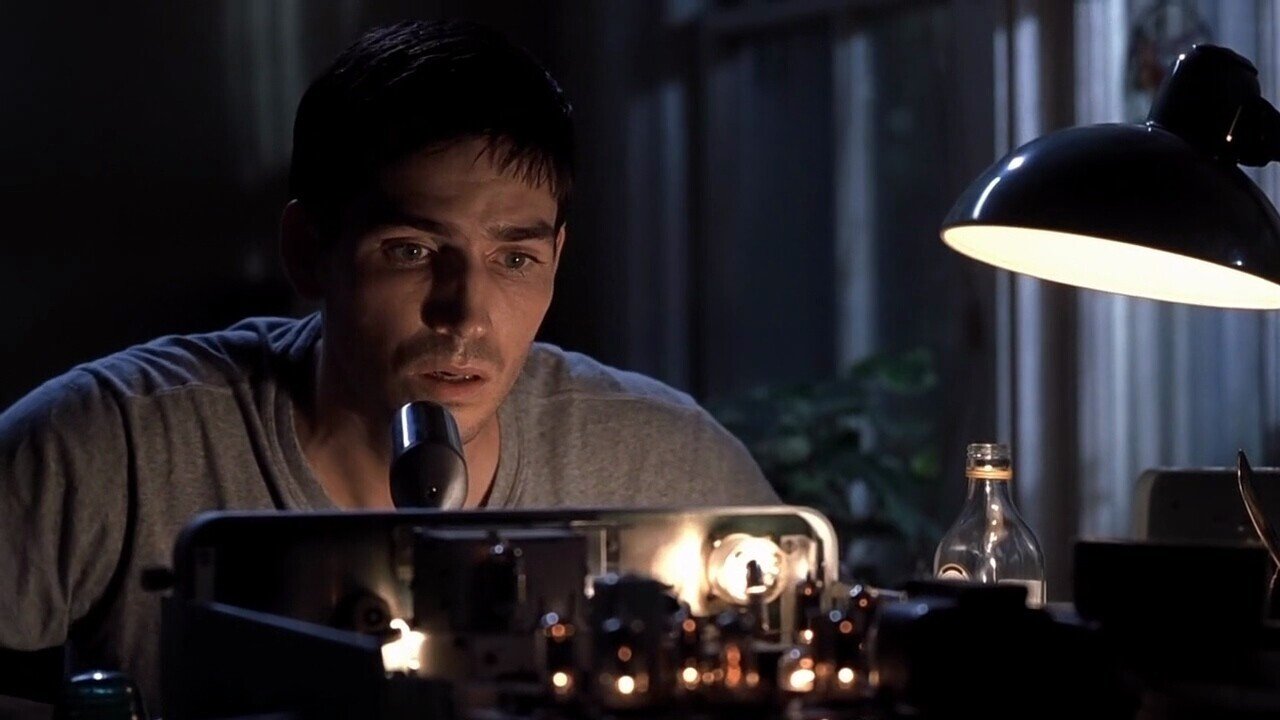
Frequency begins with one of the genre’s simplest and most affecting wishes: the opportunity to speak once more with someone who is gone.
Jim Caviezel plays John Sullivan, a New York detective who discovers that an old ham radio can connect him with his firefighter father Frank, played by Dennis Quaid, 30 years earlier. Their conversations allow John to prevent the warehouse fire that originally killed Frank—but the altered timeline produces consequences neither man anticipated.
Director Gregory Hoblit, working from Toby Emmerich’s screenplay, treats the changing timeline as a thriller without losing the father-and-son relationship at its centre. The film’s $68 million worldwide gross against a reported $31 million budget was respectable, yet it never became the lasting cultural fixture its emotional premise deserved.
The machinery is almost incidental. The fantasy that matters is hearing a lost parent’s voice and discovering that there may still be something left to say.
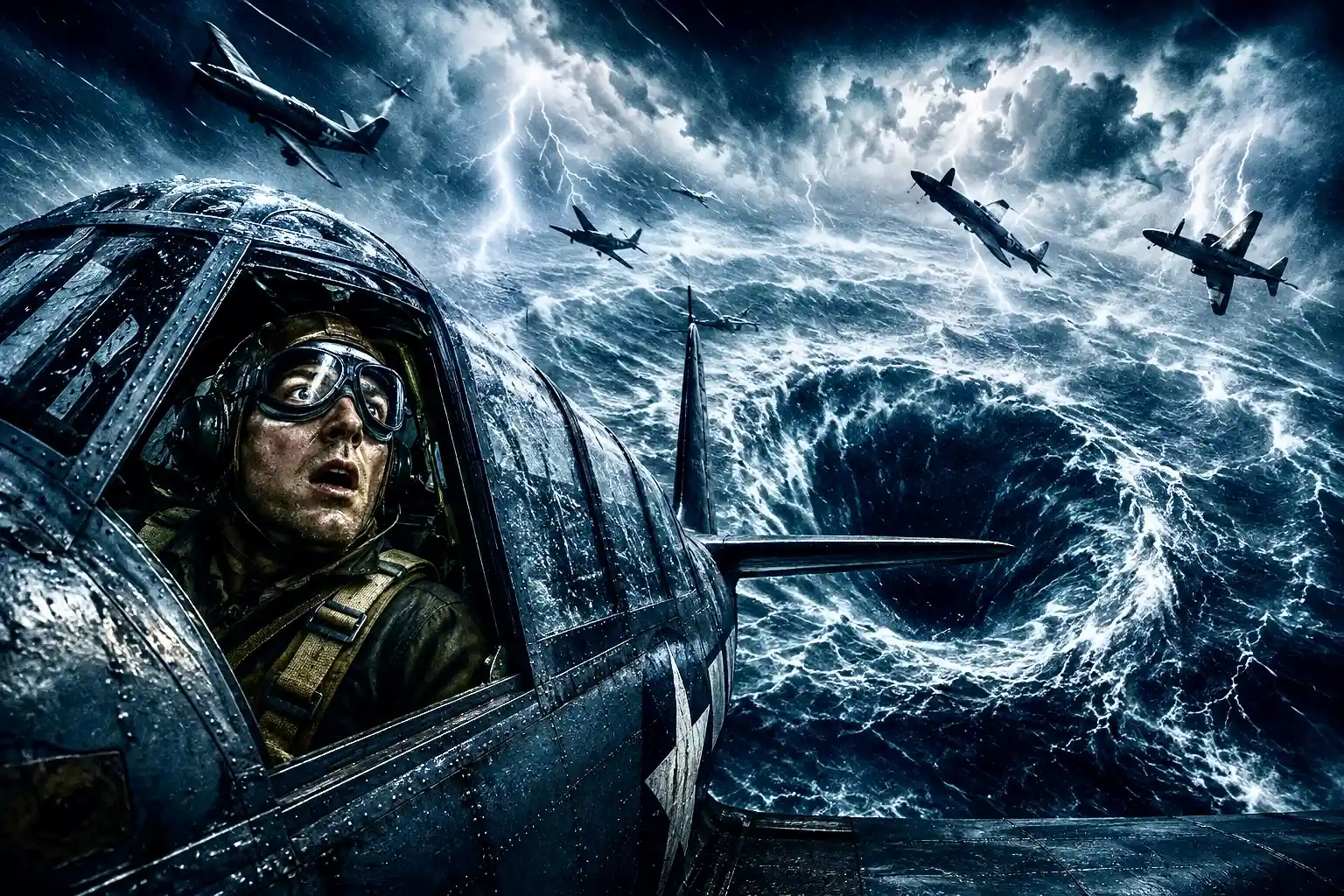
A storm carries the nuclear-powered USS Nimitz back to December 6, 1941. The carrier’s officers quickly realize that they have arrived one day before the attack on Pearl Harbor—and possess enough modern firepower to change history.
The production was granted extraordinary access to the real Nimitz. Navy personnel appeared on camera, authentic flight operations became part of the film, and F-14 Tomcats shared the screen with aircraft representing Japanese Zeroes. The result has a physical authenticity that contemporary visual effects would struggle to reproduce.
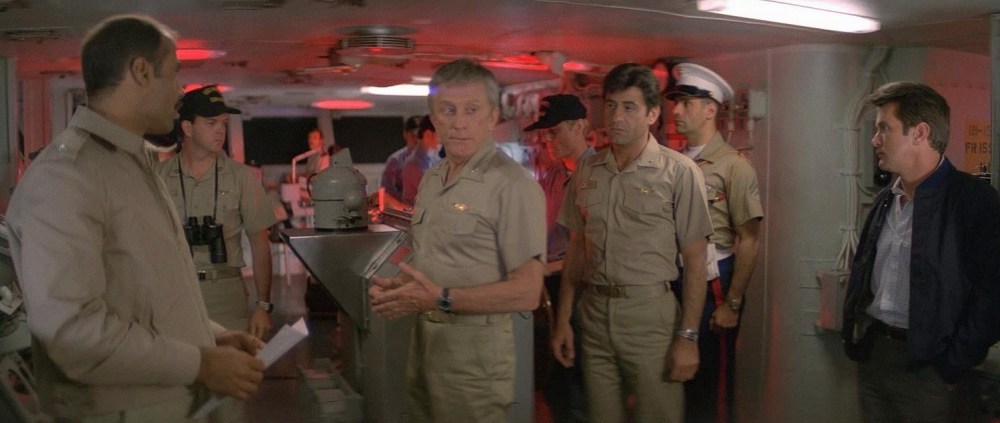
Kirk Douglas plays the captain, with Martin Sheen as a civilian analyst. The central dilemma is more interesting than simple military spectacle: does knowing what will happen create a duty to intervene, or would preventing Pearl Harbor destroy the future from which the ship came?
The movie does not exploit every possibility in its premise, but it leaves viewers carrying the question long after the carrier has returned home.
Justin Benson and Aaron Moorhead’s Synchronic disguises time travel as an urban drug mystery. Anthony Mackie and Jamie Dornan play New Orleans paramedics encountering deaths and injuries that appear to belong to other historical periods. The connection is a designer drug that dislodges users from the present.
The film premiered at the Toronto International Film Festival in 2019, then entered a release landscape disrupted by the pandemic. Its limited theatrical life never gave it much chance to build momentum.
Its most distinctive idea is also its most unsettling: travelling into the past is not equally safe for everyone. When Mackie’s character—a Black man—moves through earlier periods of American history, nostalgia disappears. The past is not an amusement park. It is territory governed by dangers that depend upon who arrives.
After becoming internationally famous as Superman, Christopher Reeve chose an unabashedly romantic fantasy for one of his next major roles.
He plays playwright Richard Collier, who becomes obsessed with a photograph of early-20th-century actress Elise McKenna, played by Jane Seymour. Through intense self-hypnosis, Richard attempts to travel back to 1912 and meet her at the Grand Hotel on Michigan’s Mackinac Island.
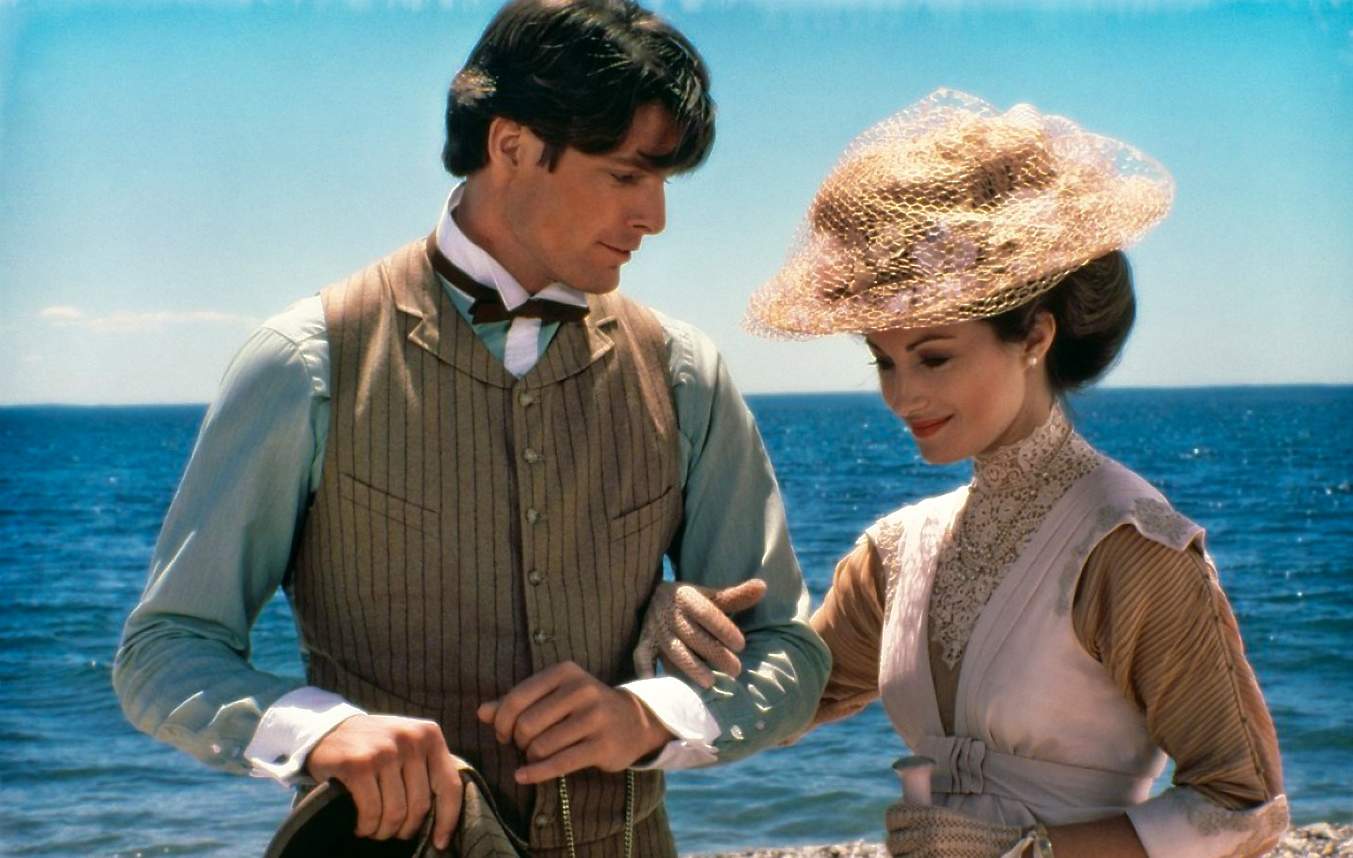
The film received harsh reviews and was badly hurt by the 1980 actors’ strike, which prevented its stars from promoting it. Cable television and home video later transformed it into a cult success. Admirers still gather at the Grand Hotel for an annual celebration more than four decades after filming.
Somewhere in Time survives because it commits completely to its romantic premise. John Barry’s score, the period setting and the chemistry between Reeve and Seymour make time travel feel less like science than longing made physical.
Nicholas Meyer’s directorial debut imagines H.G. Wells as the inventor of a functioning time machine—and Jack the Ripper as the man who steals it to escape into 1979 San Francisco.
Malcolm McDowell plays Wells as an earnest idealist who expects the future to be enlightened. David Warner’s Ripper reaches the opposite conclusion: the violence of the modern world makes him feel entirely at home.
That contrast gives the film its edge. Wells is not merely chasing a killer; he is confronting the collapse of his belief that progress in technology must produce progress in human behaviour. Mary Steenburgen supplies warmth and independence as Amy Robbins, while San Francisco becomes an essential character rather than a generic backdrop.
Meyer would soon direct Star Trek II: The Wrath of Khan. The intelligence, humour and moral clarity that later revived that franchise are already visible here.
Marketed largely as a horror movie about people stalked aboard an abandoned ocean liner, Christopher Smith’s Triangle is far more intricate than its advertising suggested.
Melissa George plays Jess, a single mother who joins friends on a sailing trip. After a storm capsizes their boat, the survivors board a seemingly deserted liner and enter a loop in which events repeat, overlap and gradually reveal a larger pattern.
The loop is not simply a puzzle to be solved. It functions as punishment, denial and tragedy. Smith spent years refining the structure, drawing on recurring-cycle mythology and the influence of films such as La Jetée and The Shining.
George has to play multiple emotional stages of the same woman while preserving the logic of the unfolding loop. The result rewards a second viewing because its earliest details acquire new meaning once the destination is understood.
A comet passes overhead while eight friends gather for dinner. The power fails. A nearby house still has lights. Then the guests begin to realize that the other house may contain another version of the same dinner party.
James Ward Byrkit shot Coherence over five nights in his own home. Rather than giving the cast a conventional screenplay, he worked from a carefully constructed outline and handed individual actors private objectives and information. They improvised their dialogue without knowing what the others had been told.
The method produces conversations that feel unstable in precisely the right way. Ordinary grievances and suspicions become dangerous once the characters understand that neighbouring realities may offer better—or worse—versions of their lives.
Coherence demonstrates how little equipment science fiction actually requires. A dark street, photographs, coloured glow sticks and a group of convincing actors create a multiverse more disturbing than many effects-heavy blockbusters.
The inspiration was a classified advertisement seeking a companion for time travel, warning applicants to bring their own weapons and offering payment only after returning. The ad was a joke written to fill space, but it became an early internet legend.
Derek Connolly’s screenplay turns that curiosity into a story about belief. Aubrey Plaza plays Darius, a magazine intern assigned to investigate Kenneth, the eccentric man behind a new version of the advertisement. Mark Duplass plays him with just enough sincerity to keep both Darius and the audience uncertain about whether he is delusional or extraordinary.
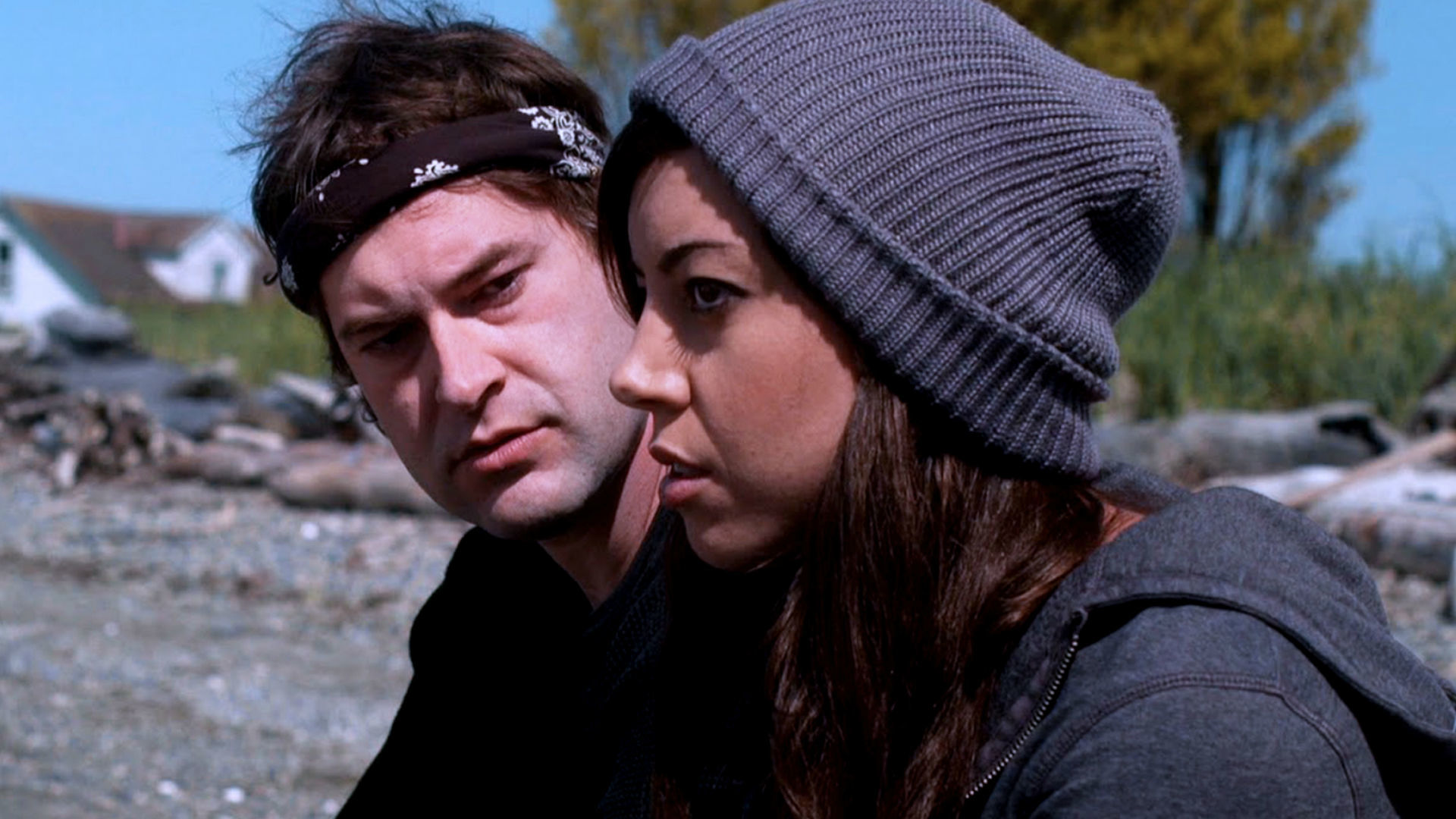
The film won Connolly the Waldo Salt Screenwriting Award at Sundance and provided director Colin Trevorrow with a remarkable calling card before Jurassic World. Yet its lasting value has little to do with the career leap that followed.
It understands that believing in another person can be its own form of time travel: a decision to stop treating the past as the only reliable evidence of what the future can contain.
Nacho Vigalondo’s Spanish thriller begins with an ordinary man looking through binoculars from his garden. Within minutes, curiosity pulls Héctor into the woods, toward a bandaged attacker and eventually into an experimental time machine.
What follows is one of the genre’s most elegant closed loops. Héctor repeatedly tries to correct what has happened, only to discover that his interventions are the events he was attempting to prevent.
Vigalondo understood that a limited budget could become a structural advantage. The screenplay provides the spectacle. The film does not need cities to vanish or armies to materialize; it needs a house, a laboratory, a forest and a protagonist capable of making one increasingly disastrous decision after another.
The ending closes the mechanism neatly but offers no emotional victory. Héctor may preserve the timeline, yet the person who emerges from the loop is morally altered by what preservation required.
Shane Carruth’s Primer remains one of the most formidable achievements in independent science-fiction filmmaking.
Made for a reported $7,000, the film follows two engineers who accidentally create a device capable of sending objects—and eventually people—backward through time. Carruth, a former software engineer, wrote, directed, produced, edited, scored and co-starred in the film.
The characters speak like technically trained colleagues rather than lecturers hired to explain the plot. Carruth refuses to simplify every mechanism for the audience. As duplicate timelines accumulate, friendship gives way to secrecy, control and paranoia.
Primer won both the Grand Jury Prize for dramatic feature and the Alfred P. Sloan Feature Film Prize at Sundance. Its tiny budget became part of its legend, but cost alone does not explain the film’s endurance. Viewers continue drawing diagrams and debating its chronology because the movie behaves like the invention at its centre: compact, difficult, ingenious and increasingly dangerous each time it is opened.
These films do not share one tone or one theory of time. Some are romances. Some are thrillers. One places a nuclear aircraft carrier outside Pearl Harbor; another confines almost everything to a living room.
The common element is a question strong enough to organize an entire story.
What would you say to a parent who died too soon? Would you prevent a historic attack if doing so might erase your own world? Is the past equally welcoming to everyone? How much of yourself would you sacrifice to preserve the life you already know?
Expensive effects can make time travel look convincing. They cannot make it matter. These ten films endure because they understand the difference.