Khon Kaen, Thailand - For over a century, the world’s great dinosaur frontiers seemed well established.

The deserts of Mongolia.
The badlands of Alberta.
Patagonia’s windswept fossil fields.
The American West.
Those were the places associated with giant discoveries — enormous predators, long-necked titans, and skeletons that reshaped humanity’s understanding of prehistoric Earth.
But in May 2026, paleontology received a reminder that the map of ancient life is still incomplete.
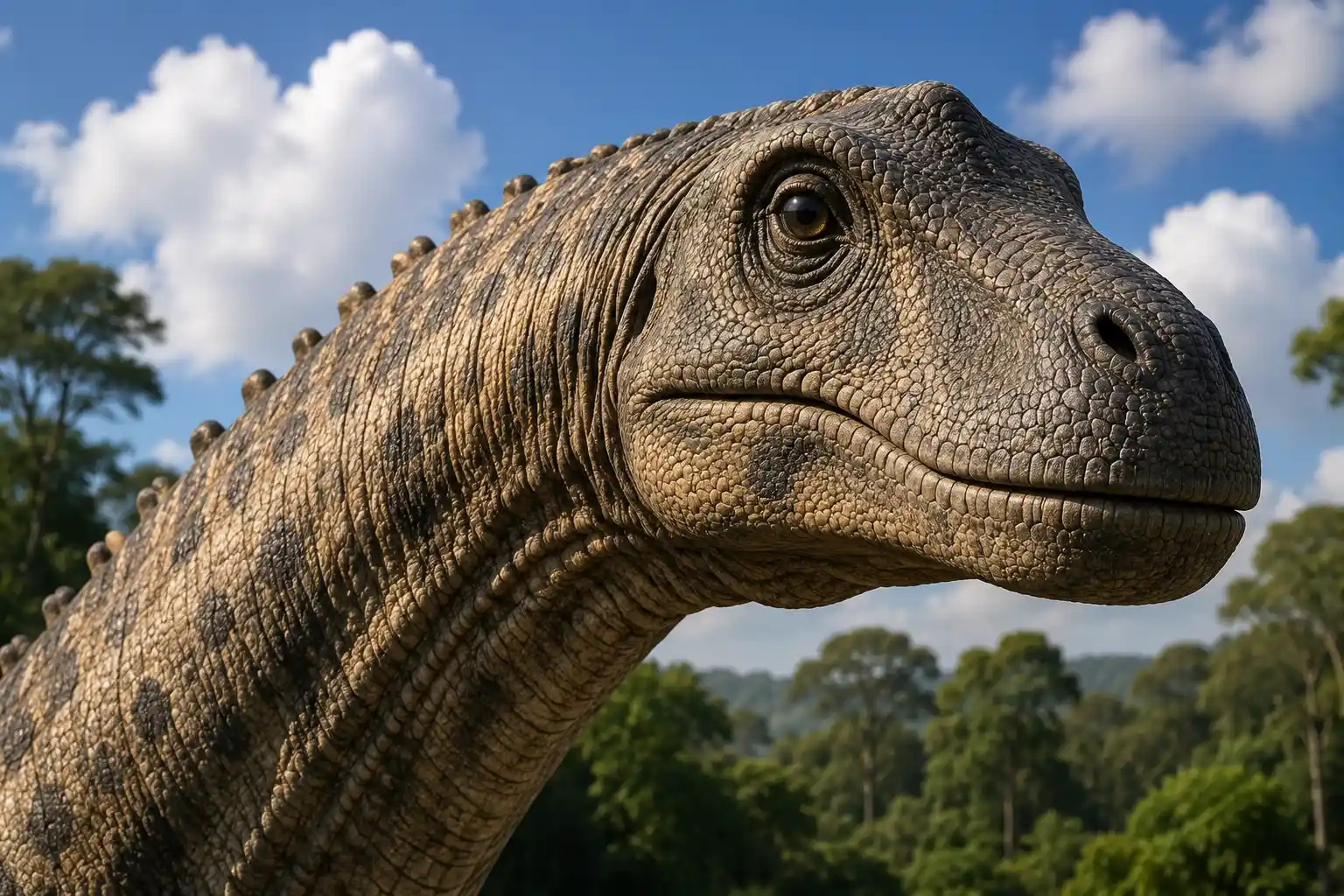
Researchers in Thailand announced the discovery of Nagatitan chaiyaphumensis, a gigantic sauropod dinosaur that lived approximately 113 million years ago during the Early Cretaceous Period. Stretching roughly 27 meters (nearly 90 feet) long and weighing an estimated 25–30 tonnes, the animal is now recognized as the largest dinosaur ever discovered in Southeast Asia.
The find is more than simply another “big dinosaur.”
To paleontologists, it may represent the opening of an entirely new chapter in dinosaur science.
The story began not with satellites or cutting-edge scanners, but with a local resident noticing unusual shapes near a pond in northeastern Thailand.
What initially appeared to be strange rocks turned out to be fossilized dinosaur bones. Excavations eventually uncovered vertebrae, ribs, pelvic material, and enormous limb bones, including a humerus measuring roughly 1.78 meters long.
That upper arm bone alone hinted at something extraordinary.
Sauropods — the long-necked plant-eating dinosaurs that include animals such as Diplodocus and Brachiosaurus — were already the largest land animals in Earth’s history. But this specimen appeared to rival some of the great giants discovered elsewhere on the planet.
The dinosaur was eventually named Nagatitan chaiyaphumensis:
The name feels appropriate.
The creature sounds less like a museum specimen and more like something from ancient mythology itself.
Modern Thailand is tropical, humid, crowded, and heavily developed in many areas.
The Thailand of 113 million years ago was another world entirely.
Scientists believe Nagatitan roamed a warm subtropical environment made up of rivers, forests, semi-arid plains, and fern-covered landscapes populated by crocodile relatives, fish, pterosaurs, and predatory dinosaurs.
Towering conifers likely dominated parts of the environment.
A mature Nagatitan would have moved slowly but confidently through these ecosystems, feeding in enormous quantities simply to sustain its gigantic body.
Its immense size probably served as its greatest defense.
Researchers note that large predators related to carcharodontosaurs may have inhabited the same environment, but a fully grown sauropod of this scale would have been an extremely dangerous target.
The adults likely feared little.
The vulnerable stage would have been the young.
One of the enduring mysteries of dinosaur evolution is how sauropods became so impossibly gigantic.
Even today, their scale strains imagination.
Some species approached or exceeded the length of a blue whale while walking entirely on land.
Researchers believe several evolutionary advantages made this possible:
Their skeletons were engineering marvels.
Unlike mammals, sauropods evolved pneumatic bones — structures filled with air sacs that reduced weight while maintaining strength. This allowed necks to extend to astonishing lengths without becoming impossibly heavy.
In many ways, sauropods solved the problem of gigantism better than any land animals before or since.
Climate may also have helped.
Researchers associated with the Thai discovery noted that the dinosaur lived during a period of elevated global temperatures and high atmospheric carbon dioxide levels, conditions that may have supported massive plant growth and enabled gigantic herbivores to thrive.
The Earth itself may have been unusually favorable to giant life.
One of the most intriguing aspects of the discovery is the phrase some researchers have used to describe it:
“The last titan.”
The reason is geological.
Scientists believe that after the era of Nagatitan, much of the region later transformed into shallow seas. If that interpretation is correct, giant sauropods may have disappeared regionally as environments changed.
In other words, this dinosaur may represent the closing chapter of giant land dinosaurs in Southeast Asia.
That gives the discovery an unusual emotional dimension.
It is not merely the uncovering of a giant animal.
It may be the uncovering of the final giant of an entire vanished ecosystem.
For decades, Southeast Asia sat somewhat outside the mainstream dinosaur conversation.
Compared to Patagonia, Alberta, or Mongolia, the region remained relatively underexplored paleontologically.
But discoveries over the last several years are beginning to change that perception dramatically.
Nagatitan suggests that Southeast Asia may have supported dinosaur ecosystems every bit as impressive and diverse as better-known fossil regions elsewhere in the world.
That possibility excites scientists enormously.
Because it implies:
There is a frontier feeling to all of this.
Even now, in the age of satellites and AI, giant prehistoric worlds are still emerging from the ground.
One of the biggest ongoing developments in paleontology has been the continued confirmation that many dinosaurs were feathered.
Once considered controversial, feathered dinosaurs are now central to understanding the evolutionary connection between dinosaurs and modern birds. Recent discoveries and analysis have reinforced the idea that feathers were widespread among theropod dinosaurs and served purposes beyond flight, including insulation, signaling, and display.
The public image of dinosaurs has changed dramatically because of this.
The old reptilian portrayals of the 20th century increasingly look outdated.
Another major shift in understanding came from discoveries showing dinosaurs living year-round in Arctic environments.
Scientists once assumed dinosaurs primarily thrived in warm climates. But evidence from Alaska and polar regions suggests some species endured long periods of darkness and harsh seasonal conditions.
This changed perceptions of dinosaurs from slow-moving swamp reptiles into highly adaptable animals capable of surviving in a wide range of environments.
South America continues producing enormous titanosaur discoveries and reinterpretations.
Animals such as Patagotitan and Dreadnoughtus have forced scientists to reconsider the upper physical limits of terrestrial life.
Some of these creatures likely exceeded 60 tonnes.
The scale becomes difficult to visualize.
These were not merely large animals.
They were biological megastructures.
Few dinosaurs have generated more discussion recently than the spinosaurs.
New discoveries from North Africa have strengthened the argument that some spinosaurs were semi-aquatic hunters adapted to river systems rather than traditional land-based predators.
Earlier depictions of giant upright hunters stalking across deserts have evolved into more complex portrayals involving rivers, fish-hunting behavior, and unusual body adaptations.
In early 2026, researchers announced another major Sahara discovery — a blade-crested spinosaur nicknamed the “hell heron,” which may further reshape understanding of spinosaur evolution.
What becomes clear from discoveries like Nagatitan is that paleontology is not slowing down.
In many ways, it feels as though the science is accelerating.
Each year, dozens of new dinosaur species are identified.
Technologies such as CT scanning, 3D reconstruction, biomechanical modeling, and improved geological analysis are allowing scientists to reinterpret fossils discovered decades ago while also uncovering entirely new species.
But the most fascinating part may be this:
Many of the biggest discoveries still begin with something astonishingly simple.
A farmer notices unusual rocks.
A cliff collapses after rain.
A bone emerges from a hillside.
Someone looks closer.
And suddenly, an entire lost world reappears.
Dinosaurs continue to captivate people because they combine several things at once:
They remind humanity that Earth existed for immense stretches of time before civilization.
Worlds rose and vanished long before humans arrived.
Entire ecosystems ruled the planet for millions upon millions of years — and then disappeared.
The discovery of Nagatitan chaiyaphumensis is another reminder that those vanished worlds are still beneath our feet, waiting to be uncovered.
And perhaps most remarkably of all:
We are still finding giants.