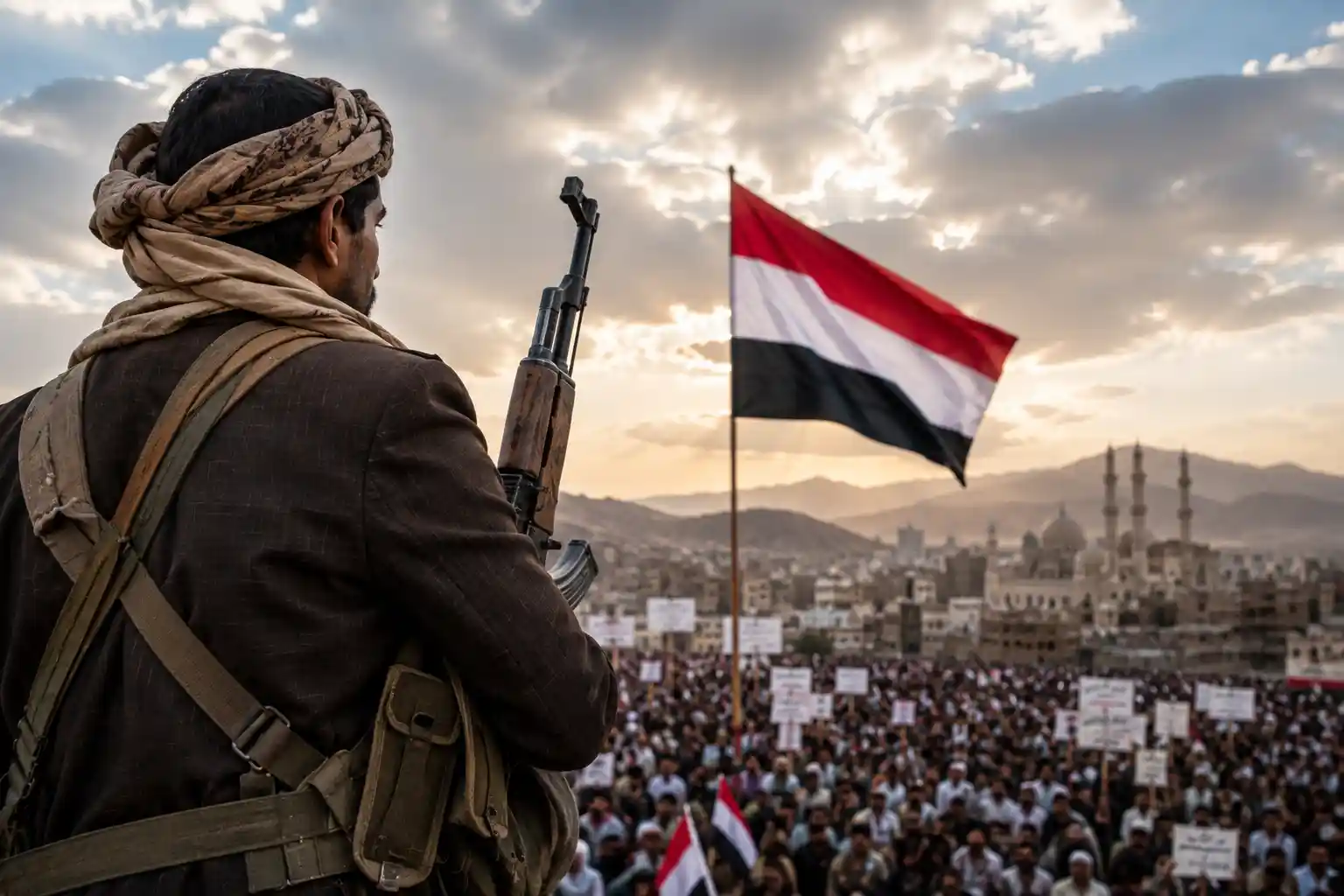
Sanaa, Yemen - For many people outside the Middle East, the Houthis seemed to appear suddenly in international headlines. In recent years, they have been linked to missile attacks, drone strikes, disruptions to Red Sea shipping, and conflicts involving Israel, Saudi Arabia, the United States, and Iran. In reality, however, the movement has existed for decades and emerged from a local conflict long before becoming a global security concern.

Understanding who the Houthis are requires looking beyond today's headlines to the history of Yemen itself.
The Houthis, officially known as Ansar Allah ("Supporters of God"), are a political and armed movement based primarily in northern Yemen. The group draws much of its support from the country's Zaydi Muslim population, a branch of Shi'a Islam that has historically been concentrated in Yemen's mountainous northwest.
For centuries, Zaydi leaders ruled large portions of Yemen. That changed following the 1962 revolution, which replaced the traditional imamate with a republic. Although Zaydis remained an important part of Yemen's population, many supporters of the Houthis later argued that their communities became increasingly marginalized politically and economically.
The movement takes its common name from its founding family. Hussein Badreddin al-Houthi, a religious and political leader, established the organization during the 1990s.
The Houthis initially emerged as a religious revival movement promoting Zaydi identity and opposing what they viewed as growing political corruption and outside influence within Yemen.
Supporters argued that Yemen's central government neglected northern regions, failed to provide adequate public services, and allowed foreign powers—particularly Saudi Arabia and the United States—to exert too much influence over the country's affairs.
The Yemeni government viewed the movement differently, accusing it of challenging state authority and threatening national stability.
In 2004, armed conflict broke out between government forces and the Houthis. Hussein al-Houthi was killed that same year, but rather than ending the movement, his death became a rallying point. Fighting continued through several rounds over the following years.
Everything changed during the political upheaval known as the Arab Spring.
As Yemen's government weakened in 2011, the Houthis expanded beyond their traditional strongholds. By 2014, they had captured the capital city of Sanaa with relatively limited resistance.
The internationally recognized government eventually relocated to southern Yemen, while the Houthis established control over much of the country's most populated areas.
Today, they govern territory containing a large share of Yemen's population, operating ministries, collecting taxes, maintaining security forces, and administering public institutions in areas under their control.

The Houthis' rapid expansion alarmed neighboring Saudi Arabia.
Saudi leaders feared that an armed movement aligned with Iran was establishing itself directly on the kingdom's southern border. In 2015, Saudi Arabia led a coalition of regional countries in a military intervention aimed at restoring Yemen's internationally recognized government.
The conflict quickly became one of the world's most destructive humanitarian crises.
Thousands of civilians have been killed, millions displaced, and widespread shortages of food, fuel, medicine, and clean water have affected large portions of the country. Although large-scale fighting has declined since the 2022 UN-brokered truce, Yemen remains politically divided and the conflict has not been fully resolved.
One of the most debated aspects of the conflict concerns Iran's relationship with the Houthis.
There is broad agreement that Iran has provided the group with political backing, military technology, training, and weapons over time. Iranian officials have publicly expressed support for the movement.
At the same time, many analysts caution against describing the Houthis simply as an Iranian proxy. Unlike some other armed groups in the region, the Houthis originated from local Yemeni grievances years before receiving substantial outside support.
Most experts describe the relationship as a partnership built around shared strategic interests rather than complete Iranian control.
Following the outbreak of the Israel-Hamas war in late 2023, the Houthis began launching missiles and drones toward Israel while also targeting commercial vessels transiting the Red Sea.
The movement stated that these operations were intended to pressure Israel and demonstrate solidarity with Palestinians in Gaza.
The United States, United Kingdom, Israel, and several allies responded with military strikes against Houthi military infrastructure, arguing that freedom of navigation through one of the world's busiest shipping lanes must be protected.
Those attacks transformed what had largely been a Yemeni civil war into an issue affecting global trade and international security.
Views of the Houthis vary significantly depending on perspective.
Supporters see the movement as a resistance organization defending Yemen's sovereignty against foreign intervention and standing up to more powerful regional rivals.
Critics argue that the Houthis have become an authoritarian armed group responsible for suppressing political opposition, restricting freedoms, recruiting child soldiers, detaining critics, and launching attacks that endanger civilians and international shipping.
Human rights organizations have documented abuses by multiple parties to the Yemeni conflict, including the Houthis, the internationally recognized government, and the Saudi-led coalition.
The Houthis now occupy a unique position in Middle Eastern politics.
They remain one of the strongest non-state military forces in the region, controlling much of northern Yemen while influencing international shipping routes and regional security calculations.
Their actions can affect energy markets, global supply chains, insurance costs, and military planning far beyond Yemen's borders.
At the same time, their continued influence reflects unresolved political, economic, and sectarian divisions within Yemen itself.
The Houthis did not emerge overnight, nor can they be understood solely through the lens of today's international conflicts.
Their rise began with local grievances over governance, identity, and political representation. Over two decades, those domestic disputes became intertwined with the broader rivalry between Saudi Arabia and Iran and, more recently, with conflicts involving Israel and Western powers.
Whether viewed primarily as a resistance movement, a rebel organization, a governing authority, or a regional military force, the Houthis have become one of the most influential actors in the modern Middle East. Understanding their origins helps explain why events in Yemen continue to shape global politics far beyond the Arabian Peninsula.