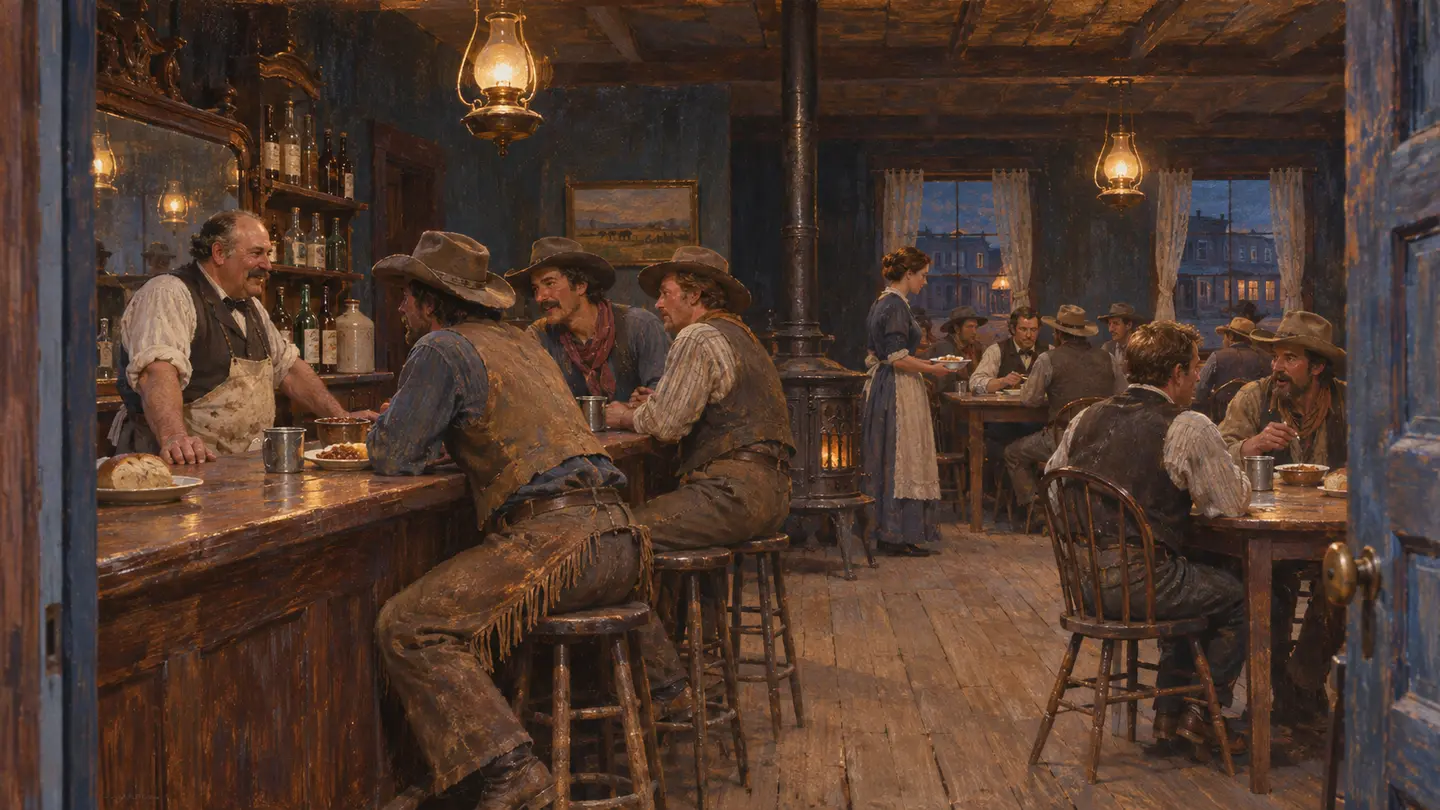
Dodge City, Kansas — Step off Front Street on a cattle-season evening in the early 1880s and imagine what might draw you through a saloon door. After days on the trail, a drink would be welcome. So would a chair, a game of billiards and the sound of somebody playing music indoors.
At Dodge City’s Long Branch, there was an orchestra corner in the front barroom. That detail, recorded in the city’s history of Front Street, tells us something the westerns tend to hurry past. An evening in a saloon could have a programme. The proprietor had reasons to keep customers in the room after their first drink.
From a tent to a street full of saloons
Ten years earlier, there was barely a street. In 1872, George Hoover and John McDonald opened a tent saloon five miles west of Fort Dodge, beyond the military reservation where the commanding officer opposed whiskey sales. Dodge City’s local history places their tent just south of the railroad survey stakes. The railway reached town that September.
Between 1878 and 1885, eleven saloons occupied a three-block stretch of Front Street. Their neighbours included a butcher, a post office, a doctor and a dry goods store that also stocked coffins. Across from the depot, the Dodge House offered a restaurant, bar, billiard hall and 38 rooms. You could step off a train and find a meal, a game and a bed without going far.
What did a nickel buy?
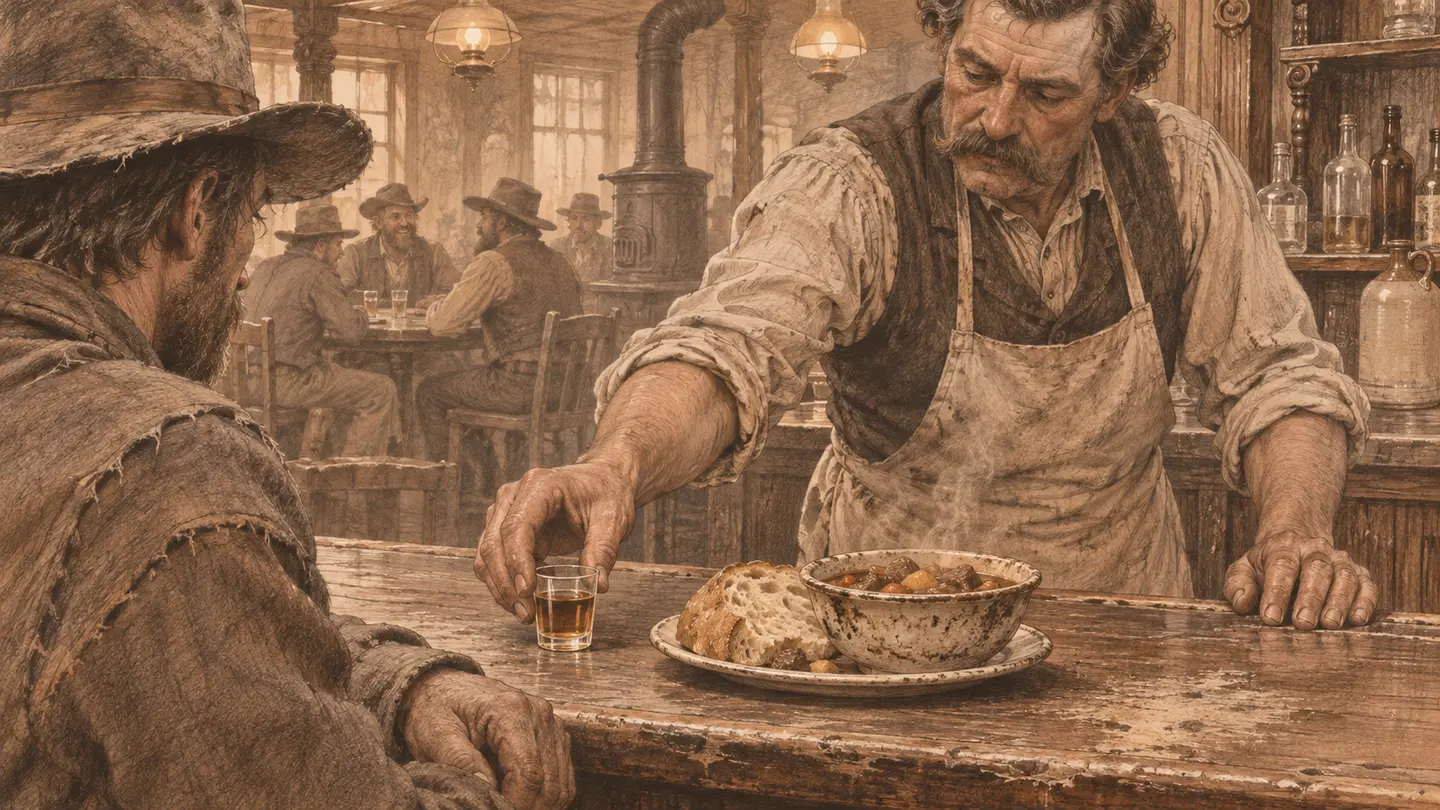
There was no standard frontier drinks menu. One period clue comes from an 1875 song preserved by the Library of Congress: its narrator boasts of a five-cent schooner of lager and a free lunch with Swiss cheese. That is a lyric, not a Dodge City price list. But the pitch is familiar: get somebody in for a cheap beer, give them a reason to stay, and hope they buy another.
The Long Branch offered billiards and live music. The Dodge House could sell you dinner and a room. A tent on the edge of a military reservation could get by selling whiskey. All three belonged to the same town’s story, but walking into one would tell you very little about what to expect at the next.
The singers who got arrested
Women were part of the saloon economy, too. A letter preserved by the Kansas Historical Society describes Long Branch proprietor Luke Short hiring women to sing, and their subsequent arrest in 1883. The letter was written by twelve citizens protesting Short’s removal from town, so it gives us their side of the dispute. It also records gunfire between Short and a special policeman and the arrest of both men.
The affair became known as the Dodge City War. The archive describes the wider conflict as bloodless, despite the exchange of shots described in the letter. What started with arrests at a saloon became a fight between rival business and political groups over who could work in Dodge and who could stay.
When the sign changed
Kansas adopted prohibition in 1880, with narrow exceptions. The city’s historical guide says Dodge saloons carried on openly until the state attorney general moved against them in 1885. Some establishments became drugstores, where liquor could be sold for medicinal purposes. Others changed the sign to say “restaurant.” The local paper noticed the sudden boom in the eating business.
That may be the most revealing scene of all: a proprietor out on Front Street, painting over a word. The saloon was a business built around customers with money in their pockets and time to spend. When the law changed, the owner still had a room to fill.
For a look at how drinking customs are changing today, read What If Drinking Stopped Being the Default?
This walk-through shows the modern Boot Hill Museum, where Dodge City’s Front Street has been recreated.