Miami, FL, USA - There are few places on Earth whose very name can still make people pause.
Say "Mount Everest," and people think of climbing. Mention the Sahara, and they picture endless dunes. But say the words "The Bermuda Triangle," and something different happens. Even today, decades after its greatest popularity, many people instinctively picture a patch of ocean where ships vanish without explanation, aircraft disappear from radar, compasses spin wildly, and strange forces lurk beneath the waves.
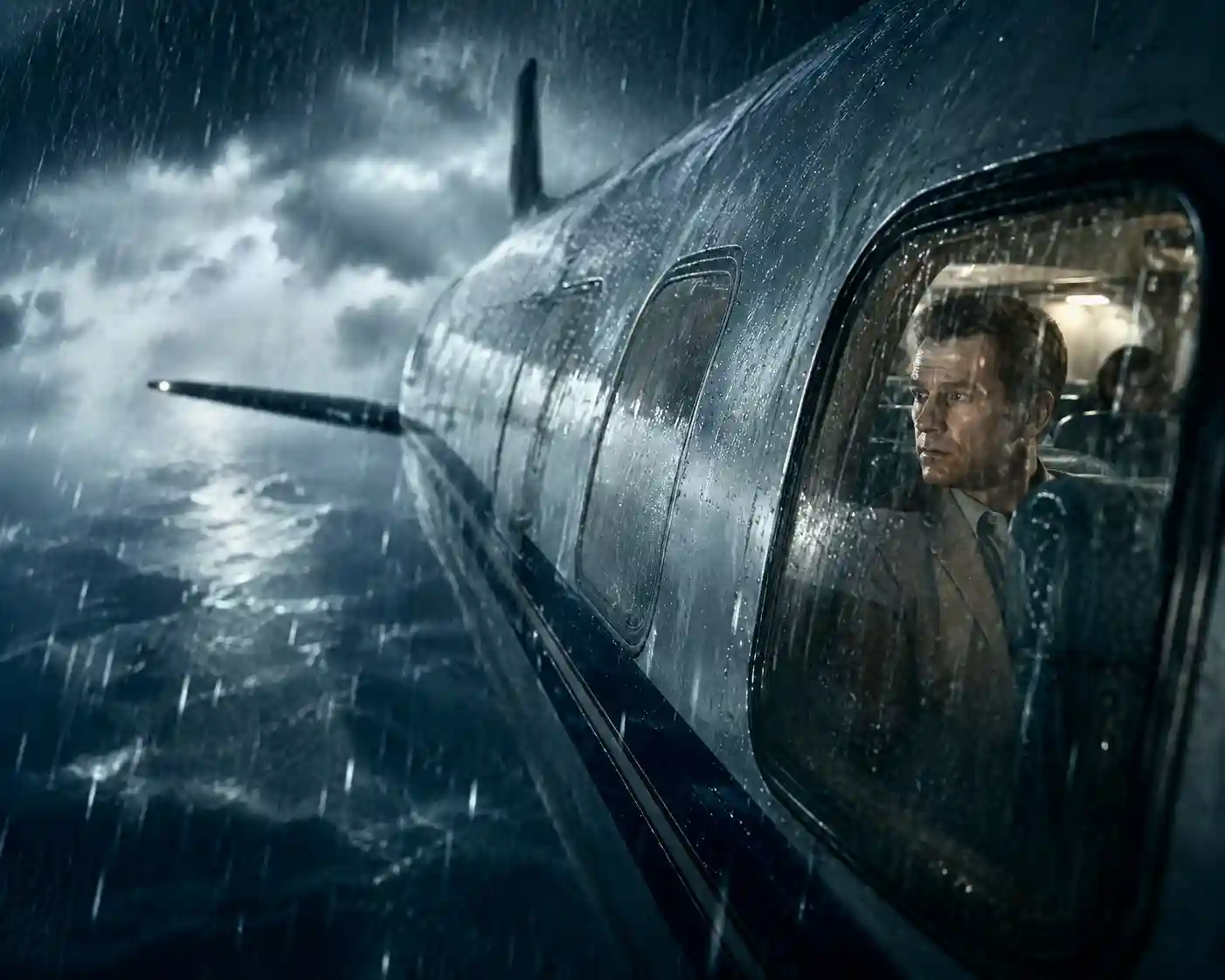
For generations, airline passengers crossing the western Atlantic admitted to glancing a little more often out the window after hearing they were flying over the Bermuda Triangle. Sailors spoke of the region with respect. Hollywood turned it into a place of supernatural terror. A board game even featured a moving storm cloud that swallowed ships and aircraft as it drifted around the playing surface.
But what exactly is the Bermuda Triangle?
And why has it remained one of the greatest mysteries of the modern age?
Perhaps the first surprise is that the Bermuda Triangle isn't officially recognized by any government or international mapping authority.
There are no universally accepted boundaries.
Most people describe it as the roughly triangular area bounded by southern Florida, Bermuda, and Puerto Rico. Depending on who is drawing the map, however, the Triangle can vary enormously in size.
Despite its fame, the U.S. Board on Geographic Names has never recognized it as an official geographic region, and neither the U.S. Navy nor the U.S. Coast Guard treats it as a special navigational zone. Insurance giant Lloyd's of London also does not charge higher premiums simply because a vessel passes through the area.
Yet none of that has diminished its legendary status.
The Triangle's reputation grew from a collection of real disappearances, unusual incidents and dramatic retellings spanning centuries.
Christopher Columbus recorded unusual compass behaviour and strange lights while sailing across the Atlantic in 1492. Modern science provides plausible explanations for those observations, but at the time they helped plant the seeds of mystery.
Then came the legends.
One of the most famous tells of the cargo ship Ellen Austin, which supposedly encountered an abandoned vessel drifting through the Sargasso Sea. According to the tale, crews sent aboard the mysterious ship disappeared, and eventually the vessel itself vanished forever.
It's an unforgettable story.
The problem is that historians have never found convincing contemporary evidence that the events unfolded as later writers described. Like many Bermuda Triangle stories, the tale appears to have grown more dramatic with each retelling.
Some mysteries, however, are undeniably real.
In March 1918, the massive U.S. Navy collier USS Cyclops left Barbados carrying more than 300 men and a cargo of manganese ore.
She never arrived.
No distress call.
No confirmed wreckage.
No survivors.
More than a century later, the disappearance remains one of the largest non-combat losses in U.S. naval history.
Historians have proposed structural failure, shifting cargo, severe weather, or a combination of all three. Yet without locating the wreck, nobody can say with certainty what happened.
That uncertainty helped transform the Bermuda Triangle from an interesting curiosity into a genuine maritime mystery.
If the Cyclops gave the legend credibility, Flight 19 gave it immortality.
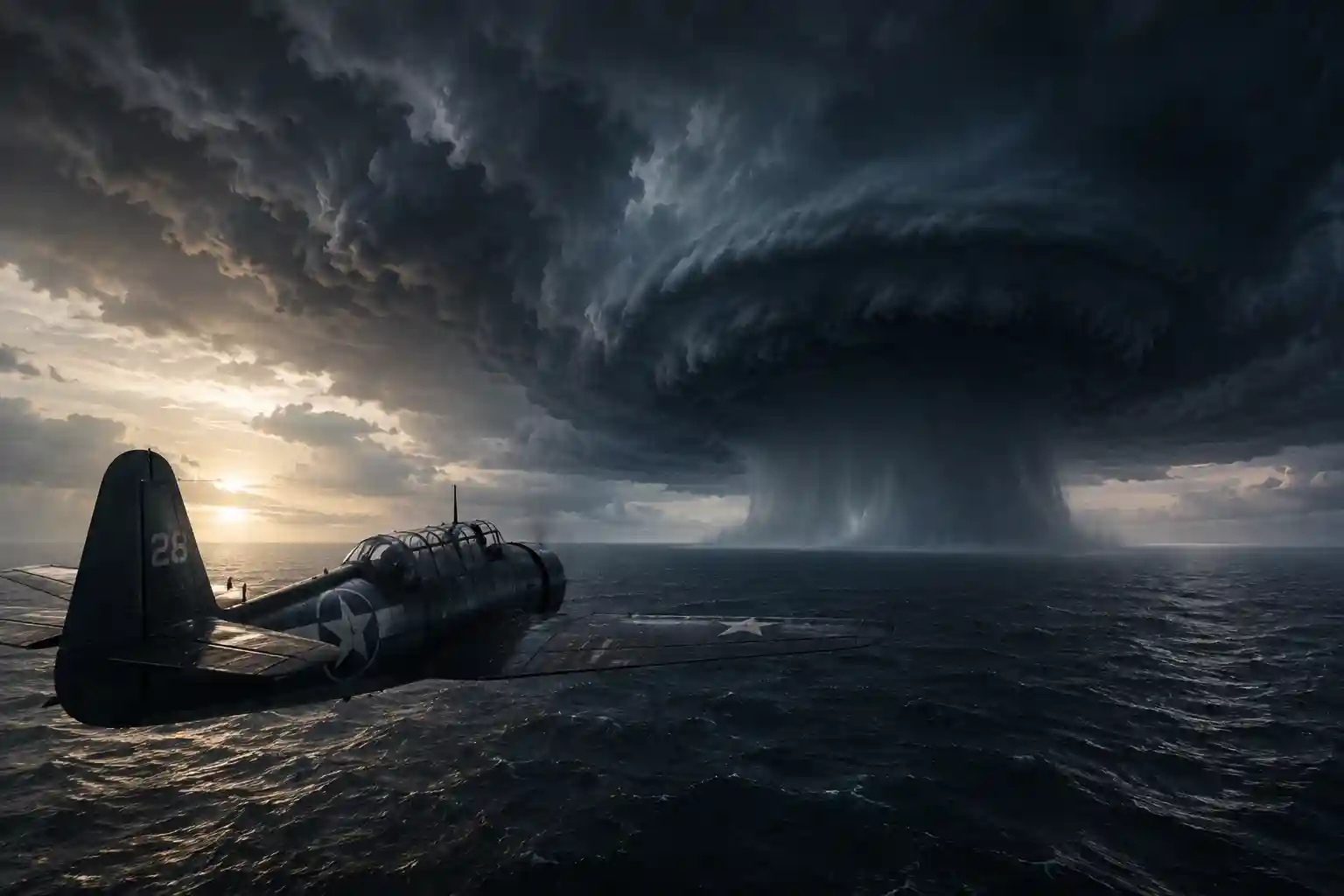
On December 5, 1945, five U.S. Navy TBM Avenger bombers departed Florida on a routine training mission.
Something went wrong.
Radio transmissions revealed growing confusion.
The flight leader reported compass problems and uncertainty about his location. As the afternoon wore on, the weather deteriorated, fuel dwindled, and the aircraft became increasingly disoriented.
Eventually the transmissions stopped.
All five aircraft disappeared.
A rescue plane sent to search for them also vanished later that evening.
No confirmed wreckage from Flight 19 has ever been recovered.
The official investigations pointed toward navigational confusion, worsening weather and human error rather than supernatural causes, but the mystery proved irresistible.
Ironically, the Bermuda Triangle itself did not become famous until the 1960s.
American writer Vincent Gaddis popularized the name in a magazine article before bestselling author Charles Berlitz took the concept worldwide in his 1974 book The Bermuda Triangle.
The timing could hardly have been better.
The world was fascinated by UFOs.
Ancient civilizations.
Atlantis.
Psychic phenomena.
Space exploration.
Cold War secrecy.
Against that backdrop, a mysterious patch of ocean where ships and aircraft supposedly vanished seemed entirely believable.
The Bermuda Triangle quickly became a cultural phenomenon.
Television documentaries explored it.
Hollywood embraced it.
Novelists used it as the gateway to other dimensions.
Children played board games featuring drifting storms that swallowed ships whole.
The Triangle had become far more than geography.
It had become mythology.
Almost every imaginable explanation has been proposed.
Alien abductions.
The lost city of Atlantis.
Time warps.
Magnetic anomalies.
Underwater crystal energy.
Inter-dimensional portals.
Methane gas eruptions.
Giant rogue waves.
Each theory attracted believers.
Most lacked convincing evidence.
Some, such as methane gas releases and rogue waves, describe real natural phenomena that can occur under certain conditions. Others remain firmly in the realm of speculation.
Modern oceanographers and meteorologists paint a less supernatural—but still fascinating—picture.
The region experiences frequent tropical storms and hurricanes.
The Gulf Stream is one of the world's most powerful ocean currents and can rapidly disperse floating debris.
Shallow reefs, rapidly changing weather, and intense maritime and air traffic combine to create an environment where accidents can and do occur.
When wreckage sinks into deep water or is scattered by powerful currents, recovering evidence becomes extraordinarily difficult.
Recent scientific work has continued to focus on understanding Bermuda's geology rather than proving any mysterious force. Researchers recently identified an unusual low-density rock structure beneath Bermuda that helps explain why the island sits higher than the surrounding Atlantic seafloor, solving a long-standing geological puzzle—but not the disappearances themselves.
Meanwhile, recent reviews continue to conclude that the Bermuda Triangle's reputation owes far more to weather, navigation, ocean currents and storytelling than to any unknown physical phenomenon.
Perhaps the Bermuda Triangle's greatest mystery isn't geological.
It's psychological.
Imagine boarding a flight from Miami to Bermuda in 1978.
The captain announces:
"We'll soon be crossing the Bermuda Triangle."
Nothing changes outside.
The engines sound exactly the same.
The weather is ordinary.
Yet many passengers instinctively glance toward the window.
Every bump feels slightly more significant.
Every cloud seems a little darker.
The name itself changes the experience.
That's the extraordinary power of a story.
Whether one believes in supernatural explanations or not, there's no denying the Bermuda Triangle occupies a unique place in modern culture.
Real tragedies occurred.
Real ships disappeared.
Real aircraft were lost.
Some mysteries remain unresolved.
But perhaps the Bermuda Triangle's greatest achievement wasn't swallowing ships.
It was capturing the imagination of millions of people around the world.
Few places have ever become so famous despite lacking official borders.
Few legends have remained so enduring despite decades of scientific investigation.
More than half a century after the phrase entered popular culture, the Bermuda Triangle still has the remarkable ability to make people pause, glance toward the horizon, and wonder if somewhere between Florida, Bermuda and Puerto Rico, there might still be one last secret waiting beneath the waves.