Kabul, Afghanistan — A fortress is built to keep people out. At Bala Hissar, the ambition now is to invite them in.
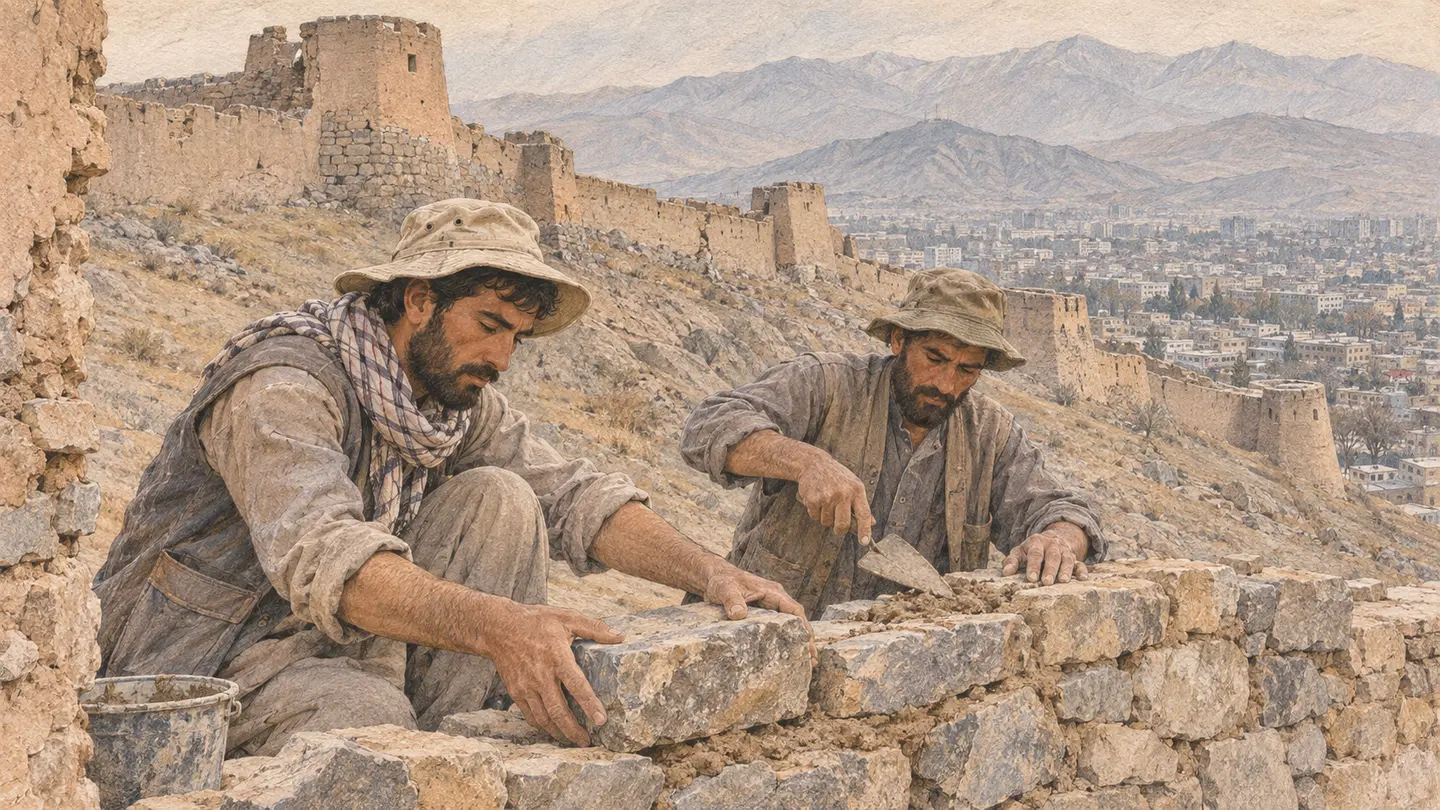
Above Kabul’s old city, a conservation project is working towards a public archaeological park: a place where residents could walk among the remains of the capital’s past. Before that can happen, walls need securing, discoveries need recording and the ground itself needs to be understood. Repairing the skyline is only part of the job.
A palace emerges from the earth
New reporting by the Associated Press describes Buddhist remains, coins, Islamic ceramics and a Mughal palace with murals and a star-shaped pool. Archaeologist Babak Rafiei-Alavi told AP: “We never thought we would find so much.” The work includes training Afghan archaeology students and is expected to continue for decades.
The small objects matter alongside the grand architecture. A coin or a fragment of pottery can help researchers work out when a place was occupied and how it was used. The setting matters, too: where an object lies, what surrounds it and which layer contains it. Digging carefully preserves relationships that cannot be put back once the earth has been removed.
Why this hill mattered
Bala Hissar means “High Fort.” Its position explains the name. The French Ministry of Culture’s Afghanistan heritage guide describes a defensive system arranged across terraces on a rocky spur, commanding the crossroads at Kabul. Archaeological observations identified major defensive works dating at least to the second century BCE.
Those dates do not mean every standing wall is ancient. The Aga Khan Development Network’s account says much of the visible fabric belongs to the eighteenth and nineteenth centuries, with surviving Mughal elements. Babur captured the citadel in 1504 and wrote about it in his memoirs. Successive occupants inherited the hill, then changed what stood on it.
That is what makes the excavation compelling. The fortress is a place repeatedly adapted by people with different needs, beliefs and enemies. Understanding it means looking beneath the most recent version.
First, stop it falling down
Emergency conservation rarely begins with a dramatic discovery. It begins with a wall that might not survive another season.
The project record on Archnet describes emergency stabilisation in 2018 and 2019, including work on the northeast tower and adjoining walls at risk of collapse. Fighting in the 1990s, demolition and long neglect had left the surviving structures vulnerable.
Research and repair have to proceed together. An unstable wall threatens the people working beside it; rebuilding without understanding its history risks obscuring the evidence. The project’s stated approach combines archaeological investigation with conservation, preparing finds for preservation and eventual public display.
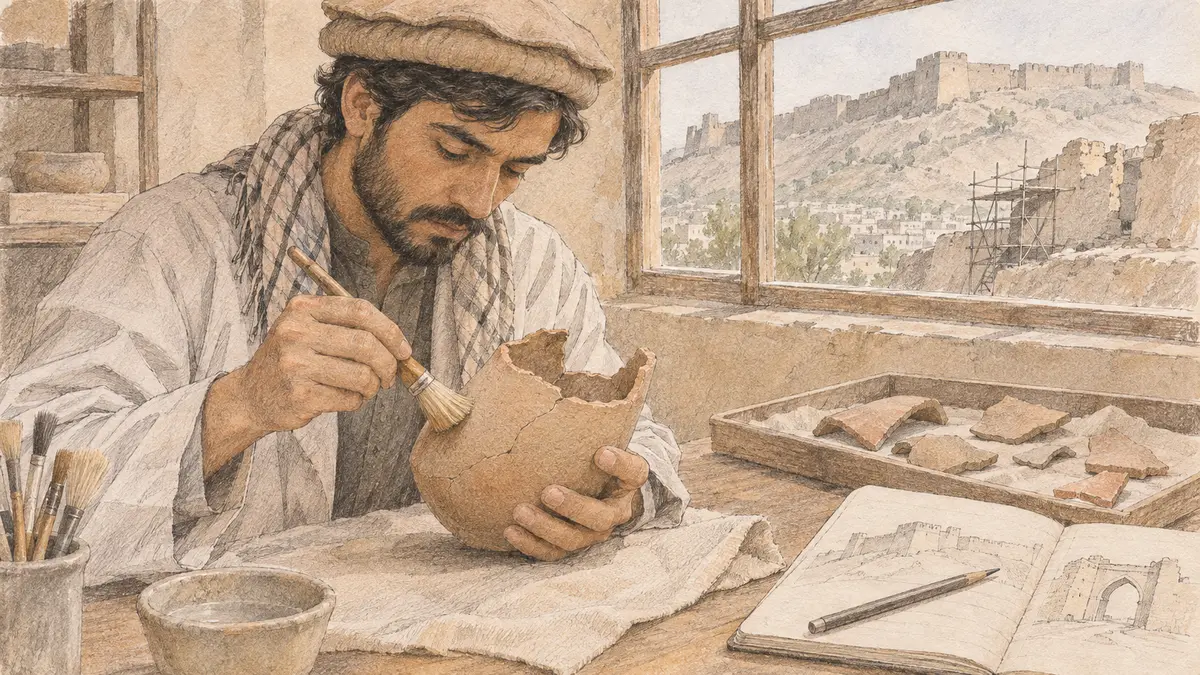
The journey from trench to museum
The discoveries have a quieter second life after excavation. During an April 2026 visit recorded by Afghanistan’s Ministry of Information and Culture, project officials described how finds are assessed in the on-site laboratory, held in the local museum and subsequently transferred to the National Museum. The ministry also reported its support for the conservation work.
That sequence matters. Bringing something out of the ground is the beginning of its care. Cleaning, assessment and a reliable record allow other researchers to examine it later—and give a museum visitor more than an attractive object behind glass.
A different purpose for the walls
ALIPH, which funds the project, describes plans for educational facilities and a heritage trail. The Aga Khan Trust for Culture’s original announcement also envisaged employment and training for Afghan craftspeople and professionals. These are long-term conservation plans, rather than an announcement that a finished park is open.
For Kabul, the possibility is unusually appealing: an important surviving open space where the city could meet its own history. A child looking at a repaired tower might one day learn who built it, who altered it and why the new stone has been added.
The people conserving Bala Hissar are giving that encounter a chance to happen. Stone by stone, and fragment by fragment, a place associated with control could acquire a more generous purpose.
For another discovery revealing the connections between ancient communities, explore the Bronze Age cargo found off Turkey’s coast.
This Canadian Press video takes a closer look at Bala Hissar and the work underway.