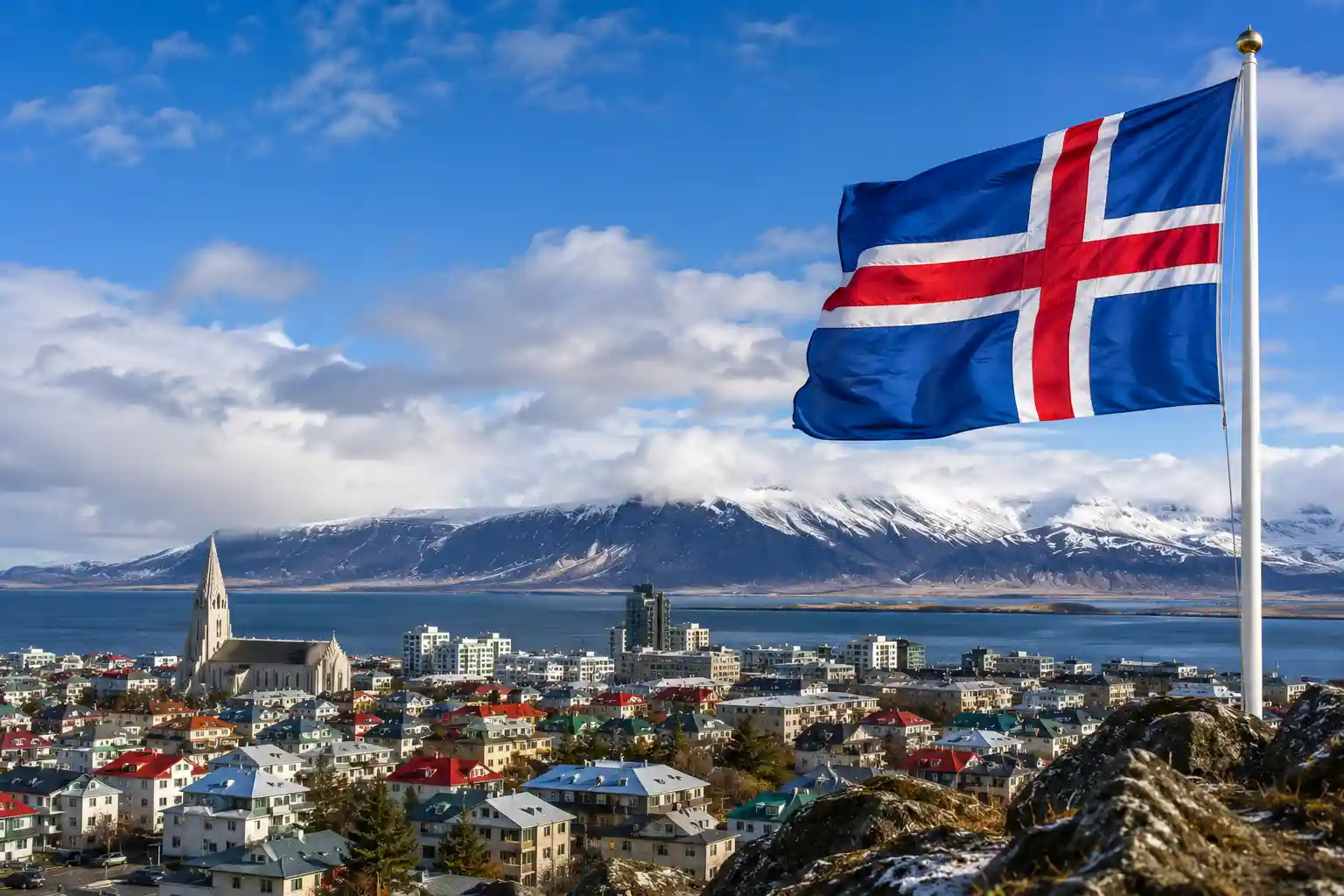
Reykjavík, Iceland - .Voters in the small North Atlantic nation rejected a proposal Saturday to reopen negotiations for membership in the European Union, bringing another chapter in Iceland’s long-running debate over European integration to a close — at least for now.
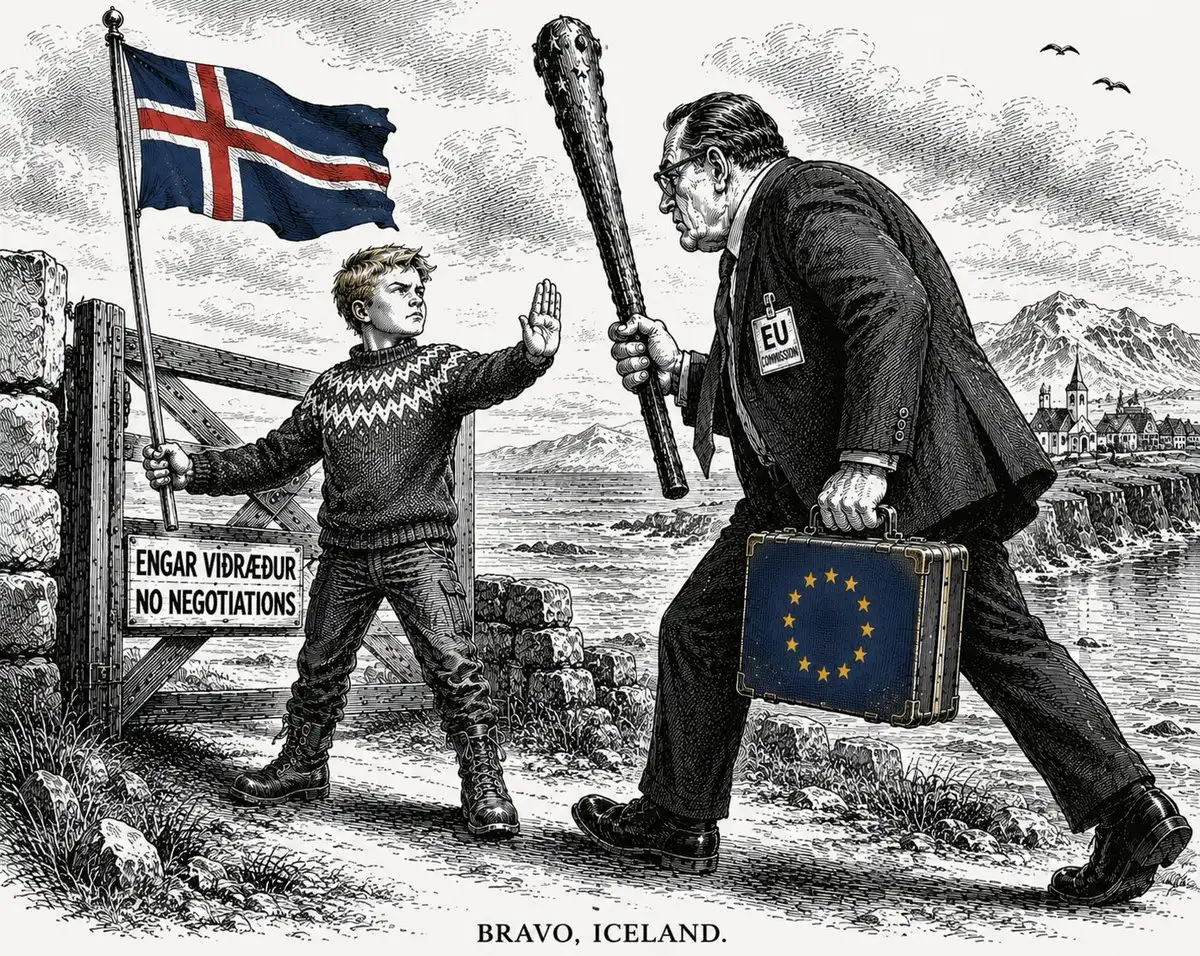
The result was close but clear.
According to Iceland’s National Electoral Commission, 52.8% voted No, while 47.2% voted Yes. More than 225,000 votes were cast from an electorate of roughly 273,000, producing an impressive turnout of 82.6%.
For a country of fewer than 400,000 people, it was an unusually consequential decision.
And Icelanders showed up to make it.
Thanks, But We’re Fine
The referendum was not actually a vote on immediate EU membership.
Voters were asked whether Iceland should resume accession negotiations with the European Union, talks that effectively came to a halt more than a decade ago.
The answer was no.
That does not mean Iceland is turning its back on Europe.
Quite the opposite.
Iceland already belongs to the European Economic Area (EEA), giving the country extensive access to the European single market. It also participates in the Schengen passport-free travel area.
Prime Minister Kristrún Frostadóttir said following the result that Iceland would now concentrate on strengthening its existing European relationships through the EEA.
“One big lesson for me and also for the government is that people are happy with the EEA agreement,” she said following the vote.
That may ultimately be the most important message from the referendum.
Icelanders weren't necessarily rejecting Europe.
They were endorsing Iceland.
🚨 WOW! Iceland citizens are CELEBRATING EN MASSE after their nation has REJECTED joining the European Union
— Eric Daugherty (@EricLDaugh) August 30, 2026
Turnout was over 82%
PROTECT YOUR SOVEREIGNTY! 🇺🇸🇮🇸
Not only should countries be rejecting joining — but nations should start PULLING OUT of the EU 🔥 pic.twitter.com/MXgOmJ9jk1
Fishing, Sovereignty and a Very Icelandic Question
Few issues illustrate Iceland's unusual position better than fishing.
The country's extraordinarily productive surrounding waters aren't simply part of Icelandic culture. They are one of the foundations of its economy.
Fishing contributes roughly 15% of Iceland's economy directly and indirectly and around 40% of export revenues, according to figures cited by Reuters.
For many opponents of EU membership, placing any additional control over those waters under European institutions represented a risk they simply didn't see a compelling reason to take.
The geographic voting patterns were revealing.
The two central Reykjavík constituencies supported reopening negotiations. Rural Iceland opposed it strongly, while Reykjavík's suburbs also voted No.
The farther the vote moved from the capital, the stronger the resistance generally became.
That shouldn't be particularly surprising in a country whose prosperity has always been intimately connected to its land, waters and ability to manage its own resources.
Iceland Isn't Isolated
There is also something important that can get lost in the usual debate over whether a country is “pro-EU” or “anti-EU.”
Iceland isn't isolated.
It is a member of NATO.
It participates in the European single market through the EEA.
It participates in Schengen.
It trades extensively with Europe and maintains close political and cultural relationships with its neighbours.
What Iceland has rejected is the additional step of becoming a full member of the European Union.
That distinction matters.
Iceland effectively looked at the relationship it already has with Europe and decided that the arrangement remains preferable to surrendering additional national decision-making authority.
Even the European Commission responded calmly, saying it respected the decision of Icelandic voters and emphasizing that Iceland remains a close European partner.
Iceland has voted no in a referendum on whether to reopen EU accession talks .
— Alexandra (@Alexandr4Denman) August 30, 2026
52.5% against 47.5% for . They were never EU members they have sat in the European Economic Area which gives them single market access without full membership .
The no camp was driven largely by rural… pic.twitter.com/7gUfHcdjvY
Democracy Did Its Job
Perhaps the most encouraging number from Saturday wasn't 52.8%.
It was 82.6%.
In an era when voter apathy is routinely lamented across Western democracies, more than four out of every five eligible Icelandic voters participated in a referendum concerning their country's long-term political direction.
The campaign was competitive. Reykjavík leaned one way. Much of the rest of the country leaned another.
Then Iceland counted the votes.
And the government accepted the result.
Frostadóttir had personally favoured reopening negotiations, but confirmed afterward that her government would respect the decision and would not proceed with accession talks.
There is something refreshingly uncomplicated about that.
A Small Country Comfortable Being Small
Iceland occupies an unusual place in the world.
It has fewer people than many North American cities, sits alone in the North Atlantic and maintains its own currency, government and distinctive national identity while participating extensively in the Western economic and security system.
It isn't rejecting cooperation.
It is choosing the amount of integration that Icelanders currently believe works for Iceland.
There will undoubtedly be another EU debate someday. The referendum itself was advisory, and future governments remain free to revisit the question.
But for now, Icelanders have spoken.
They want European friendship, European trade and European cooperation.
They just don't believe they need European Union membership to have them.
For one of the world's smallest independent countries, that amounts to a fairly confident vote of faith in itself.