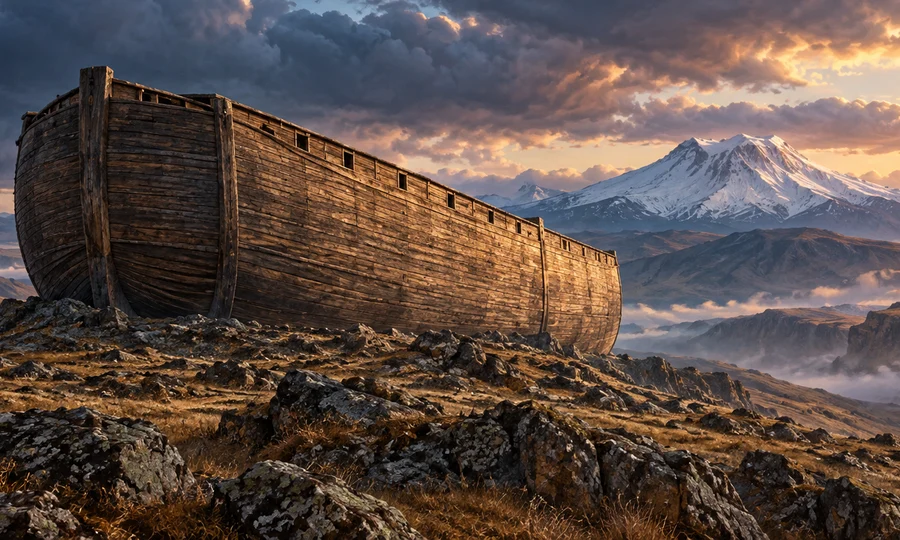
Doğubayazıt, Turkey — The search for Noah’s Ark has moved beneath the surface of a Turkish hillside, where researchers say deep drilling has recovered dark organic material and radar has detected patterns they believe could belong to a buried vessel.
The claims have put the boat-shaped Durupınar formation back in the headlines. An October 1 announcement from Noah’s Ark Scans describes what its radar specialist considers a human-made structure. Fresh television coverage this weekend has added to the attention.
There is still no confirmed discovery of Noah’s Ark. What has changed is the investigation: the team now has physical samples to test, rather than an unusual outline to photograph and argue over.
Durupınar has fascinated visitors since its identification in 1959. From above, the elongated formation looks remarkably like the outline of a ship. Its location in eastern Turkey, near Mount Ararat, has made it a natural focus for people searching for the vessel described in Genesis.
The current project is led by archaeologist Cenker Atila of Sivas Cumhuriyet University, working with Noah’s Ark Scans founder Andrew Jones. According to Turkish reporting on the fieldwork, about 20 scientists from five countries spent nearly 90 days studying the site, using drones, radar, soil sampling and core drilling.
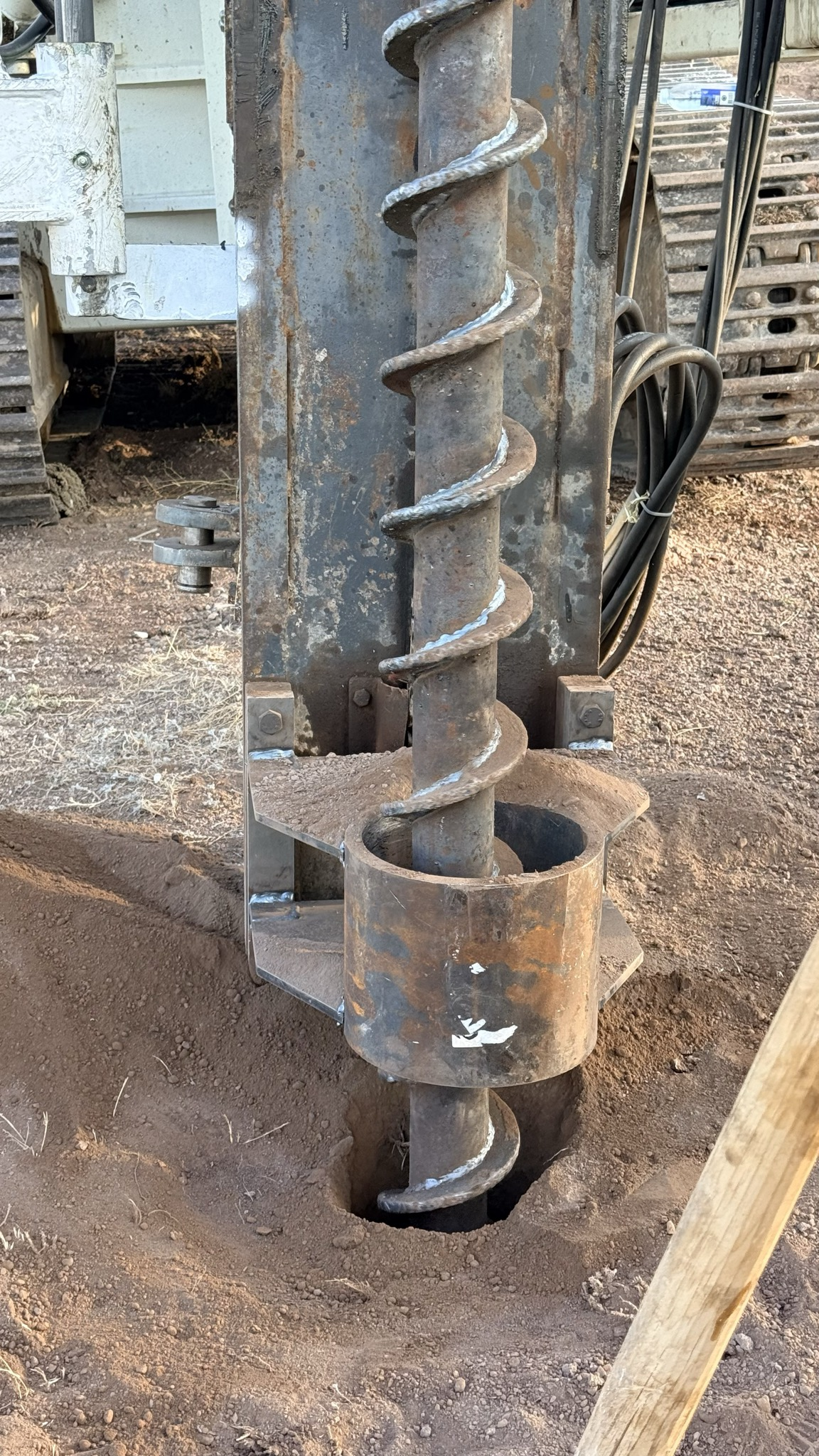
In its September 23 release, the organization said sampling reached depths of up to 18 metres, or nearly 60 feet. Jones reported organic-rich layers and cavities, including one containing mud and water.
The team also said a drill bit broke after encountering an unusually hard layer four to five metres down. It wants laboratory testing to establish whether the material could be petrified or heavily mineralized wood.
That possibility is attracting attention. The material has yet to be identified.
The organization’s October 1 announcement goes further. Radar specialist Khosrow Bakhtar says his processed imagery indicates organized internal features, interpreted by the team as corridors, chambers and hallways.
Those are the expedition’s interpretations of subsurface signals. They are not photographs of excavated rooms, and the announcement says a fuller technical report is still being prepared.
The researchers also plan to examine underground spaces with a small camera-equipped device called GOPHER, named after the “gopher wood” mentioned in Genesis.
Watch: Discovered Media’s camera exploration of the site. The expedition’s video uses “Noah’s Ark” in its title; that identification remains unconfirmed.
The latest claims face a substantial history of contrary evidence.
A 1996 study by geologist Lorence Collins and researcher David Fasold, published in the Journal of Geoscience Education, concluded that Durupınar was a natural geological structure. Their analysis attributed supposed iron fittings to weathered minerals and material described as fossilized wood to rock.
They also explained how folded layers and mineral concentrations could produce features that looked like a vessel’s walls. Fasold’s involvement is particularly significant: he had previously investigated the site as a possible Ark location.
New samples can be tested against that earlier work. But finding dark soil, cavities or a hard layer does not, by itself, identify a ship. Establishing an ancient vessel would be one step; establishing that it was Noah’s Ark would require much more.
Aerial footage circulating on X shows the formation’s striking outline. The accompanying social-media claims should not be treated as scientific confirmation.
Jones has himself cautioned against declaring the mystery solved. In the September 30 Turkish report, he said the work remained unfinished and warned that online accounts were claiming discoveries the researchers had not announced.
The timing also deserves care. This weekend’s coverage points to testing over the winter, while the project’s October 1 release puts anticipated laboratory announcements in late spring 2027. The Turkish report similarly places the final report in April or May.
For now, the story is an investigation reaching a consequential stage. The hillside has supplied a compelling silhouette for more than six decades. The samples may finally give researchers something more decisive to work with.