Virginia City, NV, USA - The wind moves differently in Virginia City.
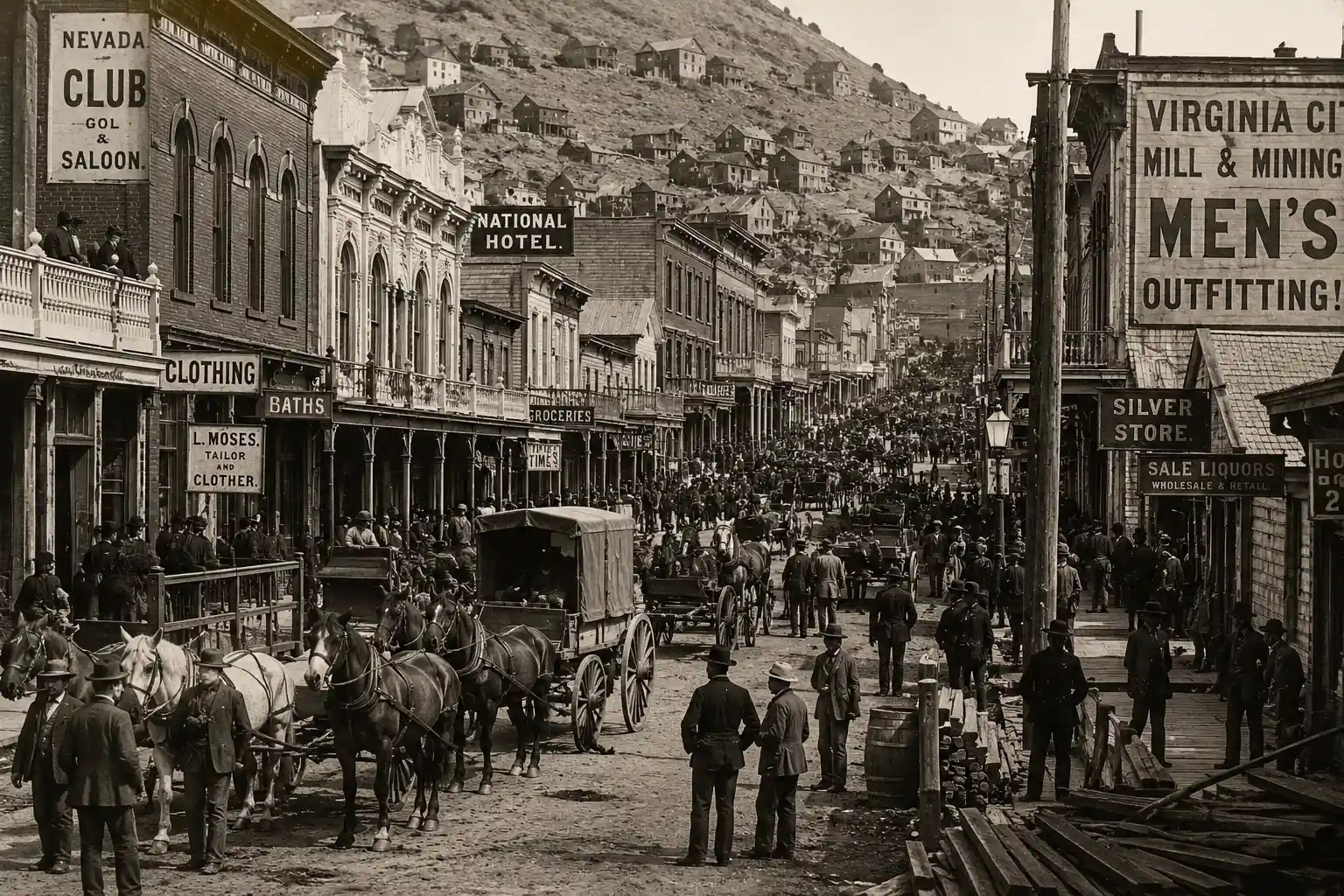
It drifts slowly through wooden sidewalks and weathered storefronts perched high in Nevada’s mountains, carrying dust, sage and echoes from another age. Tourists wander past saloons and old hotels beneath signs that have hung for generations. Antique trains whistle in the distance. The mountains glow gold in the late afternoon sun.
At first glance, it almost feels like a movie set.
But Virginia City is not a replica of the Old West.
It is the Old West.
And somehow, against all odds, it survived.
Today, fewer than a thousand people live in Virginia City, Nevada. Yet in the 1870s this rugged mining town was one of the richest places in North America — a booming mountain metropolis built on silver, ambition and the belief that prosperity would last forever.
For a brief moment in time, Virginia City stood near the center of the American story.
Then the silver began to disappear.
The Mountain That Changed America
The story of Virginia City began in 1859 with the discovery of the Comstock Lode — the first major silver deposit found in the United States.
At the time, the California Gold Rush was fading. Easy fortunes had already been claimed and thousands of prospectors drifted through the western territories searching for one more strike that might change their lives.
Then came the strange blue-black mud discovered high on the slopes near Mount Davidson.
At first, miners considered it worthless waste.
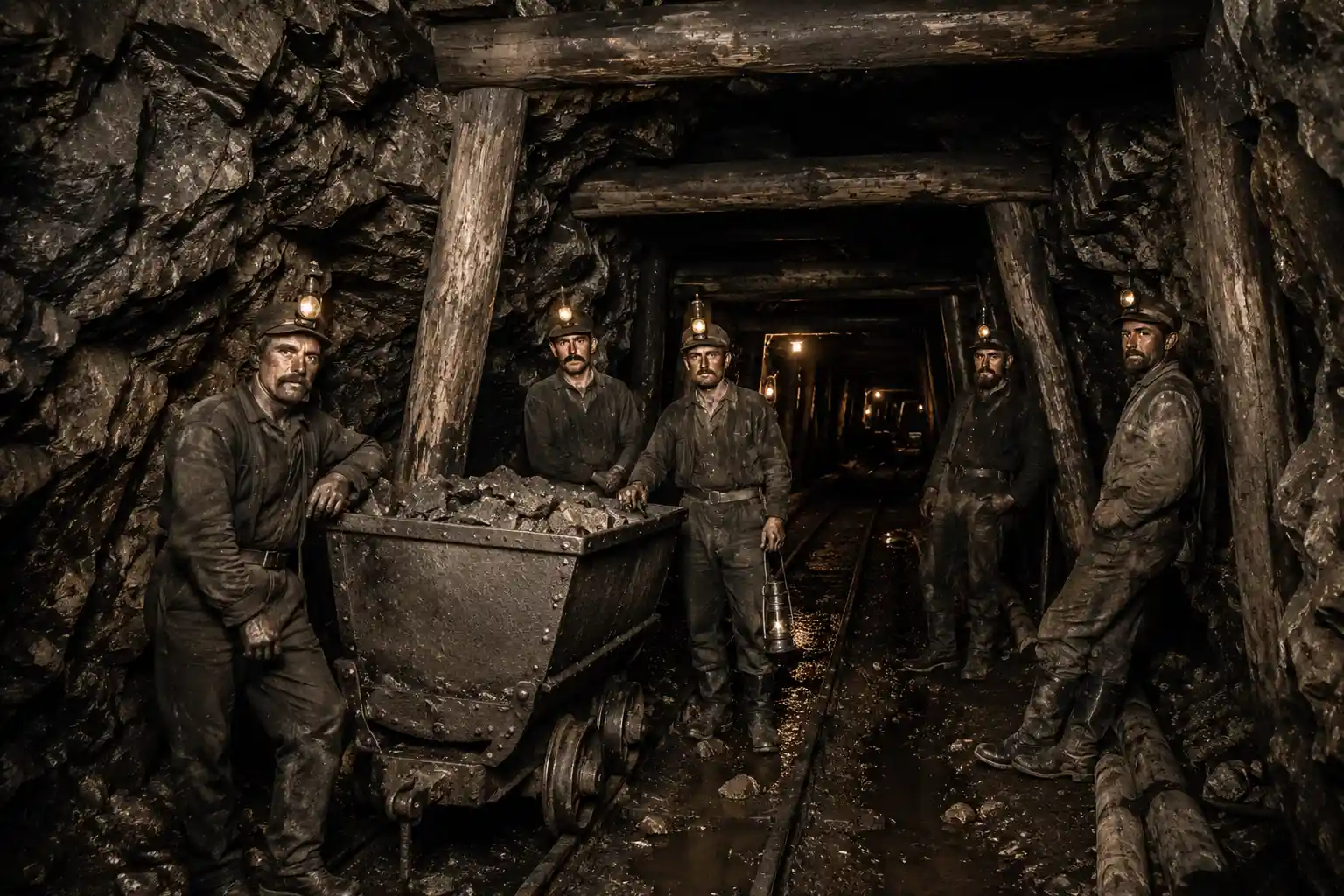
Instead, it turned out to be one of the richest silver discoveries in world history.
The Comstock Lode was not merely a vein of silver. It was a geological anomaly — an enormous underground body of extraordinarily rich ore that would eventually produce hundreds of millions of dollars in silver and gold.
News spread across the frontier like wildfire.
Within months, prospectors, merchants, gamblers, engineers, laborers and dreamers flooded into the region. Tents became wooden buildings. Dirt paths became streets. A mining camp became a city.
And not just any city.
Virginia City became a place of staggering ambition.
An Impossible City
What makes Virginia City so fascinating is not simply the silver.
It is where the city was built.
Perched more than 6,000 feet above sea level in Nevada’s harsh mountain desert, Virginia City had virtually none of the things required for a major urban center:
- no major water source,
- no farmland,
- brutal winters,
- difficult transportation routes,
- and little natural infrastructure.
Everything had to be hauled in.
Lumber crossed dangerous mountain roads by wagon. Food arrived from California. Water was piped in or carried by barrel. Even basic supplies were expensive.
Yet despite all of this, Virginia City exploded into existence.
By the 1870s, the population approached 25,000 people.
Banks rose beside saloons. Elegant hotels stood beside gambling halls. Opera houses hosted major performers while miners worked deep underground beneath the city itself.
The place seemed almost impossible.
And that was part of its magic.
More Than a Mining Camp
One of the biggest misconceptions about the Old West is that boomtowns were simply chaotic collections of saloons and gunfights.
Virginia City was far more sophisticated than that.
The city developed:
- schools,
- churches,
- libraries,
- newspapers,
- theaters,
- fraternal organizations,
- restaurants,
- and elaborate Victorian homes.
Gas streetlights illuminated parts of the city before many eastern towns had similar systems.
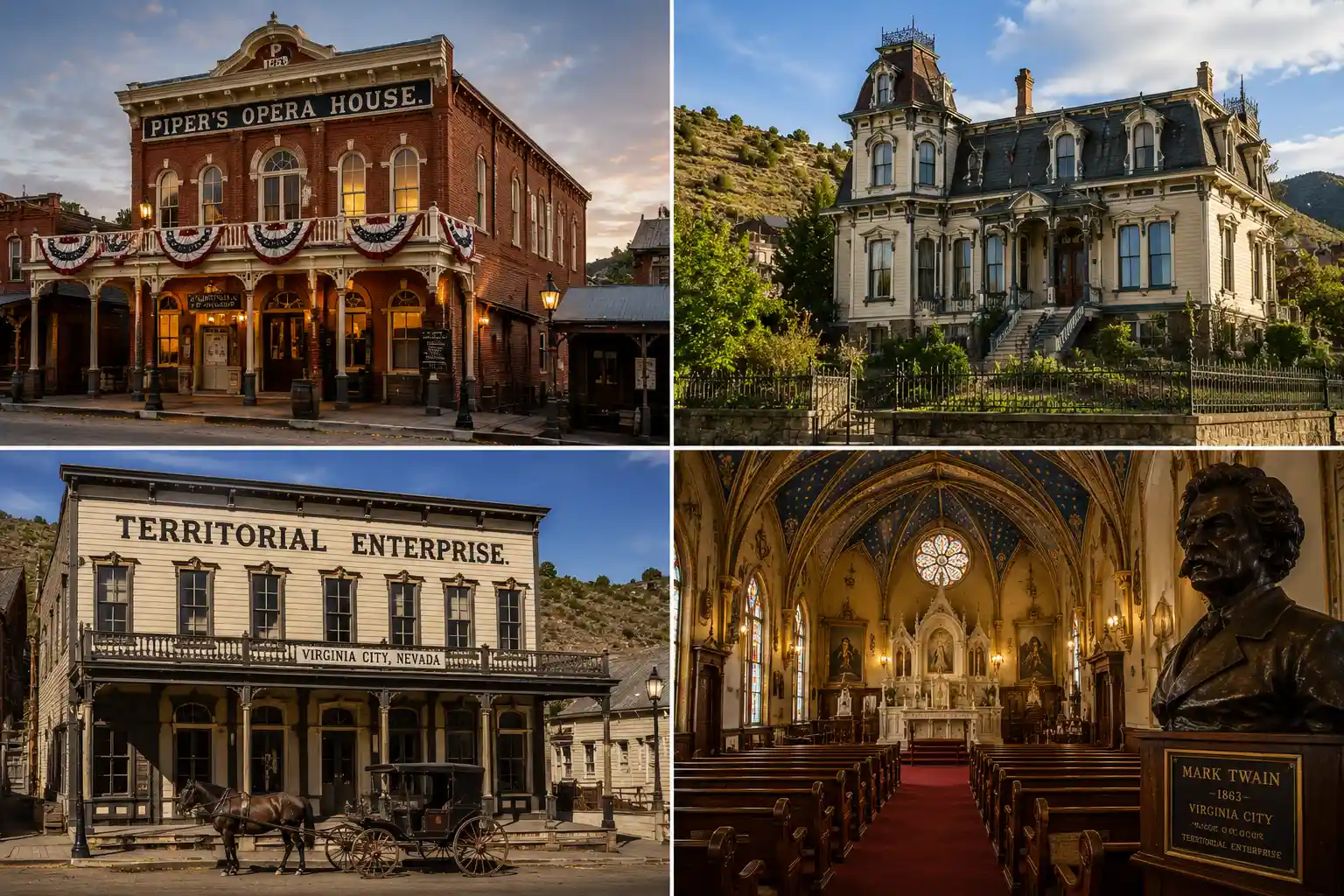
Piper’s Opera House brought world-class entertainment to the Nevada mountains. Wealthy mine owners imported furniture, marble and fine art from around the world. The Territorial Enterprise newspaper became one of the most influential publications in the region.
It was here that a young journalist named Samuel Clemens sharpened his writing style before eventually becoming known to the world as Mark Twain.
Virginia City was not pretending to become civilized.
In many ways, it already was.
The city represented something larger than silver. It represented the explosive optimism of 19th century America — the belief that technology, ambition and wealth could build a permanent civilization almost anywhere.
For a while, it worked.
Stagecoaches in front of the Wells Fargo building in Virginia City, Nevada. The population peaked at 25,000 in the 1870s but is less than 1,000 today. pic.twitter.com/9UaDSxqO1Y
— Echoes of War (@EchoesofWarYT) May 29, 2026
Beneath the Streets
Yet beneath the elegance and optimism existed another reality.
The mines of the Comstock were among the deepest and most dangerous in the world at the time.
Temperatures underground could exceed 130 degrees Fahrenheit. Miners descended thousands of feet into darkness through narrow shafts supported by timber and hope. Cave-ins, explosions, flooding and fires were constant threats.
The labor force came from around the world:
- Irish miners,
- Cornish engineers,
- Chinese laborers,
- German craftsmen,
- Italian workers,
- and countless others searching for opportunity.
Some found success.
Many did not.
Still, Virginia City was not simply a story of exploitation or greed. It was also a story of extraordinary engineering, organization and endurance. New mining methods pioneered on the Comstock would influence mining operations across the world for decades.
The city became both a symbol of frontier opportunity and a reminder of the enormous human effort required to sustain industrial ambition.
That contradiction still lingers over Virginia City today.
When the Silver Began to Fade
Like many boomtowns, Virginia City was built on a finite resource.
And eventually the mountain began to change.
By the late 1870s, miners noticed the ore becoming leaner and more expensive to extract. The deeper shafts required enormous ventilation and pumping systems. Costs rose as profits slowly tightened.
At first, few wanted to believe it.
The city had become too grand, too confident and too alive to imagine collapse.
But geology does not negotiate.
The richest silver deposits gradually disappeared.
Fires damaged sections of the city. Mining companies consolidated or closed. Workers drifted toward new opportunities in Colorado, Montana and Arizona.
The great boom began to slow.
Then it unraveled.
By the 1890s, much of the city stood quiet.
The mines flooded.
Businesses closed.
Mansions emptied.
The great silver metropolis that once helped finance the Union during the Civil War and build San Francisco into a global city had largely exhausted the very resource that created it.
Yet Virginia City never completely vanished.
And that may be the most remarkable part of the story.
The Town That Survived
Many western boomtowns disappeared entirely.
Virginia City endured.
A smaller population remained behind. Families stayed. Buildings survived. Local institutions adapted. Slowly, the city evolved from a mining center into something very different:
a guardian of memory.
As America entered the 20th century, the mythology of the Old West began to grow.
Books romanticized frontier life. Hollywood transformed western towns into global entertainment. Television series such as Bonanza introduced millions of viewers around the world to a stylized version of Virginia City and frontier Nevada.
Ironically, the city may have become more famous after its economic collapse than during its peak prosperity.
Tourism gradually replaced mining as the town’s economic lifeblood.
Visitors arrived not for silver, but for atmosphere.
And Virginia City had atmosphere unlike almost anywhere else in America.
Walking Through Virginia City Today
To visit Virginia City now is to experience something strangely layered.
The buildings are real.
The streets are real.
The mountain is real.
Yet the town also feels suspended between preservation and performance.
Tourists walk through saloons where miners once spent their paychecks after brutal underground shifts. Historic hotels still operate. Wooden sidewalks creak beneath footsteps just as they did 150 years ago.
At times, the place feels almost theatrical.
Then suddenly something changes:
- the altitude,
- the silence,
- the mountain air,
- the old brick,
- the steep streets,
- the weathered structures leaning slightly with age.
And the illusion disappears.
Virginia City no longer feels like a tourist attraction.
It feels like a surviving fragment of another civilization.
In winter, snow settles across the mountains and the town becomes quiet again. The crowds thin out. The wind returns. Residents continue living among one of the most unusual historical environments in North America.
That continuity matters.
Because Virginia City is not frozen history.
It is still a living place.
More Than Nostalgia
Virginia City raises larger questions that still resonate today.
How do societies built on resource extraction adapt when the resource disappears?
What happens when prosperity outruns permanence?
How do communities preserve authenticity while surviving economically?
And perhaps most importantly:
what remains after the boom ends?
In many ways, Virginia City became a symbol of the broader American experience:
- ambition,
- risk,
- innovation,
- speculation,
- growth,
- collapse,
- reinvention.
The silver built fortunes.
But the story outlived the silver.
That may be the town’s greatest achievement.
The Silver City That Refused to Die
Today, Virginia City exists somewhere between past and present.
It is:
- a historic landmark,
- a functioning community,
- a tourism economy,
- a western icon,
- and a reminder that even the greatest booms eventually change.
Yet despite fires, collapse, abandonment fears and economic decline, the city still stands high above the Nevada desert.
The old opera house still hosts performances.
The churches still hold services.
The Territorial Enterprise still publishes.
And the wind still moves through the streets.
Virginia City may no longer be the richest place in America.
But it remains one of the most fascinating.
Not because it perfectly represents the Old West, but because it reveals something deeper:
how people build, dream, struggle, adapt and preserve meaning long after the original reason for a place has disappeared.
The silver ran out.
The story did not.