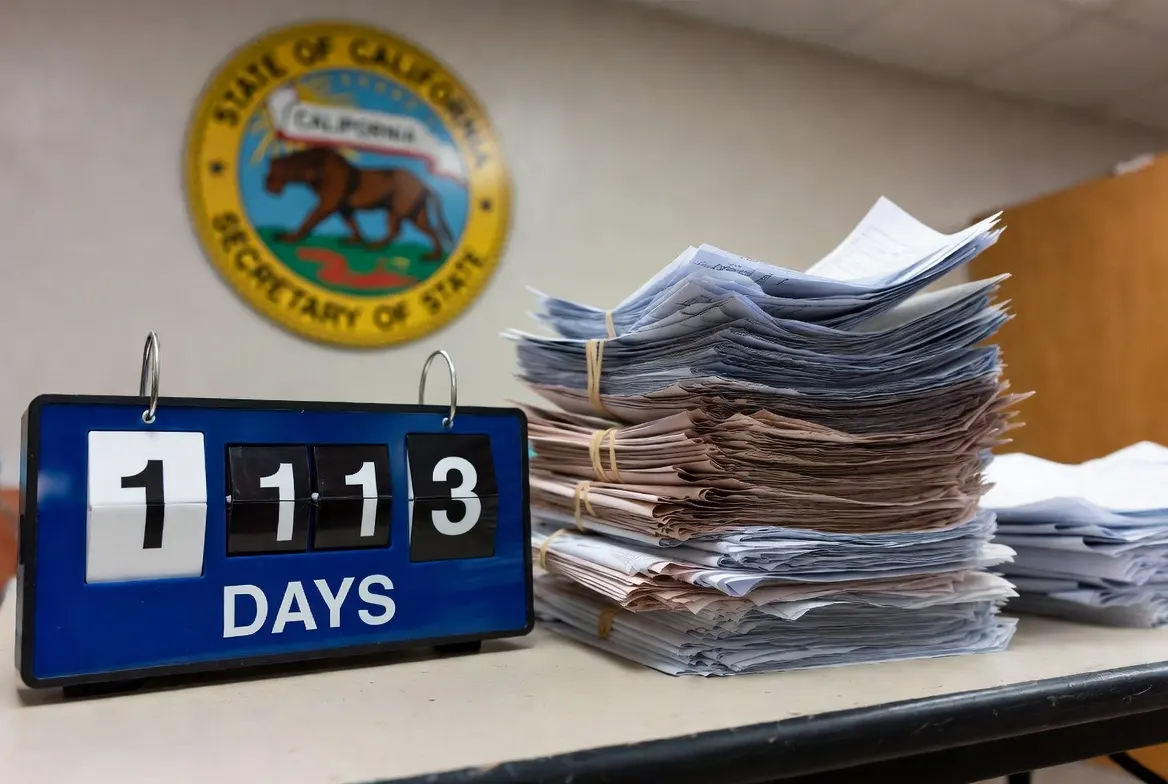
Los Angeles, CA, USA - California held its statewide direct primary on June 2, 2026, using the state's top-two primary system, where the top two vote-getters regardless of party advance to the November general election. Key races include the open gubernatorial contest (following term limits or other factors for the incumbent), Los Angeles mayoral race, U.S. House seats, state legislature, and Secretary of State. As of early June 2026, with roughly 70-72% of votes reported in some tallies, Democrat Xavier Becerra led for governor at around 27%, followed by Republican Steve Hilton at ~26% and Democrat Tom Steyer at ~21%, with others including Republican Chad Bianco trailing. Final certification is not due until July 10.
Vote counting continues days after Election Day due to California's expansive vote-by-mail system. This has fueled familiar debates over election integrity, with President Donald Trump and Republican figures alleging irregularities and "cheating," while state officials and Democrats attribute delays to standard procedures and dismiss broad fraud claims as unfounded.
California's Election System: Designed for Access, Criticized for Speed and Verification
California operates one of the most permissive vote-by-mail systems in the U.S. All registered voters receive mail ballots automatically. Ballots postmarked by Election Day can be received up to a week later (June 9 for this primary), and counties process signatures, cure discrepancies, and count them during an official canvass period.
Strengths emphasized by officials:
- High turnout facilitation, especially for working families, elderly, and disabled voters.
- Signature verification, ballot tracking (e.g., wheresmyballot.sos.ca.gov), and cure processes for minor errors like missing signatures.
- Multiple layers of safeguards, including voter roll maintenance and prohibitions on electioneering.
Criticisms, particularly from conservatives:
- Extended counting windows create a "window of opportunity" for skepticism and claims of manipulation, as late mail ballots often favor Democrats.
- No strict voter ID requirement for most voters (though registration involves DMV/SSN data).
- Automatic voter registration and expansive eligibility rules.
- Perceived resistance to aggressive voter roll purges or audits.
Election law experts note that California's rules prioritize accuracy and inclusion over rapid results, but this predictability of delays has not prevented recurring controversies.
Specific Allegations and Irregularities in 2026 (and Recent Context)
1. Slow Counting and Shifting Leads ("Ballot Dumps")As in-person and early votes (often leaning Republican) are tallied first, followed by mail ballots, leads shift. In the governor's race and LA mayor contest, this dynamic has prompted Trump to claim Democrats are "cheating" by delaying counts to "find" votes. Similar patterns occurred in prior cycles. Officials counter that this is transparent, lawful, and expected. A misreading of LA vote updates (one candidate briefly appearing with zero in a dump) amplified conspiracies, though prosecutors clarified every candidate received votes in updates.
2. Federal Investigations AnnouncedFirst Assistant U.S. Attorney Bill Essayli (Trump appointee) stated his office has "multiple election fraud investigations underway" with the FBI. A prosecutor was sent to monitor LA County's ballot processing. He highlighted "serious structural vulnerabilities" and pointed to a recent Skid Row case involving paid voter registration. Essayli has also pushed for voter roll audits, accusing California of blocking access to unredacted records in ongoing litigation (now before the Ninth Circuit). These probes are active but lack public specifics tying them to widespread 2026 primary fraud. State officials monitor federal activity but emphasize compliance with California law.
3. Riverside County Precedent and Ballot SeizuresIn early 2026, Riverside County Sheriff Chad Bianco (a GOP gubernatorial candidate) seized over 650,000 ballots from a 2025 special election/Proposition 50, citing a citizen group's claim of a ~46,000-vote discrepancy between logs and machine counts. The registrar disputed this, putting the actual gap at ~103. Bianco later paused the probe amid legal pushback. This episode heightened tensions and distrust heading into 2026.
4. Voter Roll ConcernsLongstanding disputes involve the accuracy of California's voter rolls (over 23 million registered). Federal efforts seek deeper audits for non-citizens, duplicates, or inactive voters. California maintains safeguards via DMV integration and list maintenance but faces lawsuits and criticism for alleged resistance. Claims of hundreds of thousands of problematic registrations circulate but remain contested.
5. Isolated Incidents and Broader Context
- Voter fraud complaints can be filed with the Secretary of State.
- Past issues include signature mismatches, late ballots, and rare prosecution cases (e.g., ballot harvesting attempts).
- Threats to election officials (e.g., prior Shasta County incidents) and partisan rhetoric erode trust.
No evidence of systemic fraud altering 2026 primary outcomes has been publicly substantiated at scale. Most experts and officials describe issues as procedural or isolated rather than outcome-determinative.
🚨 HOLY SMOKES. President Trump just went berserk on the ELECTION FRAUD in California to Kristen Welker's face, and she melted down
— Eric Daugherty (@EricLDaugh) June 7, 2026
"They're CROOKED just like YOU'RE CROOKED! You're either CROOKED or you're STUPID. You KNOW these elections are rigged." 🔥
"They're dropping fast… pic.twitter.com/zufWPjjviA
Perspectives from Both Sides
Republican/Trump-aligned view: California's system invites fraud through lax rules, delayed counts allowing manipulation, non-citizen voting risks, and resistance to transparency (e.g., audits). Federal probes and calls for overhaul (e.g., by Steve Hilton) are necessary to protect legitimate votes.
Democratic/state official view: Delays stem from deliberate inclusivity. Fraud claims are politically motivated, lacking evidence, and echo 2020 skepticism. Safeguards work; focus should be on access over speed. Concerns about suppression exist on the other side.
Neutral analysts: Extended counts are predictable in mail-heavy systems. Trust erosion harms democracy regardless of intent. Improvements could include faster processing tech, better communication, standardized audits, or ID expansions without restricting access.
Looking Ahead
Results will finalize in July. The top-two advances (likely Becerra vs. Hilton for governor) set up a contentious November. Ongoing federal probes, lawsuits over voter rolls, and partisan monitoring will shape narratives. California remains a test case for balancing ballot access with verifiable integrity in a polarized era.Election integrity requires vigilance against real fraud and avoidance of unsubstantiated claims that undermine confidence. Observers, journalists, and courts will continue scrutinizing the process. For the latest, check official sources like the California Secretary of State or county registrars, cross-referenced with multiple outlets.