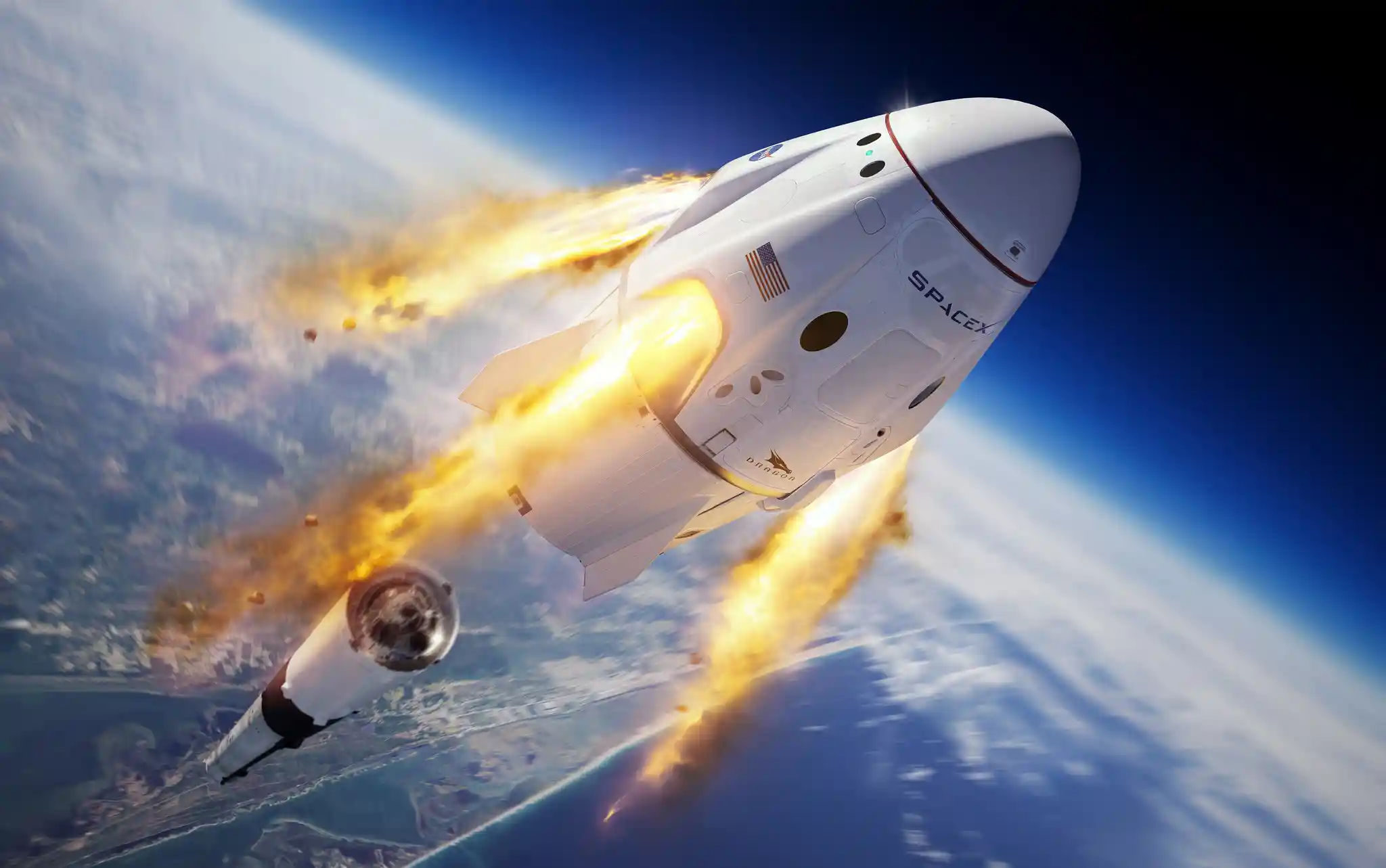
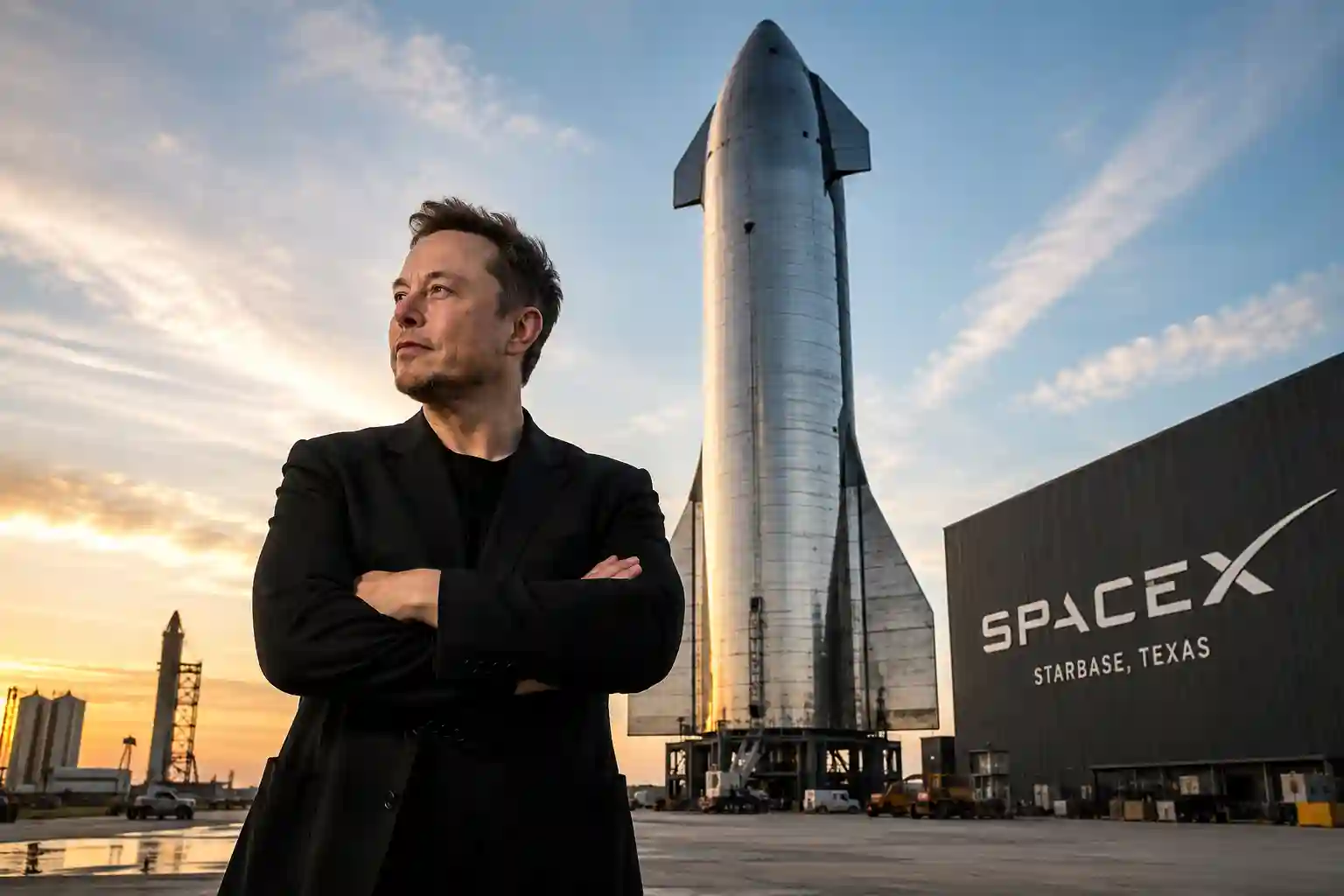
Starbase, TX, USA - SpaceX has spent more than two decades doing what many experts believed was impossible.
It launched rockets cheaper than its competitors. It landed them. It reused them. It built the world's largest satellite internet network. It became the primary transportation provider to the International Space Station. It turned a private aerospace company into one of the most influential industrial enterprises on Earth.
Now it has done something else.
In the largest initial public offering ever completed, SpaceX has gone public, raising approximately $75 billion and immediately becoming one of the most valuable companies on the planet. The company priced shares at $135 and began trading on the Nasdaq under the ticker SPCX on June 12, 2026. By the close of its first trading session, investors had pushed the valuation above $2 trillion.
For founder Elon Musk, the offering represents the culmination of a journey that began in 2002 with a simple but ambitious goal: make humanity a multi-planetary species.
For Wall Street, it marks the arrival of a company unlike any that has come before it.
When SpaceX was founded in 2002, the commercial space industry barely existed.
Rocket launches were dominated by governments and a handful of large aerospace contractors. Launch costs were enormous. Failures were common. Few believed a startup could survive in such an unforgiving industry.
The company's early years nearly ended in disaster.
Three consecutive Falcon 1 launches failed. By 2008, SpaceX was reportedly running out of money. A fourth launch finally succeeded and was soon followed by a NASA contract that helped keep the company alive.
From there, the trajectory changed dramatically.
Falcon 9 became the workhorse of the modern launch industry. The company pioneered routine booster landings and reusability, reducing launch costs and increasing launch frequency. What was once viewed as a science-fiction concept became standard operating procedure.
By 2025, SpaceX was responsible for approximately 85 percent of all spacecraft launched into orbit worldwide.
No aerospace company in modern history has achieved comparable market dominance.
Many casual observers still think of SpaceX primarily as a rocket company.
Investors see something different.
The heart of the SpaceX valuation is Starlink.
The satellite internet service has grown into a global communications network serving millions of customers across residential, commercial, aviation, maritime and government markets. According to SpaceX financial disclosures, Starlink generated the majority of company revenue and remains its most profitable division.
SpaceX reported approximately $18.7 billion in revenue during 2025, with Starlink accounting for roughly 60 percent of that total.
The business has become far more than a rural internet provider.
Airlines use Starlink. Cruise ships use Starlink. Militaries use Starlink. Governments use Starlink.
For many analysts, Starlink resembles a global telecommunications platform rather than a traditional space business.
That distinction matters because telecommunications companies generate recurring revenue. Investors generally place much higher valuations on predictable subscription businesses than they do on cyclical manufacturing operations.
In many respects, the IPO was less a bet on rockets than a bet on global connectivity.
The scale of the offering was unprecedented.
SpaceX sold approximately 555.6 million shares at $135 per share, raising $75 billion and achieving an initial valuation of roughly $1.77 trillion. Demand reportedly exceeded the available shares several times over before trading began.
The stock opened strongly and climbed throughout its first day of trading, briefly pushing the company's value beyond $2 trillion.
That instantly placed SpaceX among the most valuable companies in the world.
It also transformed Musk's personal fortune.
Because he remains the company's largest shareholder, the IPO elevated him to a net worth exceeding one trillion dollars according to several estimates, making him the first person ever to reach that milestone.
Not everyone is convinced the valuation makes sense.
SpaceX generated nearly $18.7 billion in revenue during 2025 but also reported a net loss approaching $5 billion as it continued investing aggressively in future projects and infrastructure.
At its IPO valuation, the company traded at revenue multiples rarely seen outside the most speculative periods in market history. Some analysts have argued investors are paying today for profits that may not arrive until years into the future.
The concern is understandable.
SpaceX's long-term plans include projects that remain largely unproven, including next-generation launch systems, massive AI infrastructure investments and eventually interplanetary transportation networks.
In other words, part of the valuation is based on businesses that do not yet fully exist.
Investors are effectively betting that SpaceX can continue achieving the kinds of breakthroughs it has delivered throughout its history.
The most important thing to understand about SpaceX may be that it no longer fits neatly into a single category.
It is a launch provider.
It is a satellite operator.
It is a telecommunications company.
It is a government contractor.
It is increasingly positioning itself as an AI infrastructure company.
And, perhaps most importantly, it remains the only major corporation actively building the transportation systems needed for future human settlement beyond Earth.
That combination is what makes SpaceX so difficult to value.
Traditional aerospace metrics do not fully apply.
Telecommunications metrics do not fully apply.
Technology metrics do not fully apply.
Investors are attempting to place a price on a company that operates simultaneously in several industries and dominates at least one of them.
Whether SpaceX ultimately proves worth $2 trillion is a question that may take years to answer.
What is already clear is that the company has crossed a historic threshold.
Twenty-four years after a startup founded by an internet entrepreneur began building rockets in Southern California, SpaceX has become one of the most valuable public companies in history.
Its IPO is not merely another stock market event.
It represents the moment when the commercial space industry moved from the edge of the economy to its center.
And for better or worse, investors around the world are now betting that humanity's future in space is also one of the biggest business opportunities ever created.