Rouen, France - Every generation believes it is living through the greatest technological revolution in human history.

The printing press changed the world. So did steam power. Radio. Television. Computers. The internet. Smartphones. Artificial intelligence.
Each new wave arrives with the same promise: everything is about to change.
And yet, tucked into kitchen drawers, casino pits, backpacks, military barracks, retirement homes, and smartphone apps around the world sits a technology that has quietly survived them all.
The humble 52-card deck.
It may be one of the most successful inventions ever created.
Nobody knows exactly who invented playing cards.
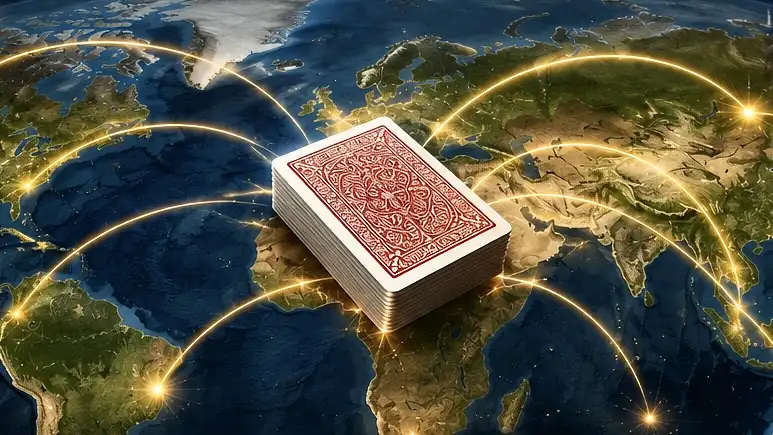
Most historians trace their origins to China more than a thousand years ago, where paper gaming slips and card-like games emerged during the Tang Dynasty. From there, the concept traveled westward through trade routes, evolving as it moved across Asia, the Middle East, and eventually Europe.
By the time cards reached Europe in the late Middle Ages, they existed in numerous forms. Different regions used different suits, different symbols, and different deck sizes.
Then something remarkable happened.
Around the late 1400s, French printers standardized a design that proved so effective it would eventually conquer the world.
Hearts.
Diamonds.
Clubs.
Spades.
Fifty-two cards.
Four suits.
Thirteen ranks.
The identities of the craftsmen who created this system have been lost to history.
Their invention has not.
The greatest inventions often appear obvious in hindsight.
The wheel.
The hammer.
The book.
The paper clip.
What makes these creations extraordinary is not complexity. It is efficiency.
The 52-card deck falls into the same category.
A deck costs only a few dollars to manufacture. It fits in a pocket. It requires no electricity. It can survive years of use. It can be carried across a continent or around the world.
Yet from those 52 pieces of cardboard emerges an astonishing range of possibilities.
Poker.
Bridge.
Hearts.
Blackjack.
Euchre.
Cribbage.
Solitaire.
Thousands of games have been built upon the same foundation.
Most entertainment requires constant replacement. New books. New movies. New software. New hardware.
A deck of cards generates fresh experiences every time it is shuffled.
One reason cards remain endlessly fascinating is the sheer scale of their possibilities.
A properly shuffled deck can be arranged in approximately 80 undecillion different orders.
That number is so large it becomes difficult to comprehend.
If every person who has ever lived shuffled a deck every second since the dawn of humanity, they would not come remotely close to exhausting the possible combinations.
The odds are overwhelming that every time you thoroughly shuffle a deck, you create an arrangement that has never existed before in the history of the universe.
Think about that.
The same basic design developed during the Renaissance continues generating entirely new outcomes five centuries later.
Not many inventions can make that claim.
Few cultural objects have spread as successfully as the playing card.
Languages change from country to country.
Currencies change.
Governments rise and fall.
Borders move.
Yet the deck remains.
Walk into a casino in Las Vegas, a bridge club in London, a retirement center in Toronto, a military base overseas, or a family gathering in rural Australia, and there is a good chance you will find cards.
Different games. Different traditions. The same basic system.
Even countries that maintain strong local card traditions often use the French-derived deck alongside their own historical designs.
It has become one of the closest things humanity possesses to a universal recreational language.
Two strangers may not share a spoken language.
They can often share a card game.
Conventional wisdom suggests that old technologies are replaced by new ones.
Playing cards followed a different path.
The internet should have made them obsolete.
Instead, it made them stronger.
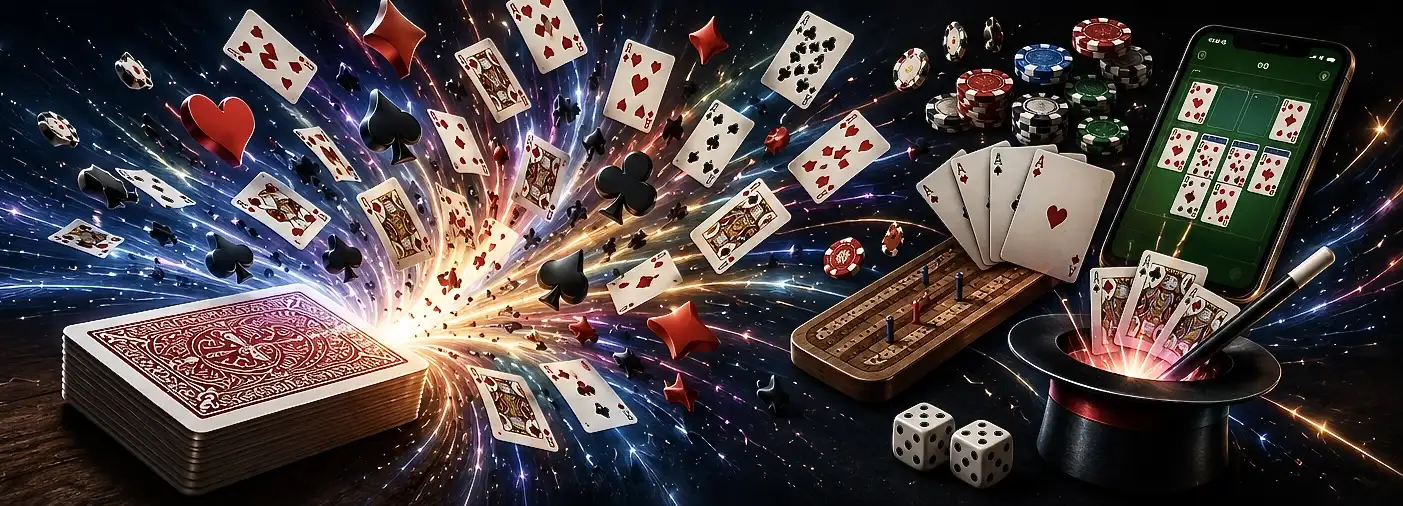
Online poker exploded into a global phenomenon.
Bridge found new audiences.
Blackjack moved online.
Millions of players discovered Hearts through computers and mobile devices.
The same deck that once entertained travelers by candlelight now exists inside smartphones and cloud servers.
Technology did not replace cards.
Technology expanded their reach.
A player in Canada can sit down for a game with opponents in Europe, Asia, and Australia within seconds.
The deck survived by adapting without changing.
Modern entertainment often grows more complex every year.
Games require updates.
Apps require patches.
Devices require upgrades.
The deck of cards requires none of these things.
Its strength lies in simplicity.
Four suits.
Thirteen ranks.
Fifty-two cards.
That is all.
From those basic components emerges strategy, probability, psychology, competition, cooperation, and endless variety.
The rules change.
The players change.
The technology changes.
The deck remains.
Modern society tends to celebrate innovation.
New is assumed to be better.
But history suggests a different truth.
Some inventions eventually reach a point where improvement becomes almost impossible.
The wheel is still round.
Books still contain pages.
Hammers still have handles.
Playing cards still come in decks of 52.
Five hundred years after anonymous French craftsmen helped standardize the design, nobody has developed a superior replacement.
That fact alone deserves attention.
Entire industries have risen and fallen during the lifetime of the modern deck.
Empires have collapsed.
Technologies have disappeared.
Companies worth billions have vanished.
Yet the same arrangement of hearts, diamonds, clubs, and spades remains in daily use around the world.
Not because people are nostalgic.
Because it still works.
Perhaps the most remarkable thing about the 52-card deck is that it is no longer merely a game.
It is a platform.
A system.
A toolkit.
A language of symbols capable of producing almost limitless outcomes.
The people who refined it centuries ago could not have imagined casinos, smartphones, online gaming networks, or artificial intelligence.
Yet their design functions perfectly within all of them.
That is the mark of a truly great invention.
Not that it survives change.
That it remains useful regardless of change.
Five centuries after its creation, the 52-card deck is still entertaining humanity.
In a world obsessed with the next big thing, that may be the most impressive achievement of all.