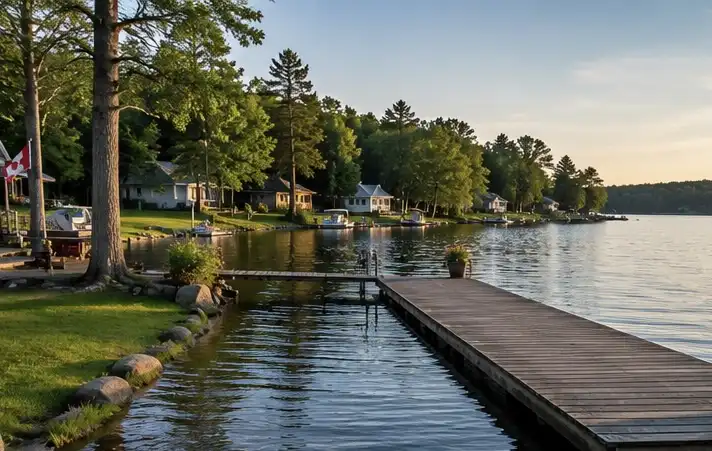
Tiny Township, ON, Canada - Roughly two hours north of Toronto, hidden among the forests and rolling countryside of Ontario's famed cottage country, lies a lake that many Canadians have treasured for generations.
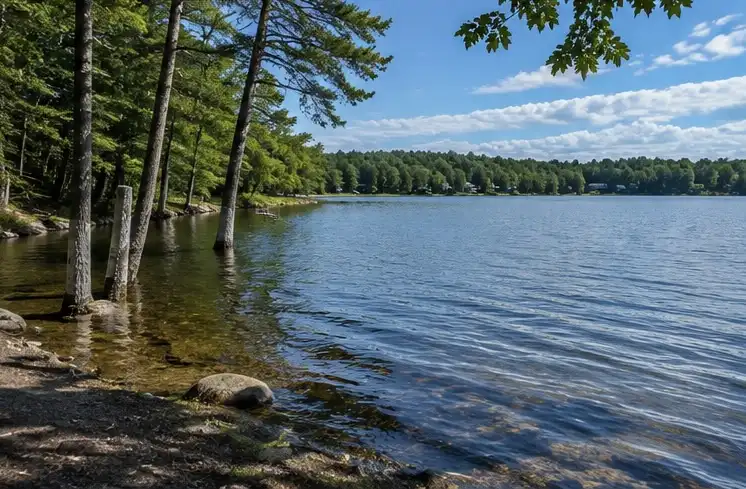
It is called Farlain Lake.
To international visitors, it may be an unfamiliar name. It does not possess the worldwide recognition of Lake Louise, the vastness of the Great Lakes, or the dramatic mountain scenery of western Canada. Instead, Farlain Lake represents something altogether different—something deeply woven into Canadian life.
It is one of the countless freshwater lakes that define the country's landscape and its identity.
Every summer, families escape the cities and travel north to places just like this. Children spend their days swimming from docks, chasing minnows along sandy shorelines and learning to paddle canoes before they are old enough to drive a car. Evenings are filled with campfires, loons calling across the water and spectacular sunsets reflected in glass-like bays.
For many Canadians, these lakes are more than vacation destinations.
They are part of the family.
Yet today, one of these treasured places is quietly telling a different story.
Residents who have known Farlain Lake for decades say the beaches are disappearing.
The shoreline seems to creep a little farther inland each year.
Trees that once stood safely above the water now find their roots submerged.
Docks have been extended, rebuilt and adjusted.
And despite years of discussion, studies and public meetings, one simple question remains unanswered.
Why is Farlain Lake continuing to rise?
Long before Toronto existed...
Long before Canada itself...
Long before the first Indigenous peoples walked this landscape...
A massive sheet of ice covered much of what is now Ontario.
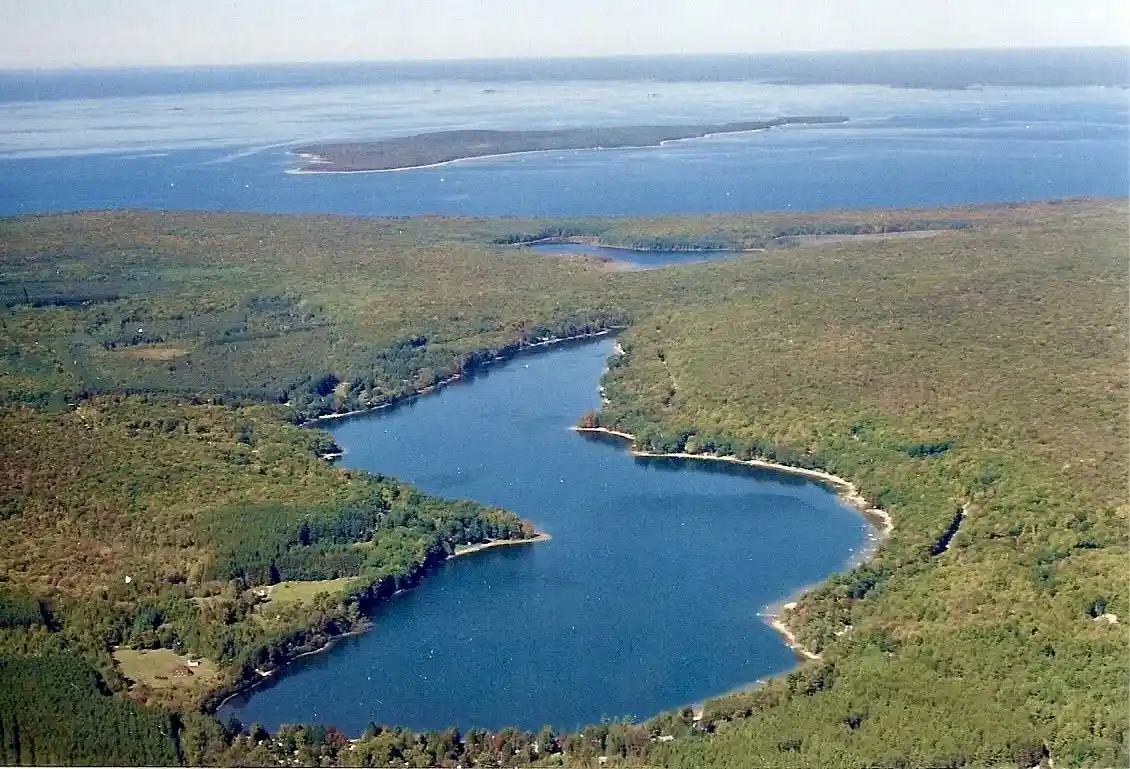
As that glacier slowly retreated roughly 10,000 to 12,000 years ago, enormous blocks of ice became trapped beneath layers of sediment. When they finally melted, they left behind deep depressions in the landscape that gradually filled with groundwater and rainwater.
Farlain Lake was born.
Unlike many lakes around the world, however, Farlain possesses an unusual characteristic.
It has no visible river flowing out of it.
Instead, it is what scientists describe as a seepage kettle lake, relying largely on groundwater, precipitation and slow underground movement of water to maintain its level.
That unique geology has helped shape one of Ontario's most picturesque lakes.
It may also hold the key to understanding the mystery unfolding today.
To understand why this matters, one must first understand what a Canadian cottage represents.
Across much of southern Ontario, owning—or simply visiting—a lakeside cottage is a tradition that spans generations.
Entire families return to the same shoreline every summer.
Children grow into parents.
Parents become grandparents.
The dock where someone learned to swim in 1972 may still be standing today.
The favourite fishing rock remains exactly where it always was.
Or at least, it did.
Longtime residents around Farlain Lake remember broad sandy beaches where children could spend entire afternoons building castles and searching for smooth stones.
Those beaches have become noticeably smaller.
Some have disappeared almost entirely beneath the water.
For families whose memories are tied to these shorelines, the change feels deeply personal.
Ontario lakes naturally rise and fall with the seasons.
Wet years follow dry years.
Snowmelt gives way to summer evaporation.
Such fluctuations are expected.
What has puzzled many residents of Farlain Lake is that the water has remained unusually high for years rather than returning to what many remember as normal.
Scientists have proposed several possible contributing factors.
More frequent heavy rainfall.
Changes in groundwater recharge.
The complex underground geology beneath the lake.
Land-use changes around the watershed.
Some residents have questioned whether historical alterations to local drainage may have affected the natural movement of groundwater.
Each possibility carries some merit.
Yet no single explanation has fully solved the puzzle.
That uncertainty has become almost as notable as the rising water itself.
At first glance, this may appear to be a local issue affecting a few hundred shoreline properties in rural Ontario.
It is not.
Freshwater is among Canada's greatest natural treasures.
The country contains roughly one-fifth of the world's freshwater resources, and thousands of lakes like Farlain contribute to ecosystems, tourism, recreation and the national identity itself.
When one of these lakes begins changing in ways that are not fully understood, the story deserves attention far beyond its immediate shoreline.
It reminds us that even in an age of satellites, artificial intelligence and instant communication, nature still possesses mysteries that refuse to yield easy answers.
Whether the explanation ultimately lies beneath the ground, in changing weather patterns, historical drainage changes, or some combination of many factors, one conclusion already seems unavoidable.
Farlain Lake deserves our attention.
Not because it is famous.
Not because it attracts millions of tourists.
But precisely because it does not.
Places like this quietly shape nations.
They become part of childhood memories, family traditions and local history long before anyone thinks to protect them.
Perhaps that is the greatest lesson Farlain Lake offers.
Conservation should never begin only after something precious has been lost.
It should begin while there is still time to understand what is happening.
Some places become symbols because history chooses them.
Others become symbols because ordinary people decide they are worth saving.
For the families who have loved Farlain Lake for generations—and for anyone who believes that the world's freshwater heritage deserves careful stewardship—this quiet Ontario lake has become exactly that.
Its mystery deserves answers.
Its future deserves science.
And its extraordinary beauty deserves to be protected for generations yet to come.