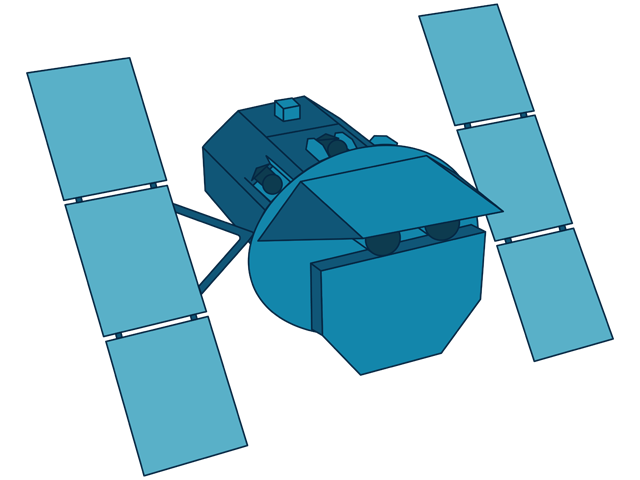
Greenbelt, Maryland, United States — NASA’s Neil Gehrels Swift Observatory re-entered Earth’s atmosphere on November 4, nearly 22 years after it launched to study some of the most powerful explosions in the universe.
The U.S. Space Force confirmed the re-entry over North Sumatra, Indonesia, at 7:39 a.m. Eastern time, NASA said. The agency expected most of the spacecraft to burn up, though some components may have survived.
Why Swift came down
Even in low Earth orbit, traces of atmosphere slow satellites down. Increased solar activity intensified that drag on Swift, causing it to lose altitude faster. A servicing mission intended to raise its orbit ended in August without attempting the boost, NASA said.
Swift resumed observing. On October 20, at about 275 kilometres above Earth, it could no longer compensate for the drag and entered safe mode. Its operations team at Penn State sent the command that ended operations and prepared it for re-entry.
What made Swift different
A gamma-ray burst can be over in seconds. Swift was built to detect that first flash, quickly turn its telescopes toward it and alert other observatories so they could study the fading afterglow.
That fast response helped researchers study blasts associated with collapsing massive stars and mergers involving neutron stars. Swift also watched flares from black holes and objects closer to home, including comets. Its original mission was meant to last two years; it gave astronomers more than two decades of observations.
In this earlier NASA Goddard video, the mission team explains how Swift got its name and why speed mattered.