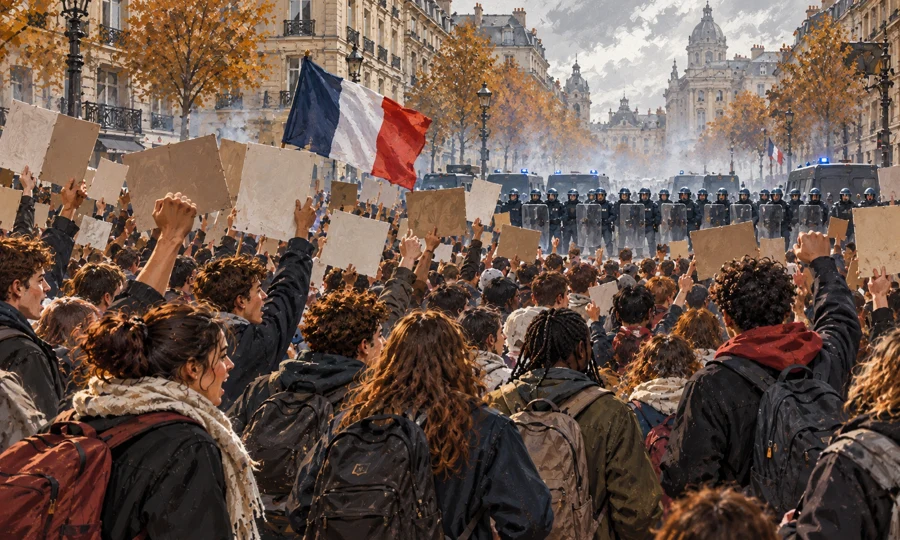
Paris, France — A protest over missing teachers and deteriorating classrooms has become a national crisis, with thousands of arrests, schools damaged by fire and French authorities bracing for another day of demonstrations on Tuesday.
Paris police chief Patrice Faure appealed for calm on Saturday, saying the student movement had become “out of control.” Reuters reported roughly 5,000 arrests nationwide since Monday, mostly teenagers. A national police spokesperson said more than 600 officers had been injured.
The confrontation now stretches well beyond the school gates where it began. Students want better conditions. The government is promising order. Each new clash is making a conversation between them harder.
The movement began at Saint-Exupéry high school in Créteil, outside Paris, on September 21, against a backdrop of unfilled teaching positions. It spread through school blockades and calls for action on social media, according to Le Monde’s account of its beginnings.
The grievances are concrete: overcrowded classes, absent teachers, buildings needing repairs and anxiety over university admissions.
More than 1,200 high schools saw protests during the week, Reuters reported Saturday. In Aubervilliers, north of Paris, a 17-year-old student said she had taken her French examination last year without a French teacher. Students in poorer suburbs say their address is determining the education they receive.
Watch: ABC News reports on the French student protests over deteriorating schools and staff shortages.
About 400 high schools were closed on Friday as the unrest continued. Tear gas was used in Strasbourg, fireworks were directed at police in Marseille and bins burned in Rennes, according to Reuters’ reporting from October 2.
Those closures are a daily snapshot, distinct from the larger number of schools affected over the week.
Le Monde reported damage to the entrance hall of Nelson-Mandela high school in Nantes and temporary transport suspensions in several cities. Teachers and school leaders described a movement involving both students seeking better conditions and people intent on confrontation. Some participants did not attend the schools where they gathered.
Reuters’ report on X follows the clashes during the current school protest movement.
Prime Minister Sébastien Lecornu’s government has accused the radical-left La France Insoumise party of helping drive the unrest. LFI denies organizing the protests and says the government’s response has inflamed tensions. Reuters reported the accusation from a government crisis meeting; it remains a disputed claim.
Jean-Luc Mélenchon has backed the students while urging non-violent action. Le Monde reported that he told supporters to maintain discipline and condemned setting things on fire.
Police conduct is also under scrutiny. The Associated Press reported that police projectiles were suspected in some protesters’ injuries. Marine Le Pen has called for broader police powers against rioters, sharpening the political divide ahead of next year’s presidential election.
Student unions have called for national demonstrations on October 6. Authorities fear renewed violence, while the original demands for teachers, resources and functioning classrooms remain unresolved.
The government must restore access to schools while addressing the conditions that brought students outside in the first place. Tuesday will test whether either side can move the confrontation back toward a discussion.