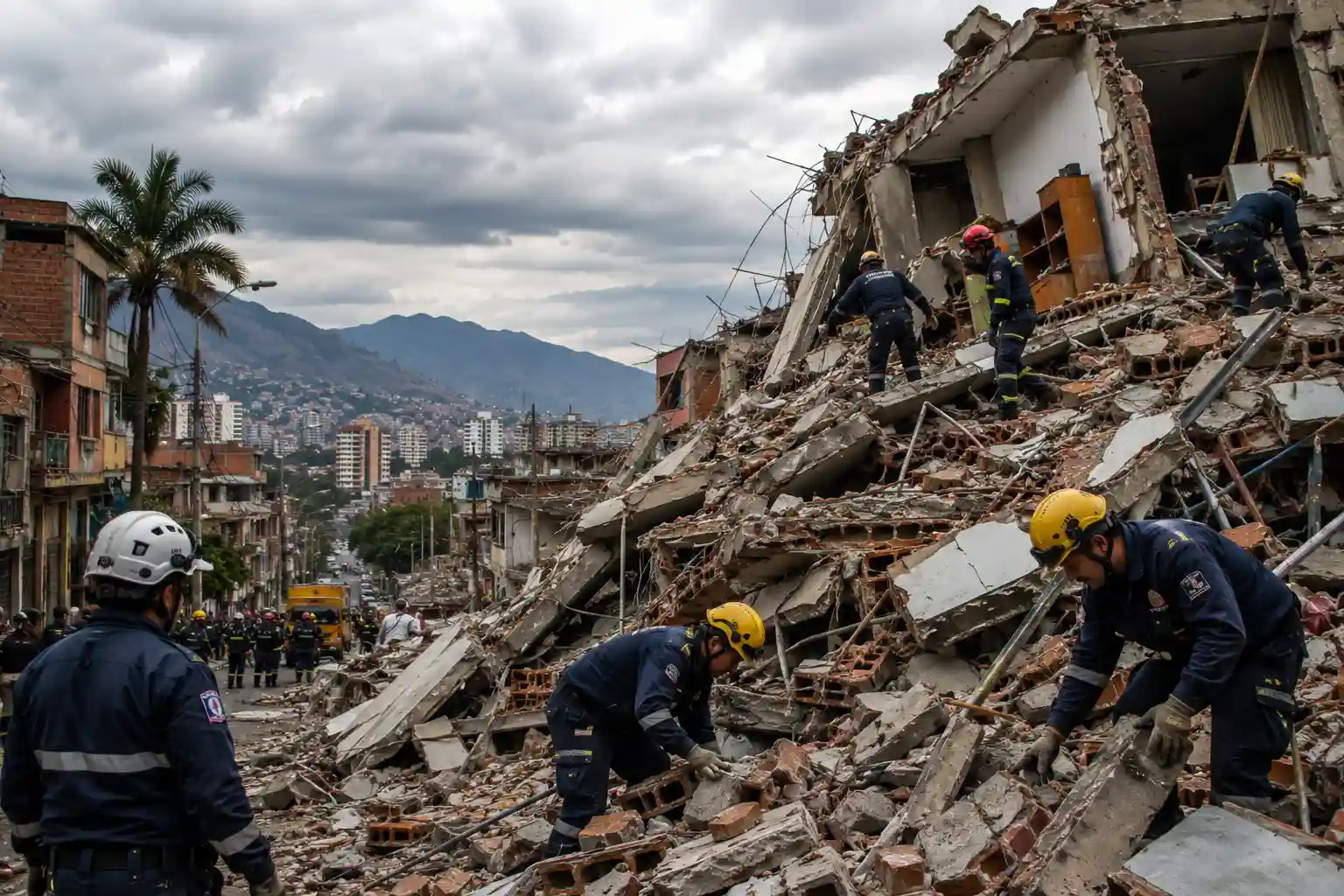
Pereira, Columbia - A powerful magnitude 7.4 earthquake struck western Colombia on Monday morning, August 10, causing widespread damage across several cities and leaving at least 22 people dead as emergency crews search damaged and collapsed buildings.
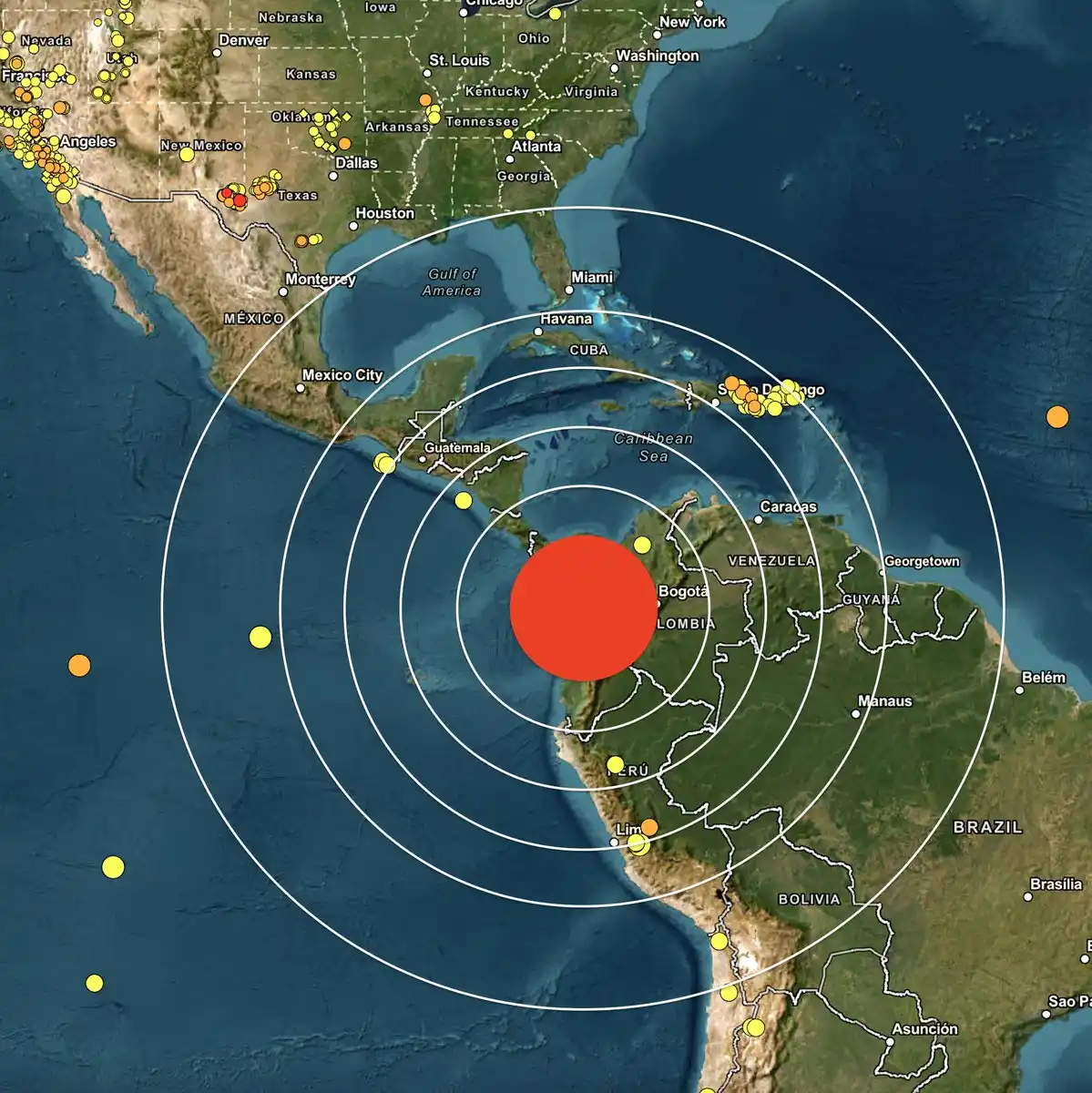
The earthquake struck at approximately 7:34 a.m. local time, with its epicentre near San José del Palmar in Colombia's western Chocó department. Colombia's Geological Service reported the earthquake at magnitude 7.4 and a depth of approximately 96 kilometres.
The shaking was felt across a remarkably large area of Colombia, including the capital, Bogotá, and beyond the country's borders. Colombia's disaster agency reported that the earthquake was felt across nine departments and in all 32 departmental capitals. No tsunami threat was issued.
Some of the most serious destruction has been reported in Pereira, a major city in Colombia's coffee-growing region. Buildings were damaged or collapsed as emergency personnel began searching affected areas for survivors.
At least 18 deaths have been reported in Pereira, according to Reuters, making it the hardest-hit city in the early hours following the earthquake. Three additional deaths were reported in Manizales and another in Buenaventura.
Damage has also been reported in Cali and Quibdó. In Cali, more than two dozen structures reportedly collapsed, with people trapped beneath debris as rescue operations got underway.
Emergency response teams from Bogotá and Medellín have been sent to assist affected communities.
Despite being hundreds of kilometres from the epicentre, residents evacuated buildings in Bogotá as the earthquake shook the Colombian capital. Tremors were also felt beyond Colombia's borders.
Several airports in affected areas, including Pereira and Manizales, were temporarily closed while authorities conducted safety inspections.
Aftershocks have followed the initial earthquake, adding to concerns about structures already weakened by the powerful initial shaking. Authorities have urged residents in affected areas to remain cautious while engineers and emergency officials assess buildings and infrastructure.
Colombia lies in a seismically active region where several tectonic plates interact, making earthquakes a recurring natural hazard. Monday's earthquake ranks among the strongest to strike the country in recent years.
The full extent of the disaster remains unclear. Rescue operations are continuing, and casualty and damage figures could change as authorities reach affected communities and search damaged buildings.