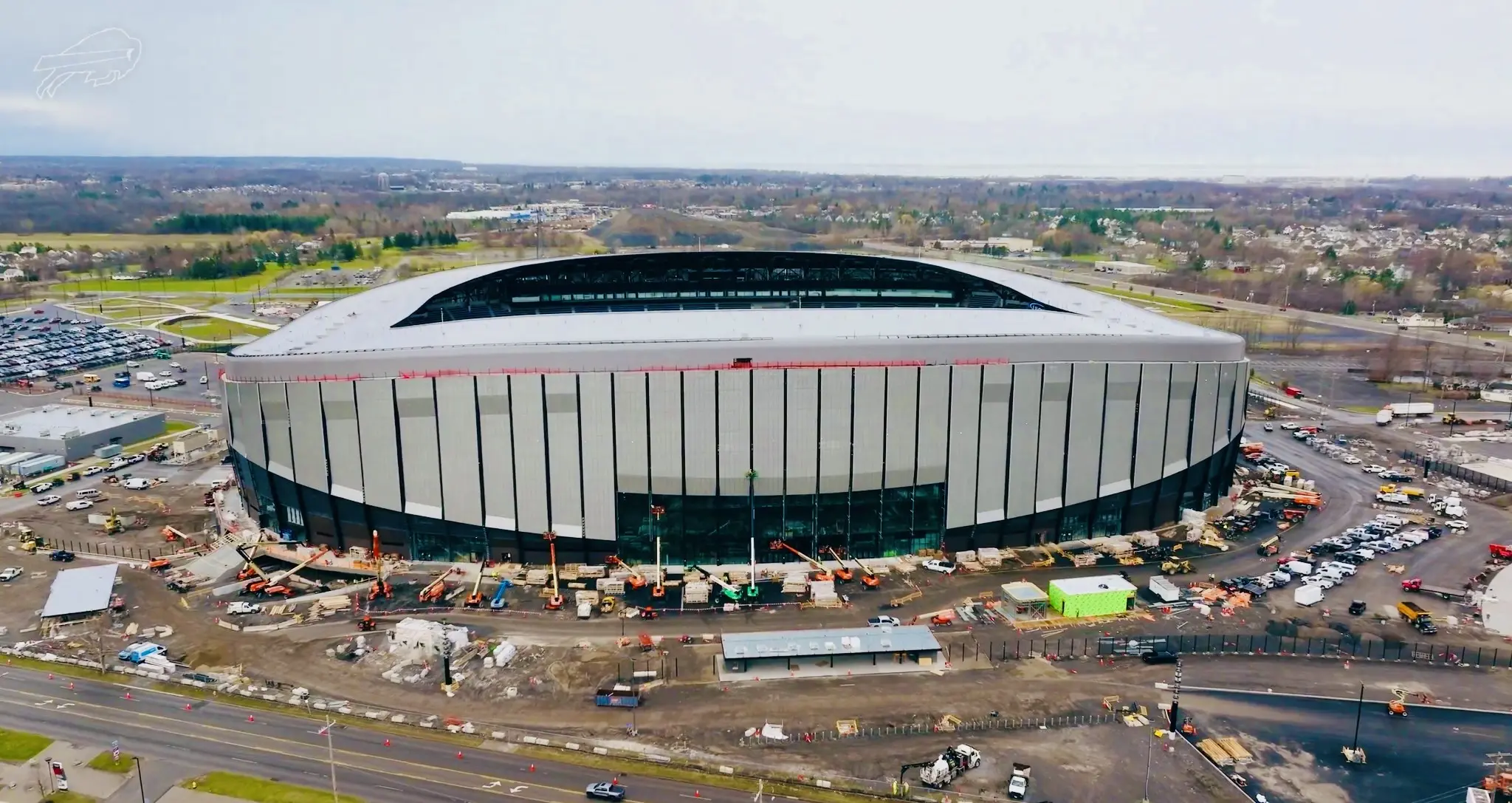
Buffalo, NY, USA - The Buffalo Bills are entering a new era as construction on their $2.1-$2.2 billion New Highmark Stadium in Orchard Park, New York, moves toward completion ahead of the 2026 NFL season. The massive project—one of the largest construction investments in Western New York history—will replace the franchise’s current stadium that has served since 1973.

Built just across the street from the old venue, the new stadium is designed to preserve Buffalo’s legendary home-field advantage while delivering a state-of-the-art fan experience and engineering innovations built for harsh winter weather.
A $2-Billion NFL Mega-Project
Construction began in June 2023, and the facility is scheduled to open in summer 2026, in time for the Bills’ first home game that season.
Key project details include:
- Estimated cost: about $2.1–$2.2 billion
- Size: roughly 1.35 million square feet on a 240-acre site
- Capacity: approximately 62,000 seats
- Architect: global stadium firm Populous, responsible for many modern NFL venues
About 1,500 workers have been on site during peak construction as the project moved through its final phases.
Designed for Buffalo’s Brutal Winters
Buffalo’s climate played a huge role in the stadium’s design. Instead of a fully enclosed dome, the Bills opted to maintain the region’s iconic open-air football identity—but with advanced engineering to handle snow and wind.
Major weather innovations include:
360-Degree Canopy
A sweeping steel canopy will cover about 60-65% of seats, shielding fans from snow and wind while preserving the outdoor atmosphere.
World-Class Snow-Melt System
Sensors embedded in the structure automatically activate heating elements to melt snow accumulation on the roof and surrounding areas, part of what engineers describe as the world’s largest hydronic snow-melt system.
Heated Natural Grass Field
The stadium will feature a natural Kentucky bluegrass playing surface with underground heating and irrigation to keep the field playable through Buffalo winters.
The Bills’ new stadium is nearing completion
— FanDuel (@FanDuel) February 11, 2026
🏟️ 62,000-Seat Facility
🍃 Natural Grass Field with Heating
💨 Wind Mitigation Technology
🤑 $2.1 Billion
Highmark Stadium is going to be the real deal 🔥
pic.twitter.com/SOaHHQ9Iwg
Built to Be One of the Loudest Stadiums in the NFL
Another key objective was creating a brutally loud environment for visiting teams.
Design features include:
- Stacked seating bowl bringing fans closer to the field
- Lower rows starting just 12 feet above the playing surface
- Canopy designed to reflect crowd noise back onto the field
The goal, according to designers, is to make it “one of the loudest stadiums in the NFL.”
Exterior panels... COMPLETE. 🤩 pic.twitter.com/y663vmakxU
— Buffalo Bills (@BuffaloBills) March 16, 2026
A Modern NFL Experience
Beyond engineering innovations, the stadium is packed with modern amenities designed to transform the fan experience.
Expected highlights include:
- Massive high-definition video boards and sound systems
- Expanded premium suites and hospitality areas
- Technology-enhanced concourses and gathering spaces
- Radiant heating in key public areas for cold-weather comfort
The stadium will also host concerts, major events, and private functions, making it a year-round venue rather than just an NFL facility.
A New Era for the Buffalo Bills
For Bills fans—known as “Bills Mafia”—the new stadium represents more than just a building. It marks a transition from a beloved but aging facility into a modern fortress built for the franchise’s future.
The current stadium hosted decades of unforgettable moments, including the team’s run to four consecutive Super Bowls in the early 1990s. Now the organization hopes the new home will help power the next era—led by quarterback Josh Allen—as the Bills continue their pursuit of a long-awaited championship.
✅ Bottom line:
The new Highmark Stadium is shaping up to be one of the most technologically advanced cold-weather stadiums ever built—an open-air fortress combining traditional football atmosphere with cutting-edge engineering designed specifically for Buffalo’s climate.