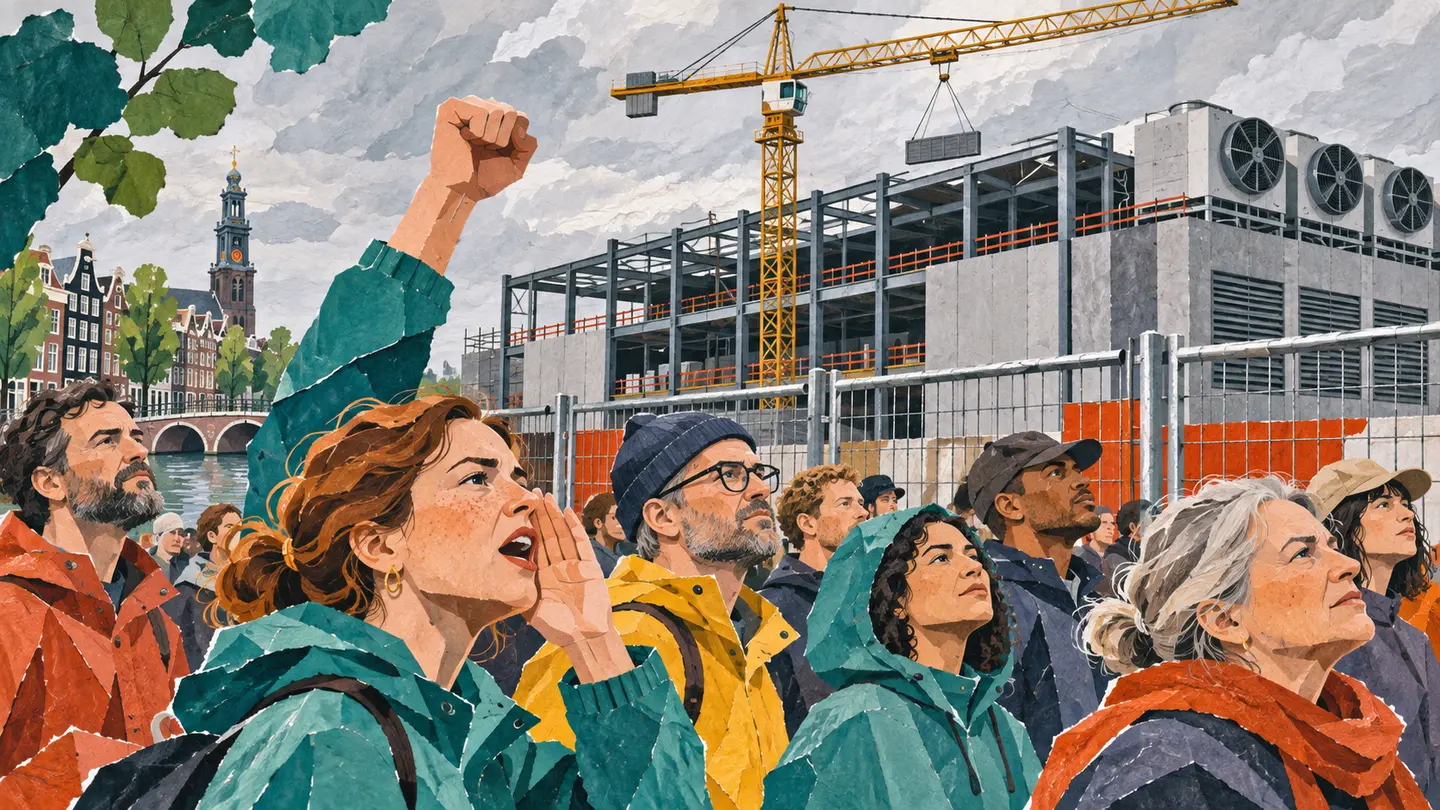
Amsterdam, Netherlands — Protesters entered a construction site intended for a Microsoft data centre in Amsterdam on November 6, climbing a crane and confronting police as opposition to large computing facilities spread across Europe.
Police detained between 150 and 200 people on suspicion of trespassing, The Associated Press reported. Microsoft said it respected peaceful protest but opposed unlawful actions and conduct that put safety at risk. The incident involved a building site, rather than an operating facility.
What happened in Sloterdijk?
The project is on Plimsollweg in Amsterdam’s Sloterdijk district. NL Times reported that activists used ladders and an opening cut in the fence to enter. Local broadcaster AT5 recorded people climbing through the perimeter.
The action was part of the November 6–7 Stop Dirty Data Centres campaign. Organisers want a pause in major construction until governments establish clearer rules. Site owner Pure Data Centres urged demonstrators to leave safely and offered dialogue, Reuters reported.
Why communities are pushing back
Campaigners point to electricity demand, water use and the pace of development, arguing that consultation and environmental oversight are struggling to keep up. The Amsterdam demonstration also included pro-Palestinian activists. Those groups brought different objections to the same site; the protest should not be treated as a single complaint shared by every participant.
The energy question extends beyond this project. The International Energy Agency’s updated outlook projects that worldwide data-centre electricity consumption will roughly double from 485 terawatt-hours in 2025 to 950 in 2030, approaching 3% of global demand. That is a forecast for the sector, not a measurement of this Amsterdam facility.
What Microsoft says
In its broader water-efficiency programme, Microsoft describes cooling designs intended to reduce freshwater consumption and commitments to engage with local communities. Those company-wide statements do not establish the water or electricity requirements of the Sloterdijk project.
The dispute puts a physical address on the AI boom: large buildings need land, power and cooling. The immediate question is how developers and authorities address local concerns while construction proceeds.
For more on the economic stakes, see our report on the IMF’s call for AI safeguards.