Moscow, Russia - There’s a simple version of this story: the Soviet Union tried to destroy religion, failed, and the Church came roaring back.
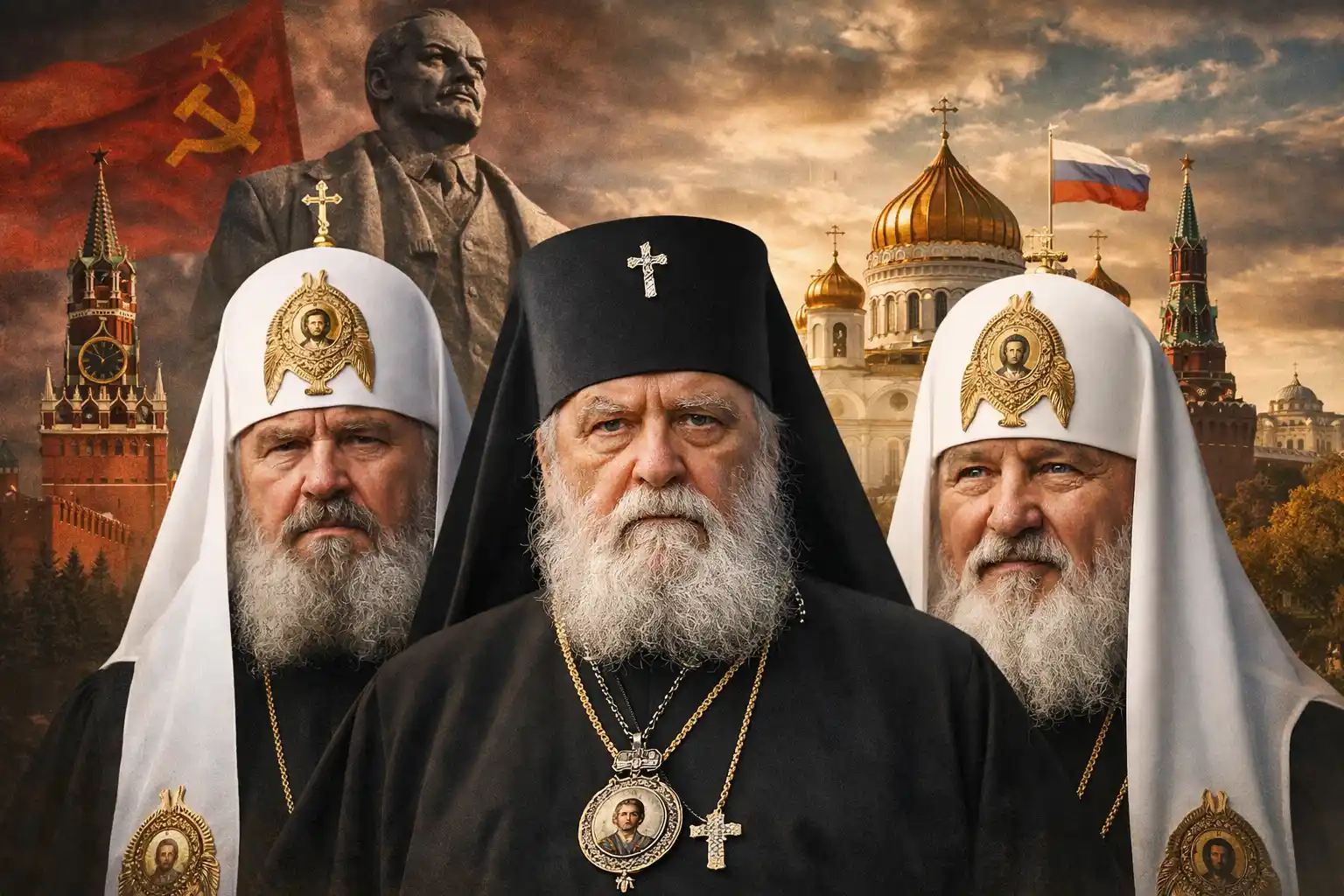
It’s not wrong. But it misses the real pattern.
What actually happened is more interesting—and more useful as a lens:
Pressure → adaptation → survival → return → integration.
The Russian Orthodox Church didn’t just endure the 20th century. It changed shape to survive it—and in doing so, it ended up helping define the system that followed.
I. When the State Tried to Replace God (1917–1940s)
After the revolution, the new Soviet system wasn’t merely anti-religious—it was replacement-driven.
Religion wasn’t to be tolerated. It was to be supplanted by ideology.
Churches were closed. Clergy were imprisoned or executed. Religious education was eliminated. The goal wasn’t coexistence—it was erasure.
On paper, the logic seemed sound:
If religion is a product of backward conditions, then modern conditions will make it disappear.
But something didn’t go according to plan.
What the state attacked
- Institutions
- Buildings
- Leadership
- Public expression
What it couldn’t reach
- Family rituals
- Cultural memory
- Personal belief
- Identity
So religion didn’t vanish.
It retreated.
👉 From churches → to kitchens
👉 From institutions → to individuals
👉 From public life → to private continuity
That’s the first pattern:
When something serves a deep human need, it doesn’t disappear under pressure—it relocates.
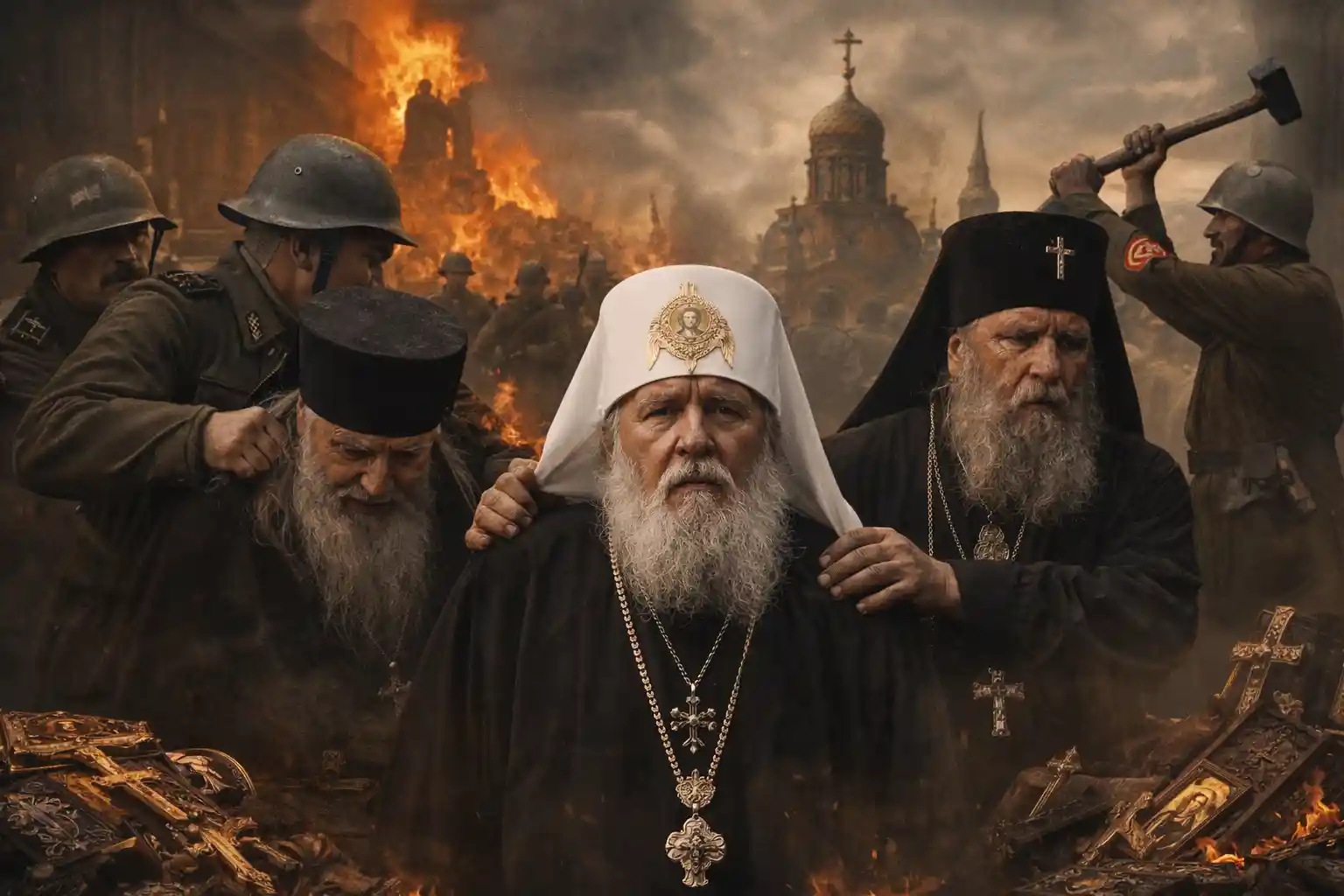
II. Managed Survival (1940s–1985)
By the time World War II arrived, even the Soviet system adjusted its stance.
Under Joseph Stalin, churches reopened—not out of ideological conversion, but necessity. The state needed cohesion, morale, and historical continuity.
Religion, ironically, could provide what ideology could not.
But this wasn’t freedom.
It was management.
Through the decades that followed—especially under Leonid Brezhnev—the Church operated in a narrow lane:
- Visible, but limited
- Allowed, but monitored
- Active, but constrained
Clergy learned to:
- Avoid political commentary
- Focus on personal morality
- Accept surveillance (often by the KGB)
- Operate within boundaries they didn’t control
Publicly, the Church was quiet.
Privately, it persisted.
And that balance—uncomfortable as it was—kept it alive.
👉 Second pattern:
Survival sometimes requires compromise at the surface and persistence underneath.
III. The System Blinks (1985–1990)
Then something rare happened.
The system itself began to loosen.
Under Mikhail Gorbachev, policies of openness and restructuring created space the Church hadn’t seen in generations.
But the Church didn’t surge forward.
It hesitated.
After decades of pressure, it had learned caution too well.
What changed
- Churches reopened more freely
- Clergy spoke more openly
- Religious life reappeared in public
How the Church behaved
- Tested boundaries carefully
- Avoided confrontation
- Rebuilt quietly
The defining moment came in 1988, with the public celebration of the millennium of the Christianization of Rus’—a symbolic acknowledgment that the Church was once again part of the national story.
Not dominant.
Not yet powerful.
But visible again.
👉 Third pattern:
When pressure lifts, the response isn’t explosion—it’s cautious re-emergence.
IV. The Vacuum Years (1990–2000)
When the Soviet Union collapsed, it didn’t just remove a government.
It removed a belief system.
And that created something dangerous:
A vacuum.
Into that vacuum rushed:
- Markets
- Politics
- Foreign influence
- Competing ideas
- And the Church
Under Boris Yeltsin, the 1990s were chaotic.
Churches reopened everywhere. Monasteries were restored. Seminaries filled. The institutional Church expanded rapidly.
But the deeper story was psychological.
People weren’t suddenly devout.
They were:
- Disoriented
- Disconnected
- Searching
So Orthodoxy returned first as identity, not necessarily as deep practice.
At the same time, Russia opened to outside religious movements—missionaries, evangelicals, new denominations.
The response?
The Orthodox Church began to defend its space.
The 1997 religion law marked a turning point:
- “Traditional religions” gained privileged status
- Newer or foreign groups faced restrictions
The Church had moved from survival to territorial awareness.
👉 Fourth pattern:
When a system collapses, what returns first is not certainty—but familiarity.
V. From Return to Integration (2000–Present)
By the early 2000s, the chaos of the 90s gave way to consolidation.
Under Vladimir Putin, the Russian state began rebuilding its identity—and the Church became part of that process.
Not as an opponent.
Not as a subordinate.
But as a partner.
The alignment
- The state provides legitimacy, protection, visibility
- The Church provides continuity, meaning, cultural depth
Orthodoxy increasingly became:
👉 Not just a religion—but a marker of national identity
Church construction surged. Historic cathedrals were rebuilt. Religious presence expanded into:
- Education
- Military life
- Public ceremonies
The Church gained influence—not just spiritually, but culturally and symbolically.
At times, its voice aligns closely with state narratives on:
- Tradition
- Social values
- National sovereignty
This raises questions—internally and externally—about independence versus alignment.
But the structural shift is undeniable:
👉 What was once suppressed as a threat is now elevated as a foundation.
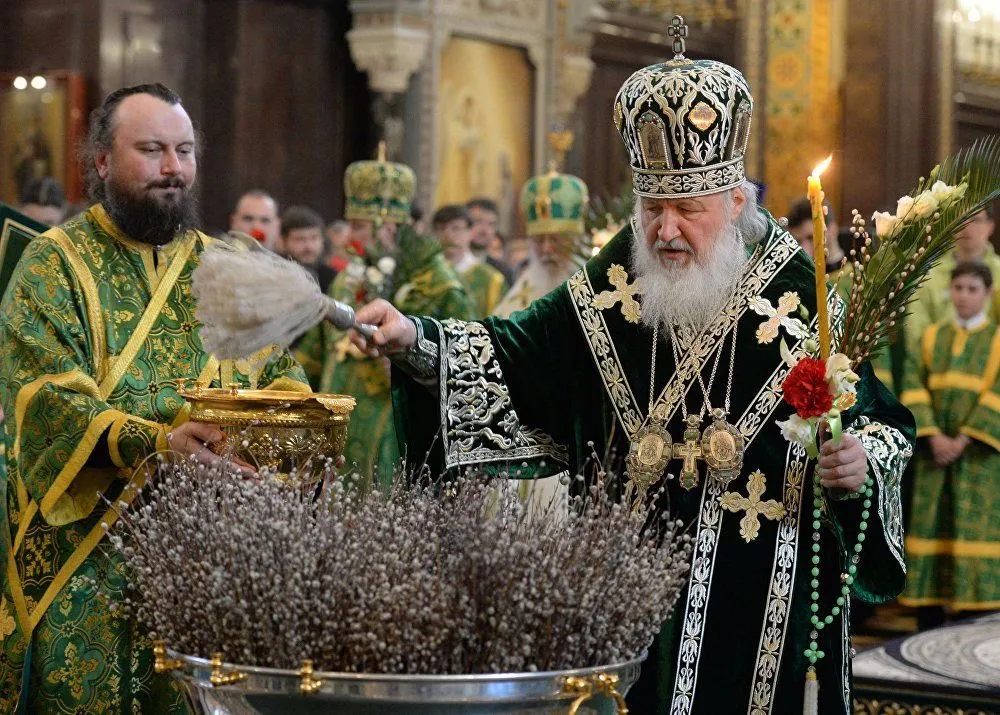
The Russian Orthodox Church is experiencing “perhaps the most inspiring and beautiful moment in its modern history,” Patriarch Kirill has said, after the transfer of the Vladimir and Don Mother of God icons from the Tretyakov Gallery.
— Brian McDonald (@BrianMcDonaldIE) April 5, 2026
He credited “our Orthodox president”… pic.twitter.com/4dysE5H6rd
The Full Pattern
Step back, and the arc becomes clear:
1. Suppression
2. Retreat
3. Managed survival
4. Re-emergence
5. Reintegration
The Church didn’t follow a straight line.
It adapted to pressure, changed form, and returned when conditions allowed—eventually becoming part of the system that once tried to erase it.
☦️ What is drawing young foreigners to the Russian Orthodox Church?
— Sputnik (@SputnikInt) April 4, 2026
Young people seek to strengthen their faith as they feel the “emptiness” of secular society, Archpriest Andrei Sommer of the Russian Orthodox Church Outside of Russia (ROCOR) said
🟠 The Church is a unifying… pic.twitter.com/Ul9XCpt9hL
What This Really Tells Us
This isn’t just a story about religion.
It’s about something deeper:
Systems cannot eliminate forces that serve fundamental human needs.
They can:
- Suppress them
- Redirect them
- Co-opt them
But they can’t erase them.
Because underneath institutions are needs:
- Meaning
- Identity
- Belonging
- Moral structure
Remove the structure, and the need doesn’t vanish.
It waits.