Miami, FL, USA - At any given moment, somewhere in the conversation, Cuba is “next.”
Next to collapse. Next to change. Next to matter again.
A circulating narrative, drawn from commentary and fragments moving quickly across the media landscape, suggests that Donald Trump and elements within the U.S. government may be considering a more aggressive posture toward Cuba.
It is not clear how much of this is grounded in confirmed policy, how much is interpretation, and how much is the familiar modern mix of speculation and amplification.
But before deciding what is happening, there is a more useful question to ask:
Why does a story like this feel believable to so many people—whether it is true or not?
BREAKING: U.S. reportedly preparing plans for a possible operation in Cuba, awaiting Trump's orders.
— Polymarket (@Polymarket) April 15, 2026
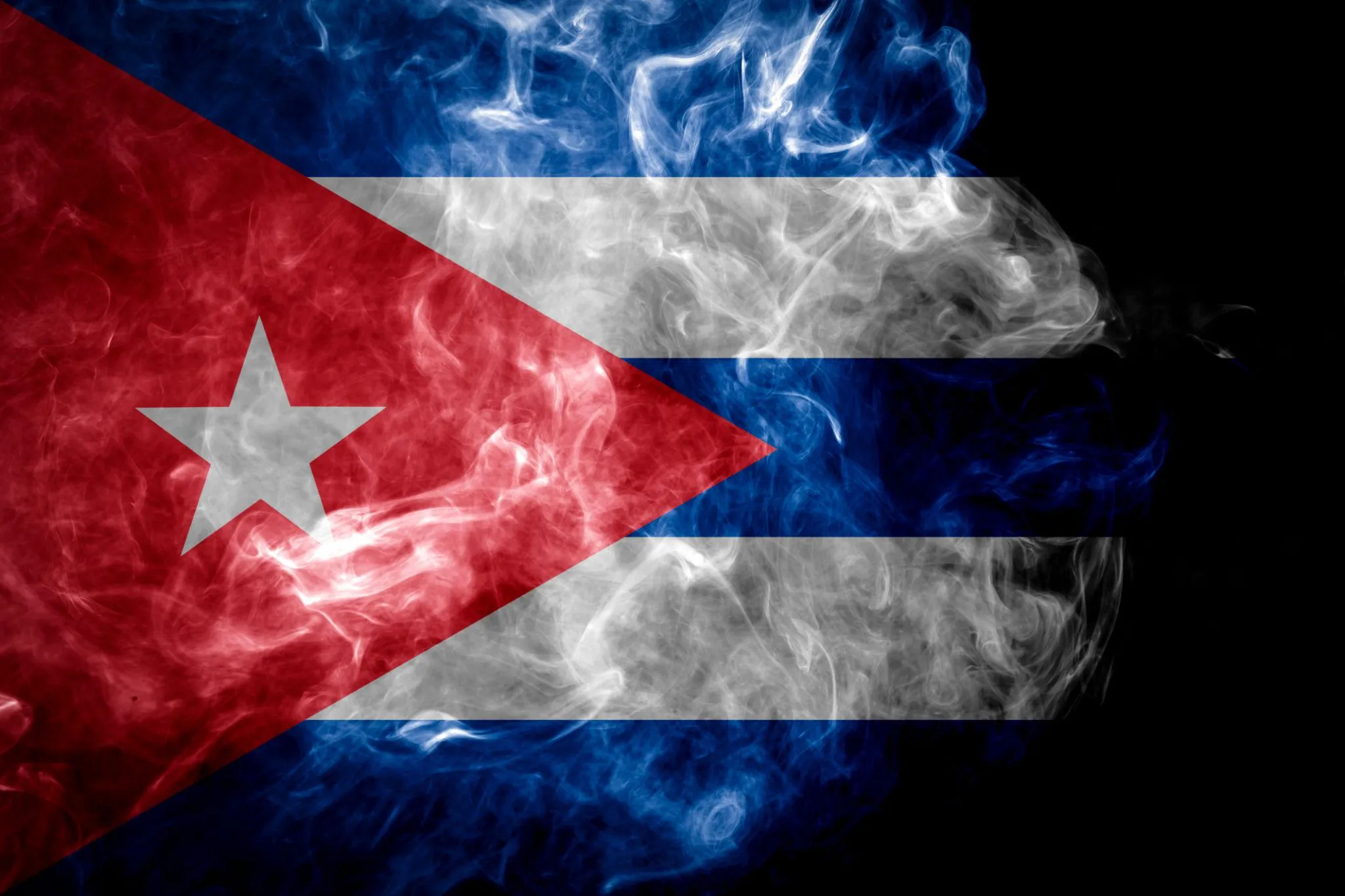
Cuba: Always “Next”
Cuba has held a strange place in the American imagination for generations.
It is often presented as:
- collapsing, but still standing
- isolated, but never irrelevant
- near some decisive turning point, but never quite arriving
From the Cuban Missile Crisis to decades of embargo, sanctions, and political tension, the island has occupied a role far larger than its size. Under the long shadow of Fidel Castro, it became more than a country in the narrative—it became a symbol.
So when someone says, “Cuba is next,” the phrase does not sound new. It sounds familiar.
And that familiarity carries weight.
The Usefulness of a Familiar Threat
A nation under strain often reaches for familiar language. Not always because leaders are misleading the public, and not always because the threat itself is imaginary—but because familiar narratives are easy to activate.
They require less explanation. They come with built-in context.
Cuba fits that role unusually well.
It is close enough to feel relevant, distant enough to feel manageable, and historically charged enough to trigger immediate reactions. Over time, it has become a kind of vessel—one that can carry fear, frustration, ideology, and political messaging all at once.
That does not confirm any specific plan is underway.
But it helps explain why the idea spreads so quickly.
🇨🇺 President of Cuba, Miguel Díaz-Canel, urged citizens to prepare for an invasion, hinting at the United States during a rally in Havana.
— Visegrád 24 (@visegrad24) April 17, 2026
According to USA Today, military planning for a potential operation against Cuba is quietly advancing in the U.S. under the direction of the… pic.twitter.com/0qPtRdkzyl
A Pattern People Recognize
Claims like this do not travel in isolation. They are measured against memory.
History has taught the public a few durable lessons:
- major powers do intervene
- governments do not always reveal full intentions
- narratives can shift quickly
- unlikely events do sometimes occur
So when a dramatic claim appears—about escalation, preparation, or covert action—it does not land in a vacuum. It lands in a mindset shaped by precedent.
People may not say, “This is true.”
More often, they say:
“I can imagine this being true.”
And in today’s environment, that can be enough.
The Information Environment
In an earlier era, a claim of this scale would have moved more slowly. It would have passed through multiple filters—editors, institutions, competing reports, and time itself.
Today, those filters are thinner.
Stories spread because they are compelling, because they align with existing beliefs, or simply because they are vivid enough to repeat. Commentary, speculation, partial information, and analysis often arrive together, in the same tone and at the same speed.
The result is not just confusion.
It is a flattening of distinctions:
between evidence, interpretation, and performance.
Many people now consume political information less as a sequence of verified facts and more as a general atmosphere.
If the atmosphere feels tense, the claim feels plausible.
Why It Resonates Now
The timing matters.
Public trust has weakened. Institutional confidence has eroded. Many people suspect that official explanations are incomplete, or at least carefully managed. At the same time, media systems—both traditional and independent—reward urgency and strong framing.
This creates a different standard for belief.
The question is no longer just:
“Is this proven?”
It becomes:
- Does this fit the moment?
- Does it match the broader sense of how things are working?
- Does it align with what people already suspect?
If the answer is yes, the story gains traction.
Whether it is fully accurate becomes, for many, a secondary concern.
BREAKING: Trump declares the strength of the U.S. military will create “a new dawn for Cuba”
— Polymarket (@Polymarket) April 17, 2026
A Measured View
At minimum, caution is required.
There is a difference between commentary and confirmed policy. There is a difference between long-standing tension and imminent action. There is a difference between pressure and escalation.
Those distinctions still matter.
At the same time, history discourages blind dismissal. Governments have acted unexpectedly before. Strategies have shifted quickly. Decisions have been made behind closed doors.
The public has learned not to be naive.
But it has also learned not to be entirely trusting.
So it exists in between—alert, skeptical, and receptive.
The Island and the Signal
Whether Cuba is actually “next” may turn out to be less important than why the claim lands so easily.
The island has become a kind of permanent placeholder—ready to absorb tension, narrative, and projection whenever the moment calls for it.
And perhaps that is the more revealing point.
Not that something specific is about to happen—but that more and more people now expect that something could.
When that expectation becomes widespread, rumor no longer feels like background noise.
It starts to feel like early warning.