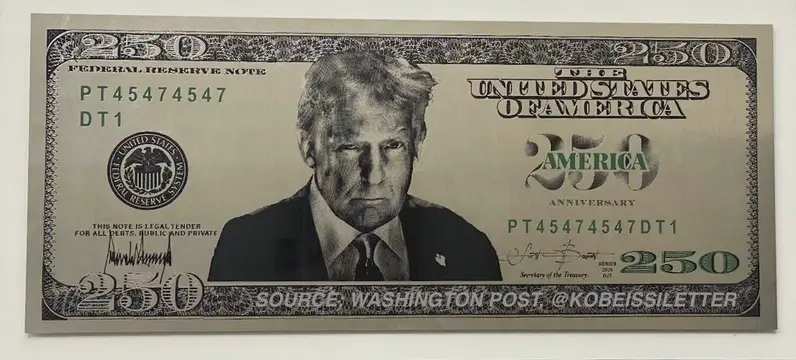
Washington, DC, USA - A proposal to create a new $250 U.S. banknote featuring President Donald Trump is suddenly one of the most talked-about political stories in America — and it’s igniting fierce debate over history, symbolism, inflation, and presidential power.
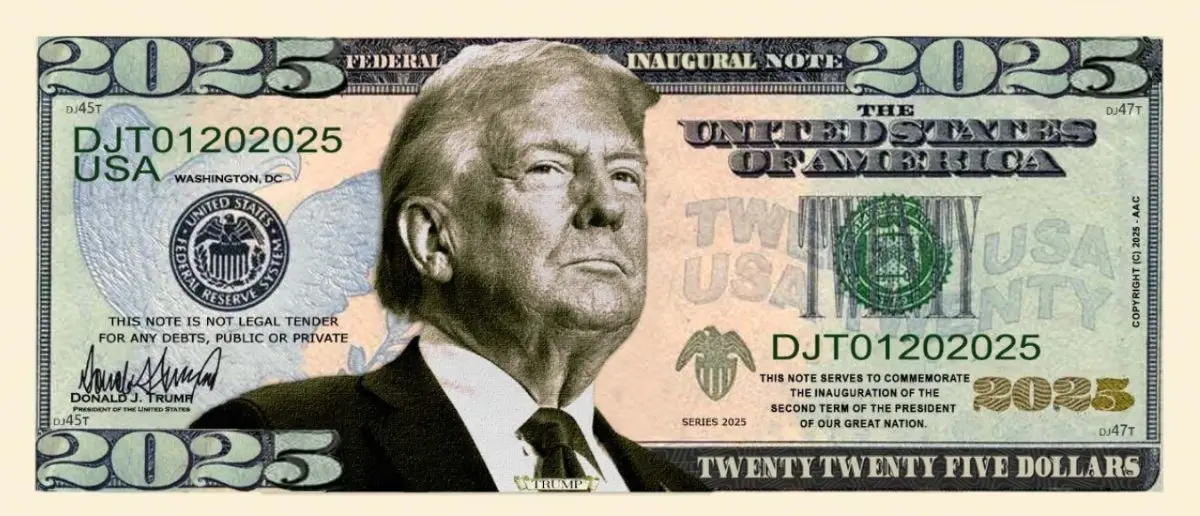
According to reports published Thursday, officials tied to the Trump administration have reportedly pushed the Bureau of Engraving and Printing to explore designs for a new $250 bill as part of the United States’ upcoming 250th anniversary celebrations in 2026.
Breaking news: Trump administration officials have pressed the Bureau of Engraving and Printing to design a $250 bill featuring the president’s portrait, in what would be the first appearance of a living person on U.S. currency in more than 150 years. https://t.co/S8sqdKSB7i
— The Washington Post (@washingtonpost) May 28, 2026
The proposed note would reportedly feature Trump’s portrait alongside patriotic “250 America” branding and signatures from Treasury officials. Mockups have already surfaced online and are spreading rapidly across social media.
But there’s one enormous obstacle standing in the way:
Under current U.S. law, living people cannot appear on American paper currency.
That restriction dates back to the 1800s and has long been considered one of the unwritten traditions surrounding American money and national symbolism. Congress would need to change the law before any such bill could legally circulate.
The idea itself is not entirely new. Back in February 2025, Republican Congressman Joe Wilson introduced legislation called the “Donald J. Trump $250 Bill Act,” arguing that inflation has forced Americans to carry larger denominations of cash and that Trump deserves recognition during the nation’s semiquincentennial celebrations.
Trump admin and Treasury Department design $250 bill featuring Donald Trump — Washington Post
— RT (@RT_com) May 28, 2026
If launched, he'd be the first living person to appear on US currency since 1866 pic.twitter.com/yAD7oQIrI3
Critics, however, see something much bigger unfolding.
Opponents argue that placing a sitting president on currency crosses a major historical line and fuels concerns about personality-driven politics. Others point out the irony of introducing a massive new denomination while inflation remains a major concern for many Americans.
Supporters counter that the proposal is largely symbolic and reflects Trump’s dominant political influence heading into the 2026 anniversary celebrations.
The story has exploded online because it touches several sensitive nerves at once:
- inflation and the declining purchasing power of money
- growing political tribalism
- America’s 250th anniversary
- the role of presidential branding in modern politics
- and the broader question of what U.S. currency is supposed to represent
Even if the bill never becomes reality, the controversy itself has already succeeded in becoming a major cultural and political flashpoint.
And perhaps that was always part of the point.