
New York, NY, USA - Silver prices rose sharply Friday, climbing roughly 9% to eclipse fresh all-time highs above $78 per ounce as markets continue to reprice industrial demand, supply constraints and broader monetary dynamics. Unlike traditional narratives of crisis-driven spikes, analysts say the move reflects a longer-term adjustment in precious metals markets rather than systemic breakdown.
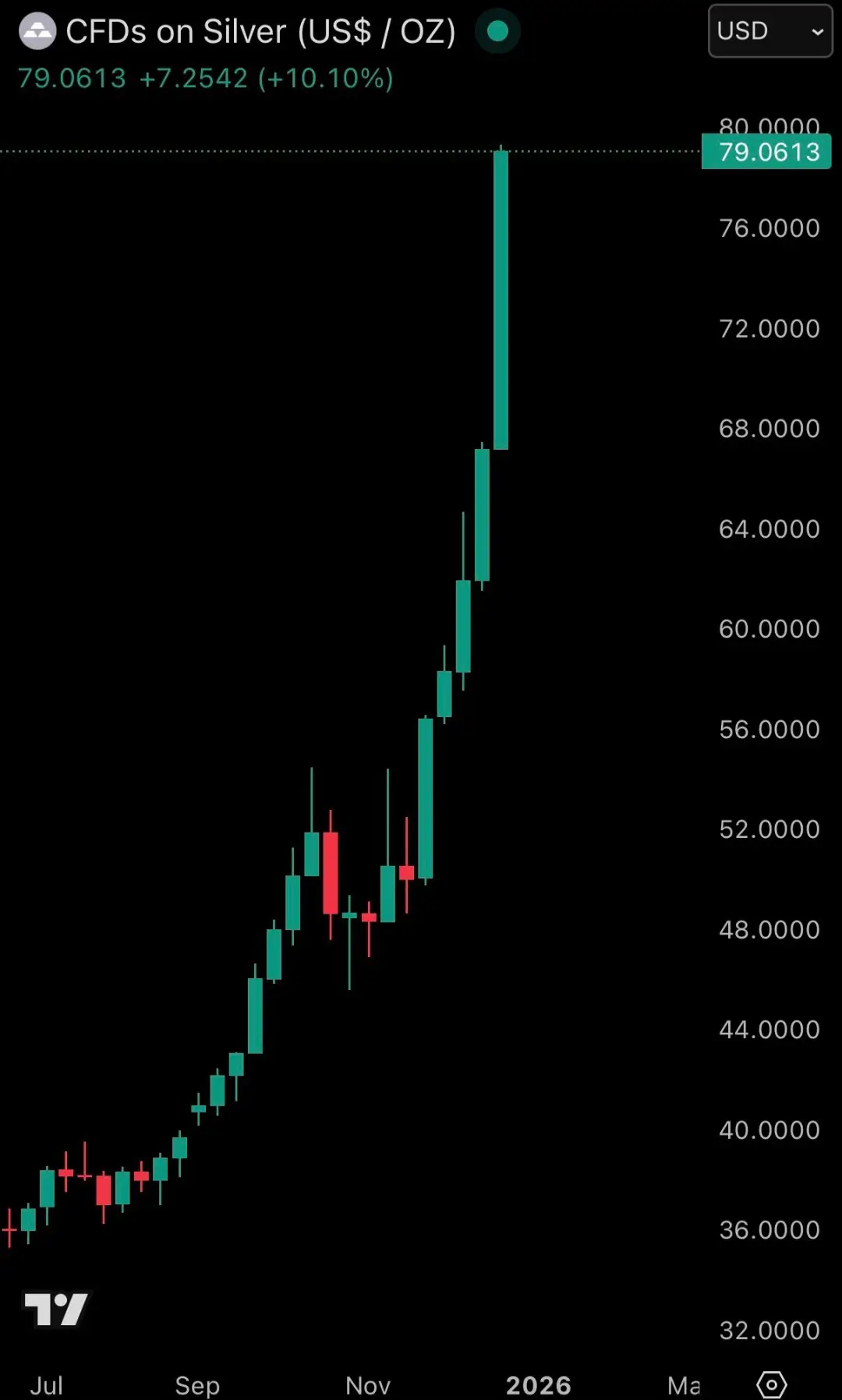
Silver’s advance on Friday capped a week of strong momentum that has pushed the white metal well beyond earlier resistance levels, extending a rally that has gathered pace through 2025. Gold has similarly risen, with benchmark bullion prices topping $4,500 per ounce, while other precious metals such as platinum and palladium have also marked notable gains.
Market observers point to a convergence of factors supporting precious metals, including persistent physical deficits, growing industrial demand for silver in sectors such as photovoltaics and electronics, and expectations that central banks remain accommodative amid ongoing economic pressures.
“Silver’s price movement should be viewed as part of a broad repricing of hard assets in a world where monetary and fiscal conditions are pushing markets to reassess long-standing valuations,” said one analyst who tracks industrial metals and monetary markets. “This is not a panic spike, it’s a structural adjustment.”
Data from key exchanges show that inventories of physical silver — including holdings associated with exchange-traded products and warehouse stocks — have trended lower relative to demand, contributing to tighter market conditions. At the same time, silver’s role as both an industrial metal and a store of value has placed it at the intersection of demand drivers that go beyond purely financial speculation.
The gold-to-silver ratio, a common barometer of relative pricing between the two metals, has declined from historically elevated levels, indicating that silver is gaining ground relative to gold. At the start of the year, the ratio was well above long-term averages; its compression suggests a broader rebalancing within precious metals markets.
Economists note that rising precious metal prices are occurring within the context of elevated global debt and currency dilution pressures rather than acute financial distress. While inflation pressures persist in many regions, there has been no widespread dysfunction in major payment systems, banking infrastructure, or currency markets that would normally accompany a crisis-driven flight to hard assets.
“Price action in silver and gold reflects recalibration within the existing financial system — markets repricing risk and value — rather than the breakdown of the system itself,” said another market strategist. “From this perspective, higher silver prices do not equate with chaos, but with structural forces that have been building over years now coming into clearer focus.”
Industrial consumption of silver has increased in tandem with technological and energy transitions, particularly in renewable energy and advanced electronics — sectors that use silver for its conductivity and durability. These underlying demand dynamics, combined with constrained mining growth, have left physical markets relatively tight compared with broad paper-based pricing mechanisms.
Silver’s rise has attracted greater attention on social and financial media, with broader public interest increasing as prices make new highs. However, some analysts caution that volatility remains a characteristic of metals markets, and periods of correction or consolidation are natural even within strong trends.
“Don’t mistake sustained repricing for a straight-line trend,” one commodities analyst said. “Higher prices are possible — even likely — but the path may include pullbacks as markets digest information and reposition.”
Traders and investors are also watching developments in the U.S. Federal Reserve’s policy outlook and international yield curves, as changes in interest rate expectations and currency valuations have historically influenced precious metals pricing.
As silver continues its upward trajectory, the prevailing view among grounded analysts is that the market is responding to acombination of fundamental shortages, industrial demand, and shifting macroeconomic incentives, rather than a singular crisis event.