
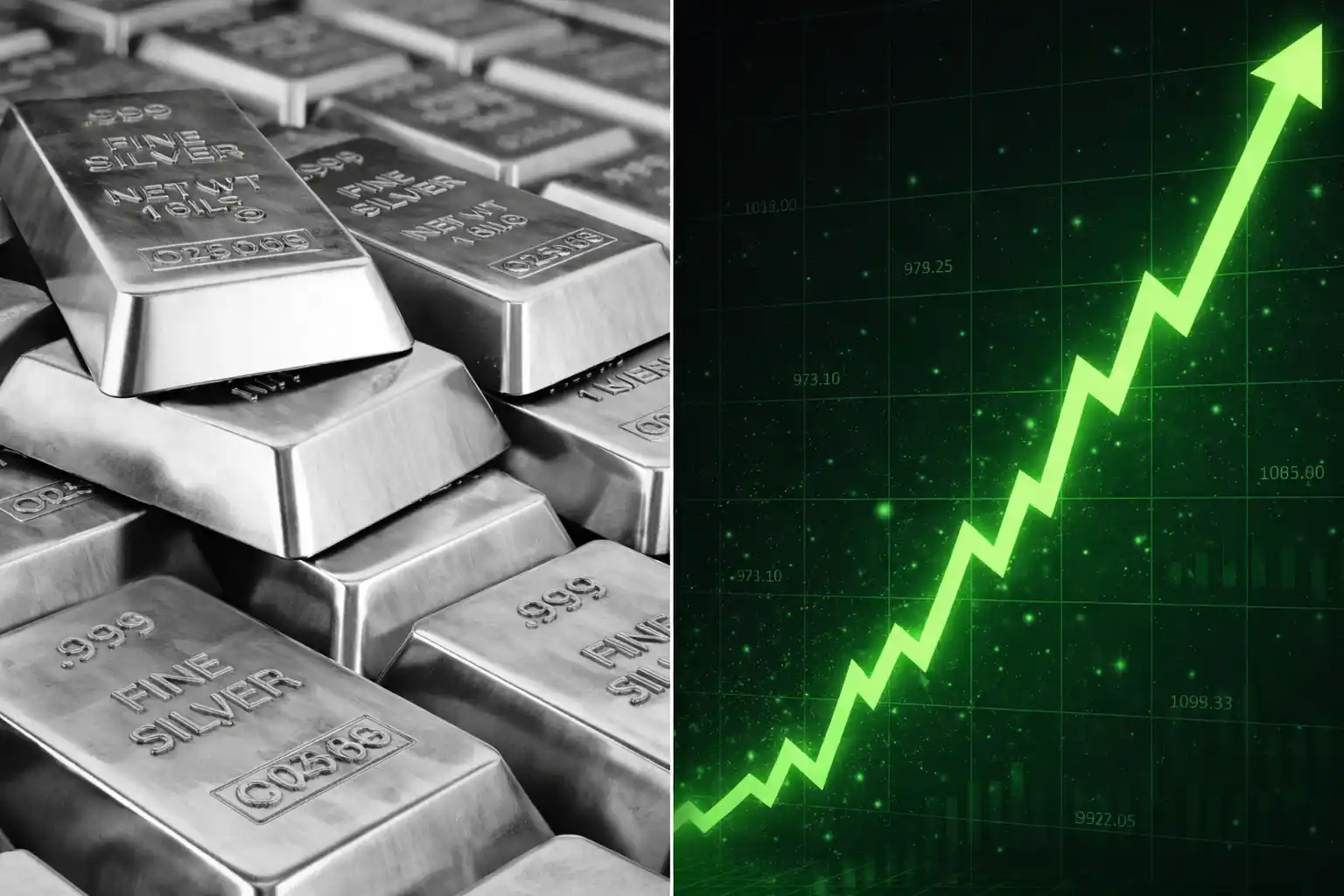
London, England, UK - Silver has crossed $100 an ounce.
Not as a rumor.
Not as a late-night spike.
Not as a headline engineered for clicks.
It crossed calmly, persistently, and—most importantly—while most people weren’t watching.
That alone tells you this isn’t a normal move.
This isn’t about excitement, victory laps, or collapse narratives. It’s about a signal. And like all real signals, it shows up before the crowd understands what it means.
This Isn’t a Spike — It’s a Repricing
Markets spike when emotion overwhelms liquidity.
Markets reprice when structure breaks.
What we are watching in silver is not a speculative blow-off. It’s the quiet separation of two prices that were never meant to be the same forever:
- Paper silver — futures, contracts, ETFs, and financial abstractions
- Physical silver — mined, refined, shipped, minted, and delivered
For decades, those prices moved together closely enough that most people didn’t question the mechanism. That relationship is now breaking in real time.
And it’s breaking without drama.
The Physical Market Is Voting — Loudly
The most important development isn’t the dollar price.
It’s where silver is being paid for most aggressively.
Across Asia — particularly China and India — silver is trading at persistent premiums over Western spot prices. Not briefly. Not arbitrage-smoothed. Persistently.
That matters because commodities do not obey narratives. They obey flow.
Metal flows to where it is valued most.
Always has. Always will.
When Shanghai is willing to pay materially more for the same ounce than New York, metal does not stay in New York. No algorithm, press release, or futures contract can override that.
That’s not ideology. That’s logistics.
BREAKING: Silver prices officially rise above $100/oz for the first time in history, now up +40% in 2026.
— The Kobeissi Letter (@KobeissiLetter) January 23, 2026
We have all witnessed history today. pic.twitter.com/h4Ac6lstm5
COMEX Isn’t “Failing” — It’s Being Bypassed
There’s no need to dramatize what’s happening at Western exchanges.
COMEX isn’t collapsing.
LBMA isn’t imploding.
They’re simply doing what paper markets always do when physical demand overwhelms supply: they settle financially instead of delivering metal.
That worked when most participants were traders.
It works less well when participants become holders.
Recent data shows registered silver inventories declining steadily, while paper volumes remain enormous — multiples of annual global production trading in days.
This isn’t fraud.
It’s a mismatch of purpose.
Paper markets are excellent at price discovery until price discovery collides with physical scarcity. At that point, the paper price becomes a reference — not a clearing mechanism.
Bankers watching their multidecade Silver shorts blow up pic.twitter.com/KcqO2CQ8gB
— Nostra, House of Gold (@Nostre_damus) January 23, 2026
The Mint Signals Matter More Than Headlines
Here’s where things quietly got interesting.
Western mints began pausing sales, limiting formats, or repricing aggressively — even as new products launched.
This isn’t marketing confusion.
It’s cost uncertainty.
When a mint cannot reliably source feedstock at yesterday’s price, it stops selling tomorrow’s product. That doesn’t mean silver is “gone.” It means the price is no longer stable enough to lock.
That is a structural signal — not a panic.
And the widening gap between “spot” silver and what it actually costs to acquire physical metal confirms it.
This Isn’t About Short Sellers or Villains
It’s tempting to turn this into a morality play:
bankers vs. stackers, manipulators vs. truth-seekers.
That framing is unnecessary — and inaccurate.
This isn’t about bad actors losing control.
It’s about systems reaching their design limits.
For forty years, silver was priced primarily as a financial instrument with industrial characteristics. Today, it is being treated increasingly as an industrial necessity with monetary properties.
Those are different valuation frameworks.
Silver Isn’t Rising Alone — And That’s the Key
One of the most misunderstood elements of this move is what’s happening around silver.
- Gold is making new highs
- Equities are rising
- Commodities broadly are firm
This confuses people who expect “risk off” and “risk on” to rotate neatly.
But this isn’t a rotation.
It’s a currency effect.
When money expands faster than productive output, prices rise together — not because everything is becoming more valuable, but because the measuring stick is shrinking.
This is why GDP can rise while households feel poorer.
Why profits can increase while purchasing power falls.
Why wages climb but savings evaporate.
Silver is not causing this.
Silver is measuring it.
Silver is smashing all-time highs and is breaking the markets! pic.twitter.com/I6gMbVy6xX
— Asian Guy (@AGAsianGuy) January 22, 2026
Why This Time Is Actually Different
Silver has spiked before — most famously in 1980 and 2011. Those moves shared key characteristics:
- Leverage-driven
- Financially concentrated
- Quickly reversed
This move does not share those traits.
What’s different now:
- Industrial demand is structural, not cyclical
Silver is embedded in energy, electronics, defense, medicine, and infrastructure. Substitution is limited. - Exploration lag is real
Years of low prices reduced discovery. New supply takes a decade or more to materialize. - The buying is global and distributed
This isn’t a corner. It’s a migration. - The public is late — very late
Search interest is rising, but participation remains tiny.
This is not a frenzy.
It’s an adjustment.
The Gold-Silver Ratio Isn’t a Prediction — It’s a Guide
Historically, silver does not need chaos to reprice.
If gold remains elevated and silver simply returns to a more typical historical ratio, prices well north of $100 become entirely plausible without gold “going through the roof.”
This is why rational observers aren’t cheering wildly or shorting aggressively.
They’re watching.
Why Holders Are Different From Investors
One of the most overlooked aspects of this move is who is buying.
These are not traders chasing momentum.
These are holders.
Holders behave differently:
- They don’t sell on volatility
- They don’t require liquidity
- They remove metal from circulation
When metal moves into hands that don’t need to resell it, price discovery shifts upward — slowly, then suddenly.
That’s what repricing looks like.
No Collapse. No Celebration. Just Reality
None of this requires catastrophe.
None of this implies imminent failure.
Things tend to keep going.
Currencies adjust.
Markets adapt.
People complain about prices and blame “big business.”
And quietly, assets that cannot be printed recalibrate against those that can.
Silver crossing $100 is not the end of anything.
It’s a line on a chart that future observers will look back on and say:
“That was when the price stopped pretending.”
The Rational Position
There’s no need to evangelize.
No need to panic.
No need to gloat.
The rational position is simple:
- Observe the spread between paper and physical
- Watch where supply is flowing
- Note who is paying premiums — and why
If silver later trades lower, that will be data too.
But when systems shift, prices don’t ask permission.
They just move.
And silver just told us something important.