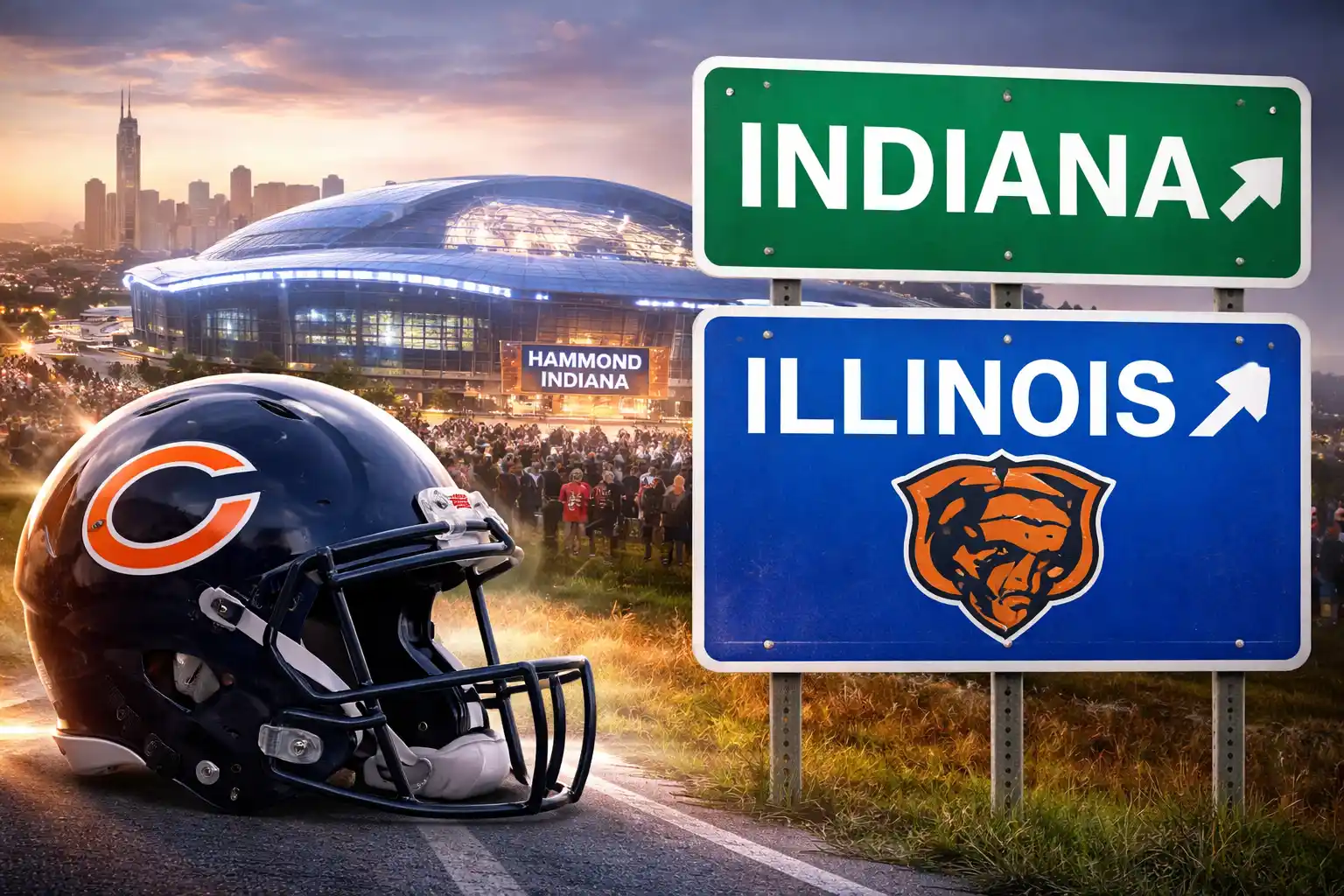
Chicago, IL, USA - The Chicago Bears’ long-running stadium saga took a sharp turn on Thursday, Feb. 19, 2026, after Indiana lawmakers advanced legislation designed to clear a path for a new NFL venue in Hammond, Indiana, near the Illinois border—while a key discussion in Illinois on keeping the team’s stadium project in-state was called off.

At the center of Indiana’s effort is legislation that would create a Northwest Indiana Stadium Authority, an entity intended to finance, construct and lease a new stadium and related development. The bill moved forward with a unanimous committee vote in the Indiana House, signaling bipartisan enthusiasm for a project that would place the Bears’ next home just outside Chicago—geographically close, but politically and financially in a different state system.
Multiple reports indicated the Bears have been evaluating a site near Wolf Lake in Hammond.
What happened today—and why it matters
Indiana’s legislative progress landed the same day Illinois momentum appeared to wobble. Reporting around the day’s events described a canceled Illinois committee meeting that had been expected to address elements of an Illinois stadium framework—another reminder that, despite years of planning and public debate, the Bears still don’t have a fully approved, financeable path to a new stadium in Illinois.
𝗕𝗥𝗘𝗔𝗞𝗜𝗡𝗚: The Bears are expected to announce their intentions to build their stadium in Northwest Indiana, per @Chicago_NFL
— Dov Kleiman (@NFL_DovKleiman) February 19, 2026
The Chicago Bears have officially agreed to relocate to Northwest Indiana.
The Indiana Bears 👀 pic.twitter.com/1jx505CpJs
Illinois Gov. J.B. Pritzker publicly pushed back against the idea that Thursday’s developments amount to a final decision, saying the Bears’ statement should not be taken as confirmation the team is moving to Indiana.
Still, the day’s optics were hard to miss: Indiana advanced enabling legislation and touted forward motion, while Illinois hit pause—exactly the leverage dynamic teams often seek when public support, tax treatment, and infrastructure funding remain unresolved.
Background: a multi-year search, multiple sites, and one core issue
The Bears’ stadium planning has cycled through several visions:
- Soldier Field replacement/redevelopment concepts in Chicago (including a domed lakefront proposal that drew political and legal skepticism).
- A major pivot to Arlington Heights, where the Bears bought the former Arlington Park property and promoted a large-scale stadium-and-entertainment district concept.
- And now, a serious cross-border alternative: Northwest Indiana, framed as still “Chicagoland,” but backed by different state and local incentives.
A key sticking point has been how to handle the mix of private stadium cost vs. public infrastructure and tax arrangements needed for roads, transit, utilities, and surrounding development—plus the predictability teams want on long-term property tax treatment. The Bears’ own Arlington Heights-focused stadium materials emphasize a large private contribution while noting the need for public infrastructure support and workable tax terms to move forward.
In September 2025, Bears President/CEO Kevin Warren publicly described Arlington Heights as the only viable Cook County option meeting the team’s criteria, underscoring how recently the franchise had been presenting Illinois—especially Arlington Heights—as the preferred destination.
But by December 2025, the Bears openly expanded their site search beyond Arlington Heights into the broader region, including Northwest Indiana, citing lack of traction and the need to evaluate alternatives.
Indiana is open for business, and our pro-growth environment continues to attract major opportunities like this partnership with the Chicago Bears. We’ve identified a promising site near Wolf Lake in Hammond and established a broad framework for negotiating a final deal. If…
— Governor Mike Braun (@GovBraun) February 19, 2026
What Indiana is offering (and what’s still unknown)
Indiana’s proposal, as reported Thursday, is structured to give a public authority the tools to develop a stadium project and negotiate terms that could include long leases and bond financing—common mechanisms in modern stadium deals.
But there are still major open questions:
- No final stadium agreement has been publicly signed. Several reports stressed the situation remains fluid and contingent.
- Financing specifics (bond terms, public contribution scale, revenue streams, and who bears cost overruns) remain the details that ultimately decide whether “momentum” becomes a buildable project.
- Illinois’ next move: Pritzker and legislative leaders have indicated discussions are ongoing, and Illinois could still adjust terms to keep the project.
What to watch next
- Does Indiana’s bill become law as written, and how fast? Passage timelines and any amendments will signal how aggressively the state is moving.
- Will the Bears clarify their “primary” site? The team has worked multiple angles before; markets and lawmakers will look for specificity.
- Can Illinois revive and finalize its stadium package? If Springfield can’t provide a reliable framework soon, Indiana’s leverage grows.
- Local response in Chicago and the suburbs: Soldier Field’s future, Arlington Heights development plans, and regional economic arguments will intensify as the threat of an out-of-state move becomes more concrete.
For now, the cleanest takeaway is this: the Bears are not officially “relocating” today—but Indiana just made its most tangible move yet to make that outcome possible, and Illinois is under pressure to respond quickly with a workable, legislated deal.